Erasmus University Rotterdam - EUR
speciality:
Communication
What is a Communications degree?
Communications is a universal degree, which explores the traditional forms of communication such as verbal, physical, visual and written communication but also extends beyond that to cover mass communication and social media. There are different types of communications degrees depending on the degree level.
Overall, Communications focuses on teaching effective communication through social media, web, print, mass media and verbal communication. However, there are two types of Communications degrees that exist. For instance, a Bachelor of Arts in Communications in the US is focused on preparing students for careers that are connected to writing, marketing, promotions, journalism and public relations. In contrast, Bachelor of Science in Communications is dedicated to the technology used in the science behind modern communication and prepares students for careers in production or sound engineering.
A Communications degree teaches students about how media and communication influences cultures, societies and people’s identities. It involves a significant amount of critical writing and research and covers different disciplines such as journalism, public relations, entertainment production, marketing, event planning and so many more disciplines, which are somehow connected to exchanging information and conveying messages. There are also different specialization options associated with this degree, including political communication, mass media, journalism, health communication, etc.
It is worth noting that a Communications degree has many intersection points with psychology, sociology, linguistics and in some cases politics.
Benefits of a Communications degree
The main benefit of a Communications degree is its universal nature. It applies to almost any subject or professional setting. For example, some of the top careers in the field of Communications include announcers, art directors, editors, broadcast and sound engineering technicians, reporters, correspondents, broadcast analysts, technical writers, writers and authors, interpreters, translators, etc. Therefore, it keeps students’ career options open and doesn’t require them to have a predetermined career path that they want to follow.
Communications degrees prepare students to make an impact from the start of their careers unlike other degrees, which require further training. This is possible thanks to the multitude of professionally accredited degrees in Communications, which develop students’ abilities based on the established standards in the field. Moreover, there are many Communications courses, which offer work placement opportunities that enable students to gain the required professional skills before they have even started their career.
Another benefit associated with Communications degrees is the fact that they develop students’ written and verbal communication skills significantly.
A major advantage of Communications over other degrees is that in most cases there are no prerequisites required to study Communications.
Communications degree structure
The duration of a Communications degree varies depending on the country and degree level. For example, Higher Education Institutions in the UK offer 3-year Bachelor’s courses. In some cases, the course may extend to four years if students are given the opportunity to spend a year abroad or in industry between the second and third year through a sandwich course. Bachelor’s degrees in Communications in the US usually take around four years to complete.
Over the duration of a Bachelor’s Communications degree, students are expected to learn and be able to apply the established communications theories by developing the technical skills required to work in a professional setting. In the first year of their studies, students learn predominantly how media and communication influences cultures, societies and people’s identities. Optional modules may introduce them to professional communication, journalism, documentary, film-making, marketing, etc. In addition to the introductory topics, this degree allows students to learn about more complex areas of communications such as interpersonal relations, brand management and linguistics at a later stage. For instance, the second and third years enable students to get a deeper understanding of theoretical concepts related to media and culture and develop practical skills in research and communications. Additionally, students may have the opportunity to take optional modules and pursue their interests in different areas related to Communications such as gender, race, youth, culture, digital media, political communication, public relations, etc.
The most common duration of a Master’s degree in Communications is between 1 and 2 years depending on the mode of study (full-time or part-time) and country.
PhD and MPhil degrees in Communications require students to dedicate anywhere between 3 and 6 years to their studies depending on the mode and country of study.
18 Student Reviews
-
Communication and ...18 Jun, 2024
 NasrinNLWriting Thesis and Supervisor feedback
Writing my thesis was an intense but immensely rewarding experience, significantly enhanced by my supervisor’s invaluable guidance and support. From the initial phase of topic selection, where their suggestions helped refine my research question, to the meticulous process of literature review and data analysis, their extensive knowledge proved to be a tremendous asset. They provided practical advice on research methods, reviewed multiple drafts with detailed feedback, and offered constructive criticism that improved my analysis and presentation. Regular check-ins and progress meetings helped maintain my motivation and time management, while their attention to detail in the final stages ensured my thesis met the highest academic standards. Their mentorship extended beyond academic guidance, fostering a research mindset and commitment to excellence that will benefit me in future endeavors. With their unwavering support, the challenging task of writing a thesis became a profoundly enriching academic journey.
View moreProgramme: Communication and MediaDegree: Bachelor'sGraduation: 2024Delivery Type: On CampusCampus: Rotterdam -
Communication and ...10 Jun, 2024
 SarpTRUniversity experience
It is a very good international university that provides students with numerous advantages. The education is on par with the highest ranked universities in Europe and the international environment enables me to understand different perspectives.
View moreProgramme: Communication and MediaDegree: Bachelor'sGraduation: 2024Delivery Type: On CampusCampus: Rotterdam -
Communication and ...14 May, 2024 LaurenNLmy experience after 3 years of studying at eur
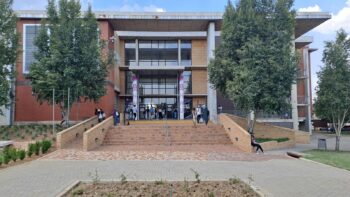
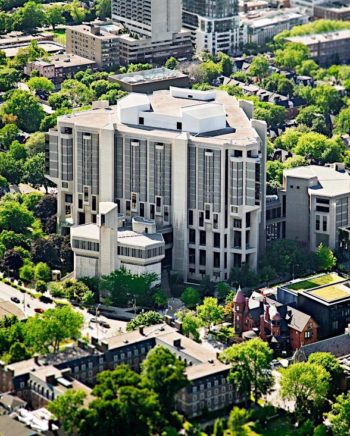
What I really like about this uni is that there is a campus. This is different from other universities in the Netherlands where different faculties are located at other places. It gives a feeling of connecting with others easily. I think we have nice buildings and a good education system. What can be improved is providing more information sometimes. When choosing courses for instance, there is lack of a good explanation of what the course is about.
View moreProgramme: Communication and MediaDegree: Bachelor'sGraduation: 2024Delivery Type: On CampusCampus: Rotterdam -
International Communication11 May, 2024 StudentInternational setting
I enjoyed being surrounded by international students. In programs such as International Communication and Media it improves the discussions in class significantly, contributing to overall awareness. The campus is also very nice and modern!
View moreProgramme: International CommunicationDegree: Bachelor'sGraduation: 2024Delivery Type: On CampusCampus: Rotterdam -
Communication and ...10 May, 2024 StudentRUActivities
There are a lot of events happening every day, for every taste, whether it’s just for fun, or to learn something new. You can also organize your own events the uni supports it a lot. It’s big enough to make large events, and not that big for it to be hard to organize and agree on with the university.
View moreProgramme: Communication and MediaDegree: Bachelor'sGraduation: 2025Delivery Type: On CampusCampus: Rotterdam -
Communication and ...10 May, 2024 StudentNLerasmus and ibcom review
In my opinion, it is a great university offering lots of interesting study programs. Usually, they are of great help when you ask for it. However, I feel like in some aspects this is a bit lacking sometimes. The campus is nice although some buildings are a bit old (e.g the G-building). However, they’re continuously trying to improve campus the campus and classes so i feel like they’re doing good in that aspect. All in all, if you’re looking for a nice university in the netherlands, i believe erasmus is a great option
View moreProgramme: Communication and MediaDegree: Bachelor'sGraduation: 2024Delivery Type: On CampusCampus: Rotterdam -
Communication and ...10 May, 2024 StudentNLA great option for your future carreer!
Erasmus University is a great option in my opinion, the teachers are very supportive and truly want you to succeed. The curriculum is filled with a lot of information and allthough sometimes assignments can be a bit difficult, they stimulate you to put in a lot of hard work. This is the type of university where a lot of individual work is required so be prepared for that. Strict attendance rules but in my opinion that’s better for me as a student as it stimulates me to take classess serious. Tuition fees are (at least I can speak for EU) very decent if compared to the quality of education that you are receiving! A top University in Europe for sure!!
View moreProgramme: Communication and MediaDegree: Bachelor'sGraduation: 2024Delivery Type: On CampusCampus: Rotterdam -
Communication and ...10 May, 2024 StudentInsightful courses, qualified professors
EUR is an international university, which provides a wide variety of courses and students can find their preferred areas to learn about. The campus is huge, large classrooms and facilities for students. Professors are supportive, able to deliver information and help with anything. One thing I would improve is the examination process, types of questions and ways of assessment.
View moreProgramme: Communication and Media StudiesDegree: Bachelor'sGraduation: 2024Delivery Type: On CampusCampus: Rotterdam -
Communication and ...10 May, 2024 StudentGood enough
People are usually friendly, especially internationals and most teachers are helpful! Workload is manageable, however maximum two attendance rule is a bit annoying. Also facilities besides academics are a bit few, would have liked more.
View moreProgramme: Communication and MediaDegree: Bachelor'sGraduation: 2024Delivery Type: On CampusCampus: Rotterdam -
Communications and ...24 Apr, 2024 StudentNLErasmus Student thoughts
Overall I would highly recommend going to this university. The facilities are great and the campus is clean and big. Students are offered yearly gym memberships with discounts. The online library provides access to countless materials and resources. We are given access to licenses for tools and programs such as ATLAS.ti or statistical software like SPSS. There are many career and skill-building workshops through out the year. However, keep in mind that for most courses attendance rules are very strict and mandatory (only 2 absences per class allowed).
View moreProgramme: Communications and Media StudiesDegree: Bachelor'sGraduation: 2024Delivery Type: On CampusCampus: Rotterdam