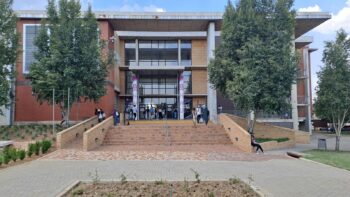

Ilmenau University of Technology
speciality:
Communication
What is a Communications degree?
Communications is a universal degree, which explores the traditional forms of communication such as verbal, physical, visual and written communication but also extends beyond that to cover mass communication and social media. There are different types of communications degrees depending on the degree level.
Overall, Communications focuses on teaching effective communication through social media, web, print, mass media and verbal communication. However, there are two types of Communications degrees that exist. For instance, a Bachelor of Arts in Communications in the US is focused on preparing students for careers that are connected to writing, marketing, promotions, journalism and public relations. In contrast, Bachelor of Science in Communications is dedicated to the technology used in the science behind modern communication and prepares students for careers in production or sound engineering.
A Communications degree teaches students about how media and communication influences cultures, societies and people’s identities. It involves a significant amount of critical writing and research and covers different disciplines such as journalism, public relations, entertainment production, marketing, event planning and so many more disciplines, which are somehow connected to exchanging information and conveying messages. There are also different specialization options associated with this degree, including political communication, mass media, journalism, health communication, etc.
It is worth noting that a Communications degree has many intersection points with psychology, sociology, linguistics and in some cases politics.
Benefits of a Communications degree
The main benefit of a Communications degree is its universal nature. It applies to almost any subject or professional setting. For example, some of the top careers in the field of Communications include announcers, art directors, editors, broadcast and sound engineering technicians, reporters, correspondents, broadcast analysts, technical writers, writers and authors, interpreters, translators, etc. Therefore, it keeps students’ career options open and doesn’t require them to have a predetermined career path that they want to follow.
Communications degrees prepare students to make an impact from the start of their careers unlike other degrees, which require further training. This is possible thanks to the multitude of professionally accredited degrees in Communications, which develop students’ abilities based on the established standards in the field. Moreover, there are many Communications courses, which offer work placement opportunities that enable students to gain the required professional skills before they have even started their career.
Another benefit associated with Communications degrees is the fact that they develop students’ written and verbal communication skills significantly.
A major advantage of Communications over other degrees is that in most cases there are no prerequisites required to study Communications.
Communications degree structure
The duration of a Communications degree varies depending on the country and degree level. For example, Higher Education Institutions in the UK offer 3-year Bachelor’s courses. In some cases, the course may extend to four years if students are given the opportunity to spend a year abroad or in industry between the second and third year through a sandwich course. Bachelor’s degrees in Communications in the US usually take around four years to complete.
Over the duration of a Bachelor’s Communications degree, students are expected to learn and be able to apply the established communications theories by developing the technical skills required to work in a professional setting. In the first year of their studies, students learn predominantly how media and communication influences cultures, societies and people’s identities. Optional modules may introduce them to professional communication, journalism, documentary, film-making, marketing, etc. In addition to the introductory topics, this degree allows students to learn about more complex areas of communications such as interpersonal relations, brand management and linguistics at a later stage. For instance, the second and third years enable students to get a deeper understanding of theoretical concepts related to media and culture and develop practical skills in research and communications. Additionally, students may have the opportunity to take optional modules and pursue their interests in different areas related to Communications such as gender, race, youth, culture, digital media, political communication, public relations, etc.
The most common duration of a Master’s degree in Communications is between 1 and 2 years depending on the mode of study (full-time or part-time) and country.
PhD and MPhil degrees in Communications require students to dedicate anywhere between 3 and 6 years to their studies depending on the mode and country of study.
3 Student Reviews
-
Media and ...28 Sep, 2023
 JanellyMXMA in Communication studies
The University offers an outstanding Communication Program that is deeply rooted in research. It is primarily oriented towards the fields of journalism, humanities, social studies, and digital communications. Additionally, the program offers several courses in collaboration with the business and economics departments. These courses are designed to help students develop a strong foundation in media platforms, enabling them to analyze perception, risk, and artificial intelligence within the context of communication.
Personally, I highly recommend my University as an excellent starting point for an academic career.
View moreProgramme: Media and Communications ScienceDegree: Master'sGraduation: 2024Delivery Type: On CampusCampus: Ilmenau -
Media and ...06 Jan, 2022 AkhilThe university is ideal for media students.
The fact that the course is taught entirely in English so a huge plus for me. The faculties are experienced researches and the studies are a blend of theoretical, research and practical based. The university has ample facilities for students, be it extra curriculars, sports or volunteer work.
View moreProgramme: Media and Communications ScienceDegree: Master'sGraduation: 2023Delivery Type: On CampusCampus: Ilmenau -
Media and ...06 Nov, 2021SidonieReview - Master's in Media and Communication Science Program
The master’s in media and communication science programme at Technical University of (TU) Ilmenau has diverse courses that continue to be restructured in order to widen job opportunities and internships abroad for students. Some specific modules like the Intercultural communications course were reorganized and developed to focus more on current developments in research such as the incorporation of a new technologically learning platform known as a social virtual room to strengthen the technical capacity of students. This is true for most of the modules in the master’s programme and thus increases the chances of students securing good jobs after the completion of studies.
I really like the programme because of the good support lecturers and the examinations office provide to students, the way studies are organized, how lecturers introduce the courses to students with their aims, content, expectations and learning outcome. This helps students understand what is expected of them and how beneficial the course will be to their personal and career growth. I also appreciate the international and practical relevance of the programme in teaching and research as it has improved my research and data analysis skills as a first-semester student. There are also onboarding sessions for new students twice a week and other infinite variety of opportunities.
I will definitely recommend this master’s programme to any person interested in pursuing a career in the area of journalism or communication. In fact, I have already recommended this programme to a few friends in Cameroon and my younger cousins and currently guiding some of them through the application process. It is an amazing programme!!
View moreProgramme: Media and Communications ScienceDegree: Master'sGraduation: 2023Delivery Type: BlendedCampus: Ilmenau