
A pharmacy degree is a great choice for healthcare students who want to keep their options open. Pharmacology and pharmacy degrees don’t just lead to patient support work in hospital or community pharmacies; you could work in drug research and development, medical sales, or even transition to veterinary pharmacy. And as Europe grapples with a need for qualified pharmacists, now is an ideal time to start your degree –in fact, applications for some courses have doubled in the last five years. But where are the best places to study pharmacy in Europe?
To compile our list of the five best places to study pharmacy in Europe, we’ve consulted traditional university rankings and student reviews. By considering where the top-ranked pharmacy programmes are located – and what students say about those locations – we’ve come up with five ideal locations to start your pharmacy and pharmacology career.
Which country will be number one? Read on to find out.
Where are the best places to study Pharmacy in Europe in 2026?
5. Croatia

Student reviewers give pharmacy programmes in Croatia an average rating of 4.33 out of 5 – the same average score as programmes in Canada and Czechia. So, while south-east Europe may be overlooked when it comes to study abroad destinations, sunny Croatia is a great destination if you’re looking for a combination of affordability and high-quality universities.
The country’s oldest institution is the University of Zagreb in the country’s capital, which QS also ranks the best university in Croatia and among the top 300 in Europe. The University of Zagreb Faculty of Pharmacy and Biochemistry offers a five-year, English-taught programme in Pharmacy. Fees for the programme total €10,000 per year, much less than for comparable programmes elsewhere, and the degree awards students with a EU/EEA -recognised Master of Pharmacy.
Students can also study Pharmacy at the University of Split, a top-500 European institution, where tuition fees are €12,000 per year.
Student Review – University of Zagreb Faculty of Pharmacy and Biochemistry

I am currently studying Pharmacy at the Faculty of Pharmacy and Biochemistry, University of Zagreb, and I would choose it again. The program offers strong scientific foundations with plenty of practical work. Professors are approachable, labs are well equipped, and the community is supportive. Student associations, including the sports association and CPSA, add real value and create opportunities outside the classroom. The faculty has a lot of potential; it is now on them to fully use it through steady investment and smoother administration. Overall, it can provide an unforgettable student experience and a solid base for a future career in pharmacy.
Student Review – University of Zagreb Faculty of Pharmacy and Biochemistry
There is a lot to learn at this faculty and through student associations you can make many acquaintances and gain skills useful in everyday life. The problem at this faculty is that classes are held in multiple locations and the schedule is quite varied and sometimes it is difficult to organize your schedule and do other things besides studying and attending classes. The faculty is trying to improve the quality of teaching even more and I believe that it will succeed.
4. Spain

Spain has a number of top-ranked universities where students can study an accredited pharmacy degree. As a student in Spain, you’ll also benefit from a low cost of living, affordable tuition fees, and genuinely international, vibrant cities.
One of the best institutions in the country is the Universitat de Barcelona in Catalonia, which is ranked 83rd in the world for pharmacy and pharmacology study. The five-year combined Bachelor’s and Master’s degree is taught mostly in Catalan and Spanish, with some English study, so is mainly targeted at local students.
However, if you’re an English speaker wishing to study pharmacy in Spain, the Universitat de València is a good alternative. Ranked 151st–200th in the world, here you can choose your language of study (Spanish, Catalan or English). The Universitat de València’s pharmacy programmes are also ranked highly by student reviewers; based on available reviews, students give it an average rating of 4.67 out of 5.
Student Review – Universidad CEU San Pablo – CEU USP
Excellent professors, very research-focused. It’s not the university’s fault, but the degree itself doesn’t prepare you for a professional career in the pharmaceutical industry, much less in the business side.
Student Review – Universitat de València

As a third-year Pharmacy student at the University of Valencia, my educational journey has been incredibly rewarding. The academic quality is outstanding, with professors who are not only highly qualified but also genuinely supportive. The curriculum is rigorous but engaging, especially in subjects like pharmacology and organic chemistry. One aspect I particularly appreciate is the emphasis on practical experience; we spend considerable time in well-equipped labs, which is crucial for developing essential skills needed in the pharmaceutical field.
Beyond academics, the university offers a vibrant student life. The campus facilities are excellent, providing everything from comprehensive library resources to modern study spaces. There’s a strong sense of community among students, fostering an environment where collaboration and mutual support thrive. Engaging in extracurricular activities and joining student associations related to pharmacy have enriched my experience, providing insights into the industry and helping me build a professional network. With the high employment rate for graduates, I’m optimistic about my career prospects after graduation.
3. Sweden

We’ve gathered only limited reviews for pharmacy programmes in Sweden, but the country’s stellar reputation means we’ve placed it third on our ranking. Sweden has two institutions in the global top 30 for pharmacy and pharmacology degrees: the Karolinska Institute and Uppsala University. Consequently, it’s a great choice if your priority is an internationally-recognised academic programme.
Karolinska Institute is a specialised medical university, so you’ll be surrounded by innovative research every day. The university’s main Bachelor’s in Pharmacology is taught in Swedish, but the school offers an English-taught Bachelor’s degree in Biomedicine and a Master’s in Translational Physiology and Pharmacology. These programmes will prepare you for roles in the public and private sector, including as a research assistant and a scientific project manager.
Uppsala University’s Department of Pharmacy is part of the school’s Biomedical Centre. The school mainly offers degree programmes in Swedish, though there are three English-taught Master’s programmes in pharmacy: Drug Discovery and Development, Pharmaceutical Modelling, and Biopharmaceuticals.
Student Review – Karolinska Institute – KI
Starting with the Swedish academic Calendar where courses are taken one at a time, I love that this lets students focus and grow their knowledge on one topic at a time and not have different mixed theories all taught in the same time frame. I also love the cultural and academic diversity of the professors and administration teams as it allows for students to understand how their newly acquired knowledge can be applied in different contexts
Student Review – Lund University
I am studying MPH program, and I would like to emphasize the course content and the teaching methods… I thought both were unique. The teachers engaged the students in various types of engaging projects, seminars, discussions, and/or presentations. In addition to helping students better understand course content, guest lectures also provided an advantage. It was a great learning experience and I enjoyed interacting with other students and teachers alike.
2. Belgium
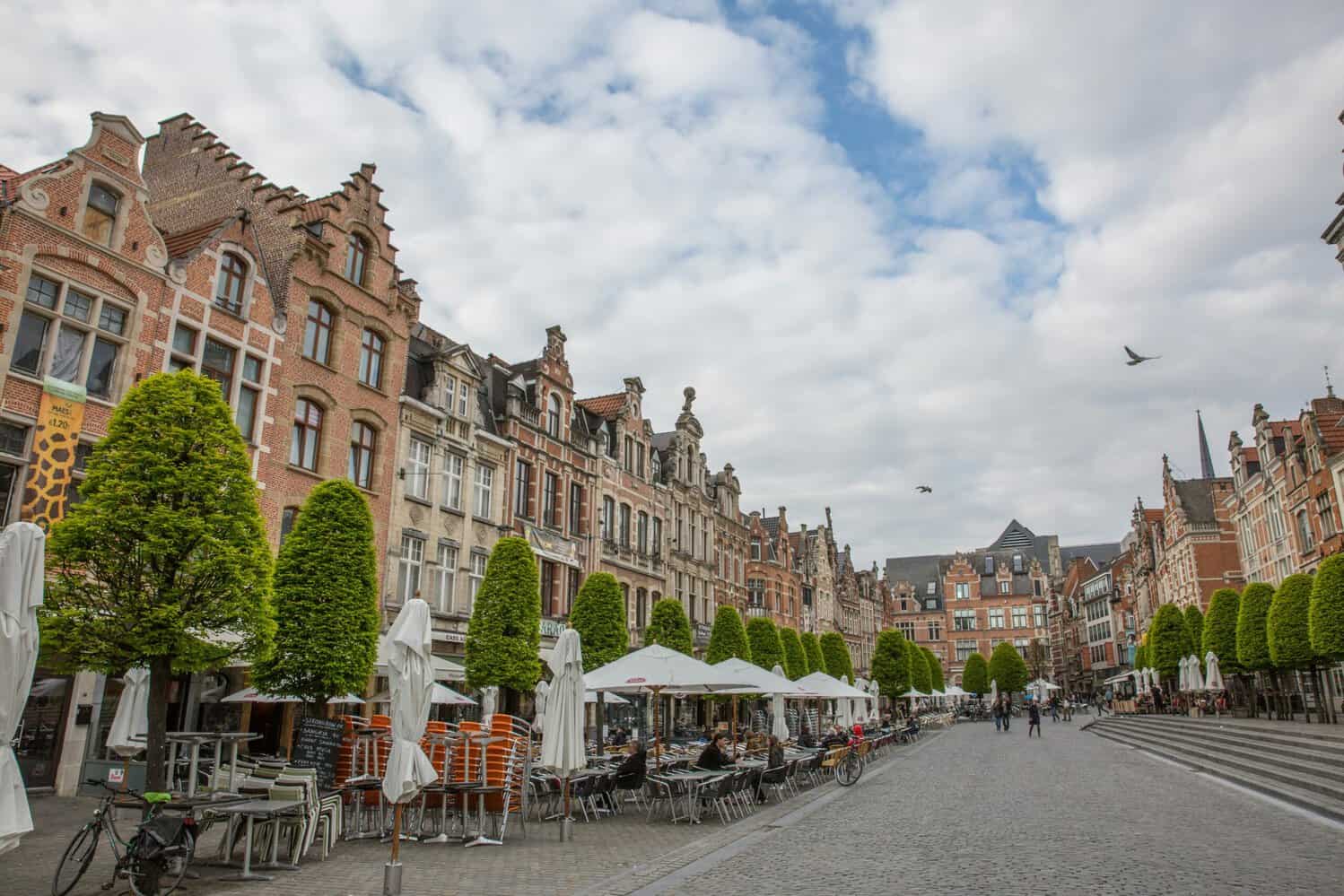
Belgium has previously ranked number one in our EDUopinions ranking of the most international countries in Europe, and top-ranked pharmacy programmes are available in some of the country’s best student cities.
Given that Belgium has three official languages – Dutch, French, and German – students from neighbouring countries will find plenty of options regardless of their mother tongue. The country’s largest French-speaking university is the Université Catholique de Louvain (UC Louvain), which is also ranked 80th in the world for pharmacy programmes.
However, according to the QS ranking, the best place to study pharmacy in Belgium is at KU Leuven – an institution that our reviewers consistently rate highly. Bachelor’s programmes in pharmacy are primarily taught in Dutch, with a minimum required language level of B2. However, there is the option of an English-taught Master of Pharmacometrics – incidentally, taught in collaboration with UC Louvain.
Student Review – Ghent University

The Pharmacy program at Ghent University offered a well-balanced mix of theory and practical experience that truly prepared me for a professional career. The curriculum was thoughtfully organized, allowing me to build a deep understanding of pharmaceutical science while developing essential clinical and research skills.
The professors were knowledgeable and approachable, always ready to share their expertise and guide us through challenging topics. The laboratory sessions and internship placements were especially valuable, giving me hands-on experience and confidence in applying what I learned.
What I appreciated most was the wide range of subjects covered, which provided a comprehensive view of the pharmaceutical industry. The opportunities for international collaboration and participation in research projects also made my studies more enriching. Looking back, studying Pharmacy at Ghent University was an excellent choice that gave me both knowledge and practical skills for my career.
Student Review – KU Leuven
The curriculum itself is very good, the manner of teaching is based on equipping the students for real-life work situations not only the theoretical knowledge and I quite appreciate that. I am the only international student in my class considering not many international students go for Dutch programs, so that makes the integration process quite harder.
1. United Kingdom

It may not come as much of a surprise that the best place to study pharmacy in Europe is the United Kingdom. British universities dominate the QS ranking for pharmacy and pharmacology, with five in the global top ten, including institutions in London, Nottingham, and Oxbridge. EDUopinions student reviewers give pharmacy degrees in the UK an average rating of 4.21, with significantly high individual ratings for internationality, location, and career prospects.
The highest-ranked UK universities for pharmacy are University College London and the University of Oxford, in joint third place. The Pharmacology BSc and MSci at UCL is taught as either a three or four-year programme, depending on whether you opt for the Bachelor’s or the research-focused Master’s degree.
There’s no specialised Bachelor’s in Pharmacology or Pharmacy at the University of Oxford, but students can opt for a pathway that includes a Bachelor’s in Medicine or Biomedicine followed by a Master’s in Pharmacology.
Unfortunately, international students wishing to study pharmacy in the UK will have to contend with high tuition fees – at UCL, these are £44,400 (approximately €52,500) per year for the Bachelor’s in Pharmacy. However, considering the quality of life sciences programmes in the UK, you might consider it a valuable pay-off.
Student Review – UCL
I studied at the School of Pharmacy, it was a great university with great supportive staff. It helped shape me as a pharmacist and gave me great foundation to start my career, which I was later able to develop further. I would highly recommend the university, it is in a great location in London.
It is a freestanding school, so this was a downside as you were not really able to interact with students studying other subjects, therefore the real ‘university feel’ may be lacking. However this is likely to have changed now.
Student Review – De Montfort University
I really love my university and my course, I am studying pharmaceutical and cosmetic science and I love the fact that it’s both creative and strict. We are allowed to have fun and creative with the cosmetic part and the practicals are always interesting. The growing of bacterias during the microbiology practicals are nice and we are not only learning through books we are also getting the to learn by actually doing it. we get representative from the industry that has done the same thing we are doing to let us know how the industry is. its really interesting and hands on

Related Posts :






Recent Posts

A pharmacy degree is a great choice for healthcare students who want to keep their options open. Pharmacology and pharmacy degrees don't just lead to ...
The Times Higher Education World University Rankings 2027 are here, but there's something missing from the methodology – the students themselves.
...

– While an exciting curriculum, vibrant location, and busy student life are all important parts of your study abroad experience, it’s just as ...

Researchers in agricultural science solve some of the most pressing challenges of today’s society – food and water scarcity, crop damage, land ...