
Researchers in agricultural science solve some of the most pressing challenges of today’s society – food and water scarcity, crop damage, land management – and PhD student Cyprian Kum is determined to make just such an impact by spotlighting an underappreciated research subject: the African leafy vegetable.
“Most research over the years has been focused on the high commercial crops, but these leafy vegetables [i.e. purple amaranth, jute leaves, and tannia] play a very important role in the livelihood of smallholder or rural farmers,” Cyprian explains.
Cyprian, who is originally from Cameroon, graduated with a Master’s degree in Agro- and Environmental Nematology – a branch of environmental sciences concerned with parasitic plant worms – from the University of Ghent in Belgium in late 2025. So, when he spotted the vacancy for a PhD researcher at North-West University’s School of Agricultural Sciences, it felt like the perfect fit.
“Research in nematology is very limited in Africa, and seeing this call from one of the top universities in South Africa and Africa as a whole really drew my attention.”
“I have also always wanted to come visit South Africa, and with the opening of this position, it was just right for me to shoot two birds with one stone, as the saying goes,” he adds.

Why study agriculture at North-West University?
North-West University’s (NWU) School of Agricultural Science ranks among the top 350 centres for agriculture programmes globally, and in addition to research programmes, offers Bachelor’s and Master’s programmes in subjects including:
- Agricultural Economics
- Animal Science
- Animal Health
- Soil Science
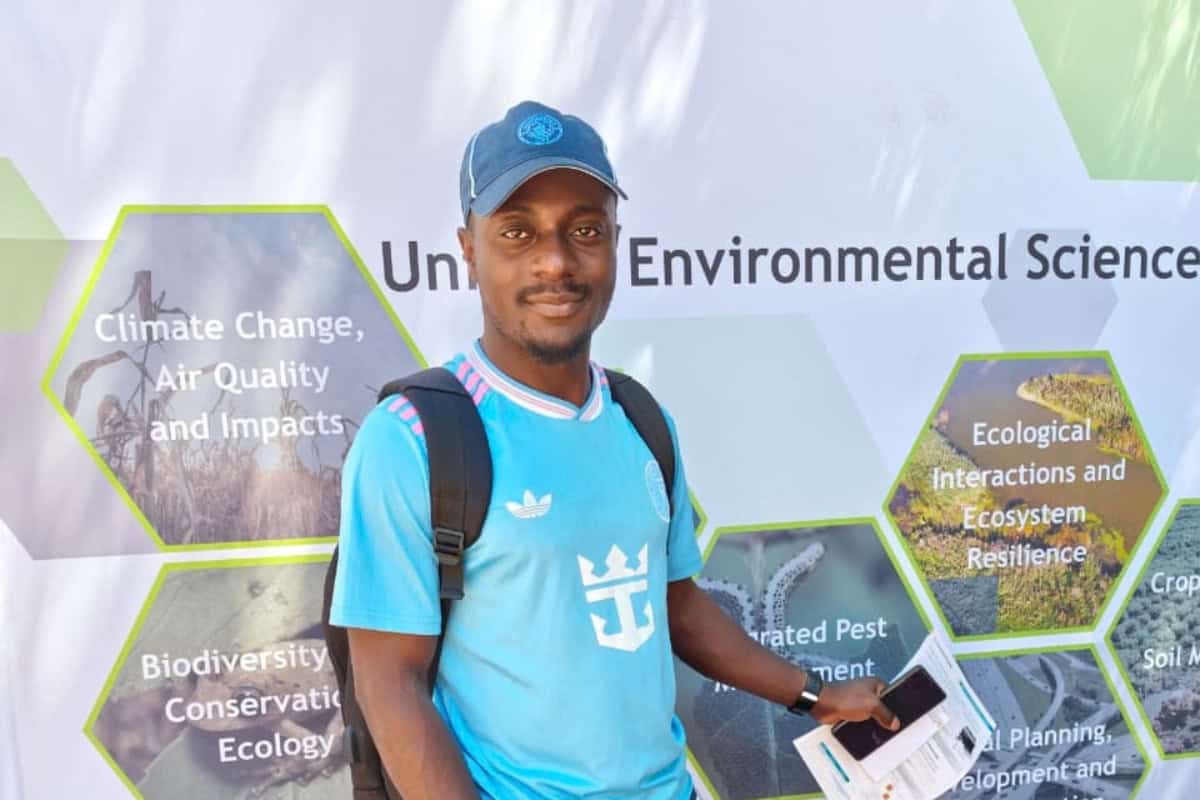
Across all disciplines in the school, practical, hands-on research is a critical part of the learning environment, and something that attracted Cyprian in particular to NWU.
“Our objective is actually starting with surveys and sampling from these smallholder farmers’ fields, and this alone means a lot to me – I have always loved and enjoyed working with smallholder farmers,” he explains.
“We place a strong emphasis on students doing research in real environments focused on impact,” adds Professor Gerhard du Preez, Deputy Director of the School of Agricultural Sciences and co-editor of the book Nematodes as Environmental Indicators: From Theory to Practice.
NWU’s facilities include the Living Laboratory for Sustainable Agriculture, where researchers investigate climate-resilient agriculture, and Molelwane Research Farm, a multidisciplinary centre for animal and crop science.
“Students are involved in everything from experimental design and field sampling to laboratory analyses, data interpretation and engagement with farmers and industry partners,” adds Professor du Preez.
Life as an agricultural science student at North-West University
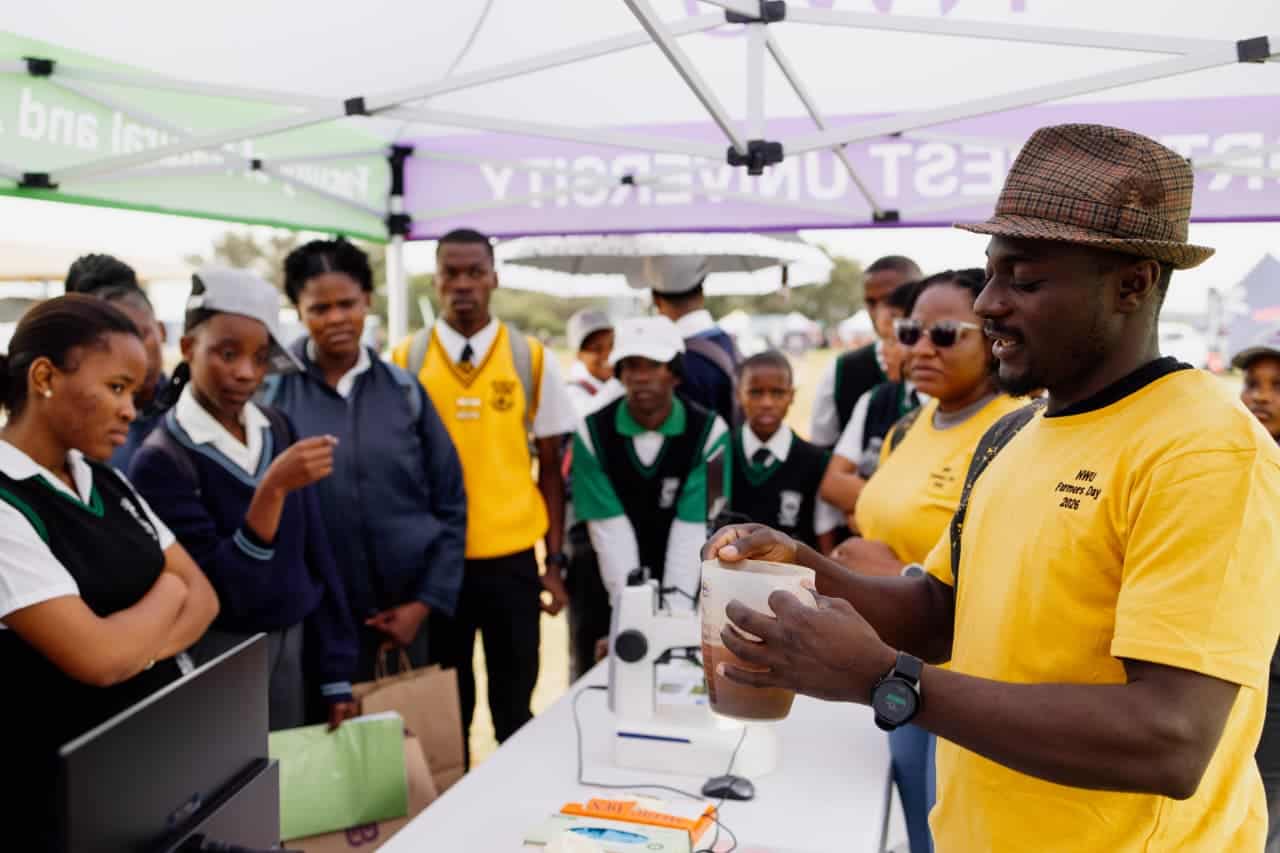
Practical work in the laboratory naturally makes up a large part of his work week, Cyprian explains. “I will be doing some sampling coming up which might take two weeks, so for this period I will be doing just fieldwork, and after that, the weeks coming will be just for lab work to process all the samples,” Cyprian explains.
“But also, a good amount of time is also allocated to reading and assisting other studies in processing data since we have some Master’s students in our group who are almost rounding up their master’s research,” he adds. “My study week is quite varied but always busy.”
The School of Agricultural Science at NWU is multidisciplinary at its core. In fact, the field is “much broader than many people realise,” Professor du Preez points out. “It brings together biology, ecology, chemistry, technology, economics and data science, while addressing some of society’s most important challenges: food security, climate resilience and sustainable use of natural resources.”
NWU projects bring together students, supervisors, industry professionals, and researchers from partner institutions, giving students the chance to learn across fields and develop problem-solving and analytical skills.
“I have become an interdisciplinary critical thinker,” explains Cyprian. “I have found myself working with agronomists, agricultural economists, nematologists, and sociologists.”
How NWU students create impact

Because agricultural science is such a varied field, opportunities to make a difference through research are endless.
Professor du Preez says Cyprian’s research, for example, will greatly improve understanding of soil ecosystems and parasites in Africa, helping farmers with crop production and management.
But the wide range of skills NWU students develop also means they’re suited to many careers beyond research. “Our graduates move into academia, research organisations, government, agricultural consulting and the private sector,” Professor du Preez says.
Though Cyprian believes he will likely move into an industry role in the future, for now he’s focused on continuing his research and is eyeing postdoc positions after his PhD.
“Capacity building has always been at the top of my list of things I should be doing, and with the limited knowledge in environmental nematology, this is where I think I will be creating impact,” he explains.
And while Cyprian would naturally be interested in creating impact on the ground in his home country of Cameroon, he knows that agricultural science can have an impact beyond just one country or region.
“I have always told myself that agricultural and environmental science doesn’t have boundaries,” he asserts. “So whether in another African country or out of Africa, the goal remains intact.”
For prospective students driven to make a difference in the world, Professor du Preez says agricultural science can be an incredibly rewarding field.
“Postgraduate students now have the opportunity to work across areas such as precision agriculture, soil health, regenerative agriculture, biotechnology and data-driven farming, often with a very direct connection to real production challenges,” he explains.
If you’re ready to start your career in agricultural science, there’s still time to apply to a programme at North-West University: postgraduate applications close on the 30th November.
Want to hear from more students before you apply? You can read hundreds of verified student reviews on North-West University’s EDUopinions profile.
Related Posts :





Recent Posts
Researchers in agricultural science solve some of the most pressing challenges of today’s society – food and water scarcity, crop damage, land ...

NHL Stenden University of Applied Sciences is among the best applied sciences universities in the Netherlands. The Dutch website Keuzegids ranks NHL ...

Bocconi University graduate Alessandro Izzo admits that his career in economic research wasn’t planned. “Research only came late for me. Honestly, I ...

If you want to study business in one of the most iconic cities in the world, there are few choices better than Paris. The presence of top-ranked ...