
- Studying abroad in France offers a unique opportunity to expand your network and immerse in a different culture.
- Key costs include tuition fees, living costs, and travel expenses, with Rennes and Toulouse being among the most affordable.
- Student discounts on transport and entertainment can help keep living expenses low while enjoying local cuisine and culture.
Studying abroad can be an exciting opportunity to expand your network, meet new people, and experience a different culture. It could also give you the opportunity to look for job opportunities in a dynamic job market outside of your home country. However, studying abroad also comes with additional costs that can make the decision of where to study more difficult. What if you want to study abroad in France? How much can you expect to pay as an international student?
There are lots of potential costs to think about as an international student, including:
- Tuition fees
- Living costs
- Visa fees
- Insurance
- Travel costs
The good news is that if you want to study in France, at least the first factor is going to be reasonably affordable. Public universities in France are known for their low tuition costs compared to the UK or the US, and the cost of fresh groceries and travel can also be kept to minimum.
But how much does it cost to study abroad in France in the best student cities? We took the most recent student city ranking from L’Etudiant magazine and explored all of the costs of living in the top five cities. Costs data comes from Numbeo, local university websites, and Campus France.

How Much Does It Cost to Study Abroad in France? Top 5 Cities
5. Caen

The third-largest municipality in Normandy, Caen is a bustling student town with hundreds of years of tumultuous history. As you study in this ancient city (its roots go back to Roman times), you can explore grand castles, abbeys, and medieval timber houses. Close to the sea and just two hours from Paris, Caen is an ideal choice if you want proximity to larger cities but with the affordability of a smaller town.
Student Costs in Caen
Rent
- University room: approx. €275
- Private residence: €450-€700
Food
- University restaurant meal: €3.30
- Loaf of bread: €0.85-€1.50
- Litre of milk: €0.80-€1.20
- Restaurant meal: €10-20
- Coffee: €1.50-€4
Entertainment
- Cinema ticket: approx. €8-€12
- University gym membership: €30 per year
- Private gym membership: €20-€30 per month
- Museum admission: €3-€5
Travel
- Urban transport pass: €22-€27 per month
- Single transport ticket: €1.60-€1.80
Average monthly living costs: €800
Student Review of Studying in Caen

University of Caen is knowing as one of the best ranking for the students life, located in the North of France in the religion of Normandy. The city has the diversity programs from law, health, economic,… They also offering the best services for supporting students from housing, paper documents and orientation.
4. Toulouse

If you want the feel of a big city without the cost, then Toulouse is for you. The fourth-largest city in France, Toulouse can go toe-to-toe with Paris and Lyon for culture. It’s home to the Couvent des Jacobins and the impressive Basilica of Saint-Sernin, plus Europe’s largest space centre – so there are lots of sight whether you’re studying humanities or science.
Student Costs in Toulouse
Rent
- University room: €190-€400
- Private residence: €300-600
Food
- University restaurant meal: €4
- Loaf of bread: €2-2.75
- Litre of milk: €0.85-€1.23
- Restaurant meal: €10-18
- Coffee: €1.50-€3.50
Entertainment
- Cinema ticket: approx. €8-€12
- Private gym membership: €20-€50 per month
- Museum admission: €5
Travel
- Urban transport pass: €28.20 per month
- Single transport ticket: €1.70-1.90
Average monthly living costs: €500-€700
Student Review of Studying in Toulouse

I have just finished my Master of Science in aeronautics at the ISAE Supaero university in Toulouse, one of the most prominent European universities in the field of aeronautics. I think one of the main strengths of the program is the emphasis on imparting practical knowledge. The entire master’s degree follows a continuous evaluation program through which the use of the most used programs in the aeronautical industry is taught. Which helped me a lot when building my CV and looking for a job.
The program offers a wide range of specializations to satisfy the professional aspirations of its students such as Space Systems, Automatic Control, Propulsion and Aerodynamics, Structures, Systems Engineering and Embedded Systems. In addition, all classes are taught by experts from aeronautical companies, which not only helps learning but also brings students closer to the industry. The exams are usually consistent with the material taught in class.
Besides Toulouse being a hub of the aerospace industry, finding an internship, even for those who don’t speak fluent French, shouldn’t be a challenge. In addition, there is a high probability of getting a permanent contract with the company after completing the internship, which makes Toulouse an excellent launching pad for a professional career, especially if you are an engineer.
In conclusion, Toulouse is a wonderful city to reside in, with comfortable, medium-sized surroundings offering a wide range of services and activities.
3. Rennes
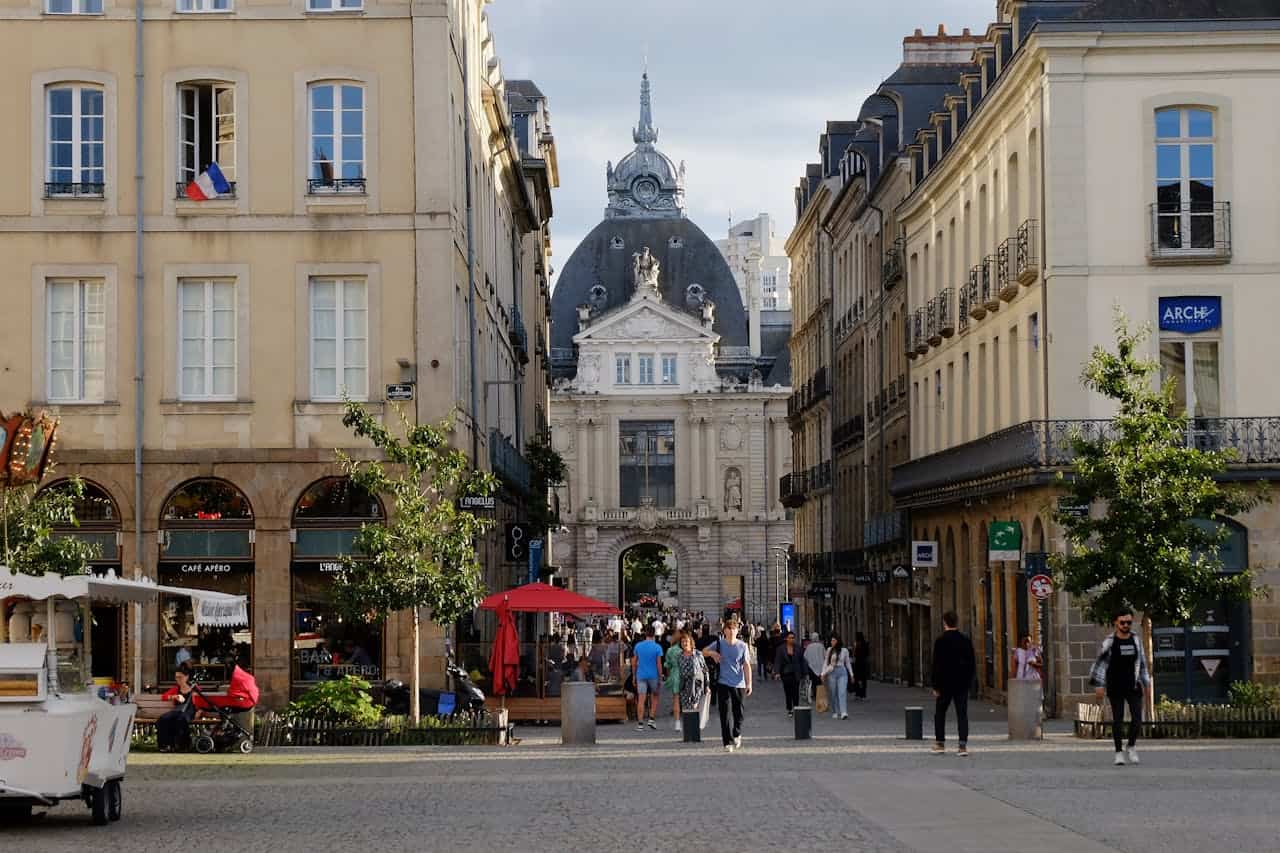
For a true taste of traditional French life, head to Rennes. This medieval Breton city is filled with historic architecture, bustling cafes, and a large student population. Just 90 minutes from Paris, it’s location is ideal for exploring the capital of France as well as the picturesque coastal towns in Brittany. There’s no wonder that almost 70,000 students (including 7,700 international students) make their way to Rennes each year.
Student Costs in Rennes
Rent
- University room: approx. €240
- Private residence: €350-€500
Food
- Loaf of bread: €1-4
- Litre of milk: €1-2.20
- Restaurant meal: €11-30
- Coffee: €1-5
Entertainment
- Cinema ticket: approx. €10
- Private gym membership: €20-€35 per month
- Museum admission: €0-€5
Travel
- Urban transport pass: €19-€25 per month
- Single transport ticket: €1.50-€5
Average monthly living costs: €500-€800
Student Review of Studying in Rennes
So far it has been a wonderful experience. The staff and school are incredibly welcoming and friendly. I was really involved in the first three weeks of campus events, which helped me learn more about what the campus has to offer. Although the classes are large and the atmosphere is friendly, I think this is my best experience yet. The campus is lovely, I love the public transit, and getting to classes and resources is easy.
2. Strasbourg
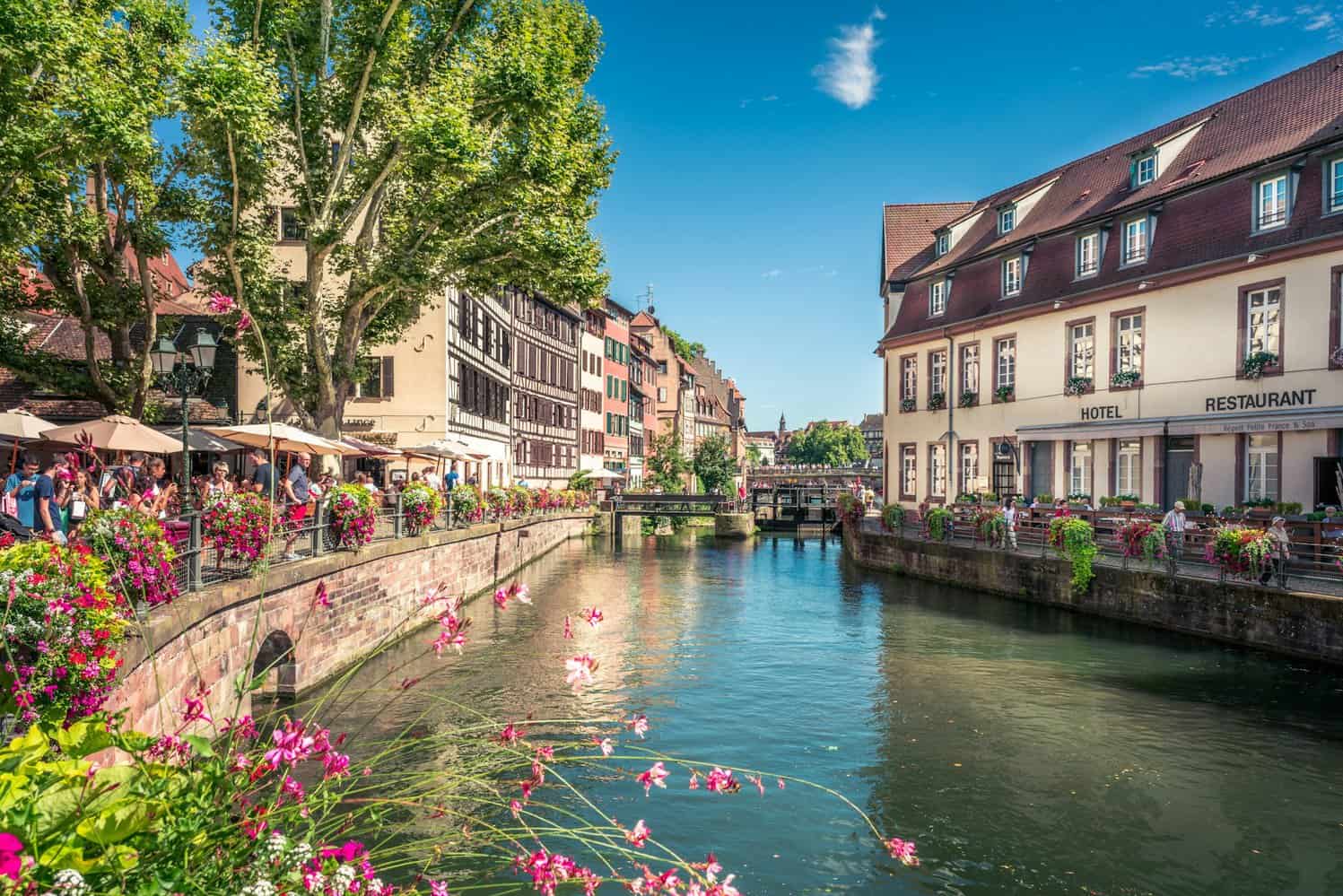
Strasbourg is a French town with a decidedly central-Europe feel. Close to the border with Germany and on the banks of the Rhine river, Strasbourg has a unique atmosphere: a blend of the modern and the traditional. The city is home to European institutions such as the European Parliament as well as impressive cathedrals and museums, so there’s plenty to explore in your downtime from studying.
Student Costs in Strasbourg
Rent
- University room: approx. €200
- Private residence: €400-€600
Food
- University restaurant meal: €3.25
- Loaf of bread: €1-€3.50
- Litre of milk: €0.84-€2.00
- Restaurant meal: €10-20
- Coffee: €1.50-€3.50
Entertainment
- Cinema ticket: approx. €5-€10
- Private gym membership: €20-€50 per month
- Museum admission: €3.50
Travel
- Urban transport pass: €24.40 per month
- Single transport ticket: €1.80-€2.10
Average monthly living costs: €750-€850
Student Review of Studying in Strasbourg
Strasbourg is a beautiful town, it’s the capital of Christmas and it’s an ecological town, which offers different amenities, but it’s very difficult to find accommodation in town. EM Strasbourg is a good business school, school schedule is flexible, there are a lot of diversity and diversity is not a problem here. The master in accounting is interesting and intensive but it I worth it. I recommend the school but if you have to come to Strasbourg prepare well and inform yourself
1. Montpellier
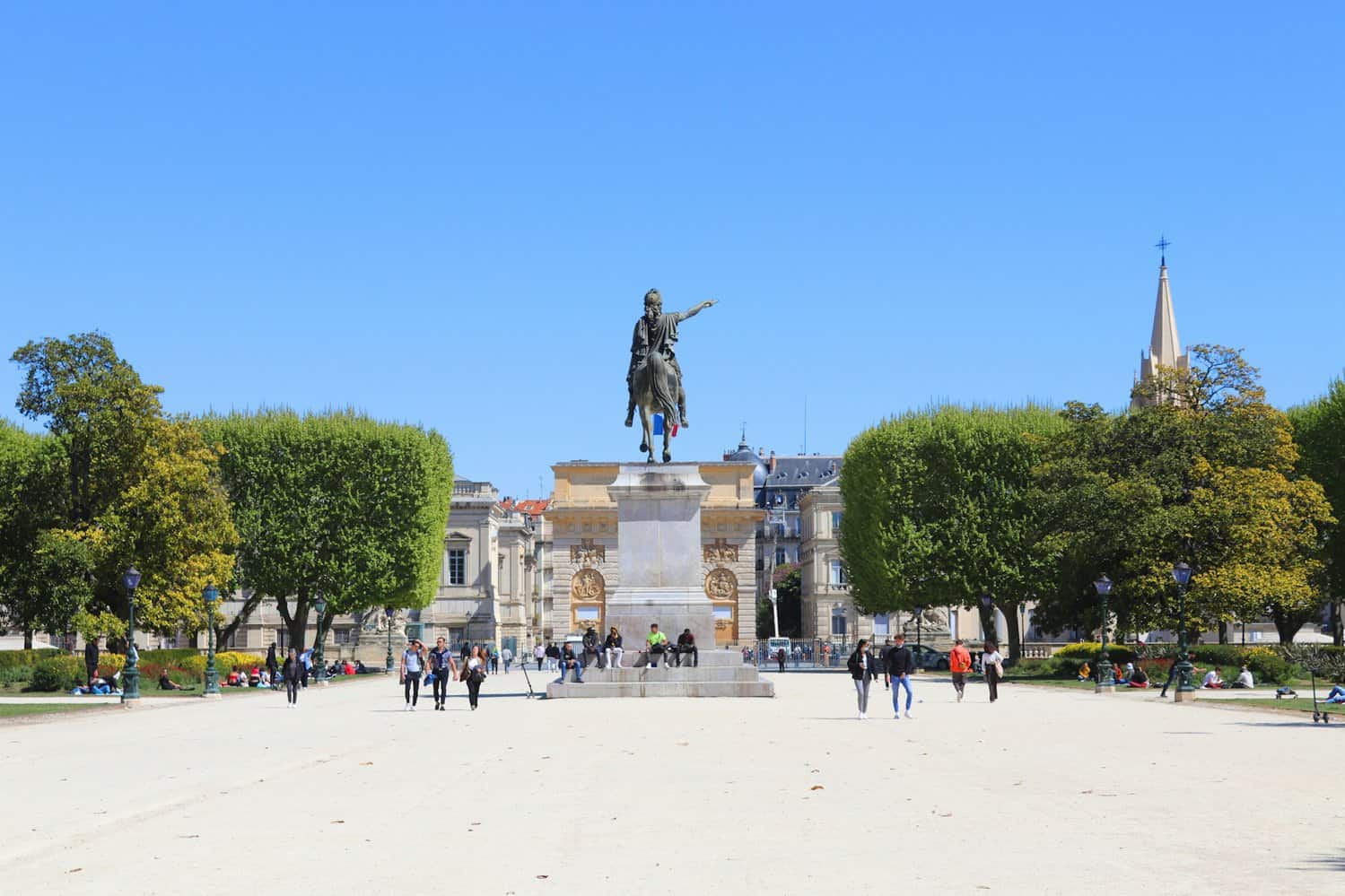
The only Mediterranean French city on this list, Montpellier is a popular choice for French and international students thanks to its sunny weather and bustling, modern culture. 43% of the city’s population is under the age of 30, with more than 75,000 students, making Montpellier the ideal place for students. With a calendar of cultural events and proximity to the Mediterranean coast and the ski resorts of the Alps, there’s a reason why Montpellier is the best student city in France.
Student Costs in Montpellier
Rent
- University room: approx. €300-€400
- Private residence: €500-€800
Food
- Loaf of bread: €1.69-€6
- Litre of milk: €0.80-€1.50
- Restaurant meal: €10-16
- Coffee: €1.50-€5
Entertainment
- Cinema ticket: approx. €8-€12
- Private gym membership: €20-€35 per month
- Museum admission: €0-€5
Travel
- Urban transport pass: €28 per month for people under 26
- Single transport ticket: €1-€1.60
Average monthly living costs: €700-€800
Student Review of Studying in Montpellier
As an international student at the University of Montpellier, I can say that it has been an exceptional experience. The university is a modern and dynamic institution, and the city of Montpellier is charming and full of life. The university offers a diverse range of courses and activities, and the staff and students are welcoming and friendly. I’ve particularly enjoyed exploring the local culture and making friends from all over the world.
Where is the cheapest place to study abroad in France?

Ultimately, any student city in France is going to be reasonably affordable compared to other locations in Europe – especially if you decide to avoid Paris, where living costs will be considerably higher.
However, according to our research, Rennes and Toulouse may be the cheapest places to study abroad in France! In these cities, you can eat out affordably and find rent in both student accommodation and private homes for less than other cities.
Conclusion
Regardless of where you choose to study in France, there are lots of ways to keep your costs to a minimum. Remember that for local transport, museums, and cinemas there are likely to be student discounts, so always take advantage!
Cooking food in your accommodation is always less expensive than eating out, and in France, this is a great excuse to try the fresh food available at local markets. From fruit and vegetables to fresh bread and dairy, you can eat some of the best produce in the region at home for considerably cheaper than a restaurant meal.
If you think you’ll struggle with your budget while studying abroad in France, another option is finding a part-time job during your studies. To find out more about whether this might be right for you, read our blog on the advantages and disadvantages of working while studying.

Related Posts :




Recent Posts

We created the EDUopinions Student Reviews Guide to highlight students' opinions of universities. All of the rankings we produce as part of the Guide ...

The University of Pécs in Hungary ranks among the top 1,000 universities in the world, and in the top 300 in Europe. Located in one of Hungary’s best ...

Want to boost your skills with an MBA, but don’t want to take time out from your job to study – or move abroad? An Online MBA means you can study the ...

North-West University is globally recognised for its strong teaching and research; it is ranked seventh in Africa and among the top 1,000 ...