Nasarawa State University Keffi - NSUK
speciality:
Communication
What is a Communications degree?
Communications is a universal degree, which explores the traditional forms of communication such as verbal, physical, visual and written communication but also extends beyond that to cover mass communication and social media. There are different types of communications degrees depending on the degree level.
Overall, Communications focuses on teaching effective communication through social media, web, print, mass media and verbal communication. However, there are two types of Communications degrees that exist. For instance, a Bachelor of Arts in Communications in the US is focused on preparing students for careers that are connected to writing, marketing, promotions, journalism and public relations. In contrast, Bachelor of Science in Communications is dedicated to the technology used in the science behind modern communication and prepares students for careers in production or sound engineering.
A Communications degree teaches students about how media and communication influences cultures, societies and people’s identities. It involves a significant amount of critical writing and research and covers different disciplines such as journalism, public relations, entertainment production, marketing, event planning and so many more disciplines, which are somehow connected to exchanging information and conveying messages. There are also different specialization options associated with this degree, including political communication, mass media, journalism, health communication, etc.
It is worth noting that a Communications degree has many intersection points with psychology, sociology, linguistics and in some cases politics.
Benefits of a Communications degree
The main benefit of a Communications degree is its universal nature. It applies to almost any subject or professional setting. For example, some of the top careers in the field of Communications include announcers, art directors, editors, broadcast and sound engineering technicians, reporters, correspondents, broadcast analysts, technical writers, writers and authors, interpreters, translators, etc. Therefore, it keeps students’ career options open and doesn’t require them to have a predetermined career path that they want to follow.
Communications degrees prepare students to make an impact from the start of their careers unlike other degrees, which require further training. This is possible thanks to the multitude of professionally accredited degrees in Communications, which develop students’ abilities based on the established standards in the field. Moreover, there are many Communications courses, which offer work placement opportunities that enable students to gain the required professional skills before they have even started their career.
Another benefit associated with Communications degrees is the fact that they develop students’ written and verbal communication skills significantly.
A major advantage of Communications over other degrees is that in most cases there are no prerequisites required to study Communications.
Communications degree structure
The duration of a Communications degree varies depending on the country and degree level. For example, Higher Education Institutions in the UK offer 3-year Bachelor’s courses. In some cases, the course may extend to four years if students are given the opportunity to spend a year abroad or in industry between the second and third year through a sandwich course. Bachelor’s degrees in Communications in the US usually take around four years to complete.
Over the duration of a Bachelor’s Communications degree, students are expected to learn and be able to apply the established communications theories by developing the technical skills required to work in a professional setting. In the first year of their studies, students learn predominantly how media and communication influences cultures, societies and people’s identities. Optional modules may introduce them to professional communication, journalism, documentary, film-making, marketing, etc. In addition to the introductory topics, this degree allows students to learn about more complex areas of communications such as interpersonal relations, brand management and linguistics at a later stage. For instance, the second and third years enable students to get a deeper understanding of theoretical concepts related to media and culture and develop practical skills in research and communications. Additionally, students may have the opportunity to take optional modules and pursue their interests in different areas related to Communications such as gender, race, youth, culture, digital media, political communication, public relations, etc.
The most common duration of a Master’s degree in Communications is between 1 and 2 years depending on the mode of study (full-time or part-time) and country.
PhD and MPhil degrees in Communications require students to dedicate anywhere between 3 and 6 years to their studies depending on the mode and country of study.
6 Student Reviews
-
Journalism and ...8 months ago
 StudentNGHelpful Lecturers and Friendly Campus
My experience at Nasarawa State University Keffi has been encouraging. The lecturers are approachable and passionate about their subjects, especially in the Mass Communication department. The school environment is peaceful, and the students are friendly, making it a good place to study and grow. One challenge is occasional delays in academic sessions, but overall, the learning experience is good. I would recommend NSUK to anyone looking for a solid education and a calm learning atmosphere.
View moreProgramme: Journalism and Mass CommunicationDegree: Bachelor'sGraduation: 2026Delivery Type: On CampusCampus: keffi -
Communication and ...8 months ago StudentNGMy University
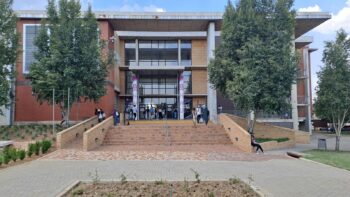
Nasarawa State University keffi otherwise known as NSUK is located in a very accessible,accommodating and lucrative. The lecturers are a bit punctual and try to attend classes but other times classes are cancelled a lot of times and essential materials needed for studies are not always provided on time. Accomodations around the school are quite expensive but lately constructions have been conducted to ensure better learning experience both in the classrooms, lecture theater and outside the learning area. More outside campus life activities should be conducted to promote communism amongst students and proper enlightenment on use of the online space most students cannot make use of the Google classroom or fill a Google form or participate in online tests in a digital era I think students need to be groomed on the use of the internet space.
View moreProgramme: Communication and Media StudiesDegree: Bachelor'sGraduation: 2026Delivery Type: On CampusCampus: keffi -
Journalism and ...03 Jan, 2025 StudentNGLack of balance in Academic teaching techniquesProgramme: Journalism and Mass CommunicationDegree: Bachelor'sGraduation: 2019Delivery Type: On CampusCampus: keffi
-
Journalism and ...03 May, 2024 StudentNGHow great is my school
My school is the best we have good and great infrastructures, it’s also a friendly environment.
View more
As amass communication student I love how far I have come, learning and doing practicals to be better . I also will recommend this school to anyoneProgramme: Journalism and Mass CommunicationDegree: Master'sGraduation: 2024Delivery Type: Online -
Communication13 Apr, 2024 StudentNGVISIT NSUK TO MAKE YOUR A TOP PRIORITY!
Flashing back to my experience at Nasarawa State University Keffi (NSUK); It was awesome anyways. As far back as 2014-2016, I had my masters degree there. The university indeed has a very strong academic standards with modern pedagogical approaches to learnings. The folks there are welcoming and the environment is friendly. My major dislike during my postgraduate years at NSUK was about the school not having hostel facilities for her postgraduate students. Though I recently heard and read that it was being proposed. Even the ones available back then for undergraduate students were insufficient. Opportunities abound at NSUK. Learnings are made easy through modern facilities and different learning centres. I encourage students who wish to school there to embrace the university for their professional and academic certifications.
View moreProgramme: CommunicationDegree: Master'sGraduation: 2016Delivery Type: On CampusCampus: keffi -
Journalism and ...20 Jun, 2022
 MaryamA school of fun and suffering
Well my school is actually just there. The good thing about it though is that the school calendar is very fast and this helps students to graduate faster. Also they have very good and outstanding lecturers with good degrees.
View more
The schools infrastructure is also impressive and they have planted trees and gardens to help with the hot sun. Apart from that the school is pretty stupid, the lecture halls are barely enough to fit the large amount of students available. It’s a pretty fun school thou the night life is wild and goodProgramme: Journalism and Mass CommunicationDegree: Bachelor'sGraduation: 2022Delivery Type: On CampusCampus: keffi