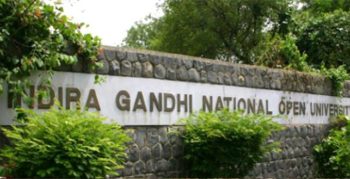
Indira Gandhi National Open University - IGNOU
speciality:
MBA
What is an MBA?
Master of Business Administration (MBA) is an internationally recognized degree, which has become one of the most popular professional degree programs in the contemporary world. MBAs are mostly taught in English and prepare students for careers in business and management by helping them develop technical managerial and leadership skills. Students develop these skills by working on real-world consulting projects and exploring different areas of the business field. The core subjects studied as part of an MBA program include accounting and finance, economics, marketing and operations. MBA programs usually offer students the opportunity to pick optional subjects as well, which allows students to dive deeper into areas that interest them the most and are relevant to their career aspirations.
Higher Education Institutions that offer MBA programs are highly likely to require students to have completed an internship at an organization or to have a few years of professional work experience.
Executive MBAs are also available at Institutions globally. They are different from the traditional MBA because they are aimed specifically at individuals who have extensive professional experience.
Benefits of an MBA
Having graduated with an MBA degree students have a wide choice of career options. They can find employment across different industries in both the public and private sectors and are not strictly limited to a career in business. MBAs also provide students with the opportunity to explore different business functions, such as accounting, operations, marketing, etc., and understand how each of them works. This increases their resilience and flexibility and enables them to work in different departments of an organization.
Throughout their programs, students gain practical experience and valuable skills as well as tackle challenges faced by business professionals in a real-world business setting by working on consulting projects. They develop important skills and knowledge thanks to the collaborative work with classmates which is common in MBA programs.
MBA programs also offer multiple opportunities for students to expand their network. Meeting people who they may collaborate with in the future creates many professional opportunities, such as finding a new job, transitioning to another industry or starting a business.
Additionally, the completion of an MBA degree is a prerequisite for quicker career progression and higher salaries. Individuals become more likely to land jobs high up in the organizational hierarchy, such as executive positions, or find employment abroad by completing an MBA degree program.
Last but not least, there are numerous part-time and online MBA degree programs, which offer high flexibility. Such programs enable individuals who are currently developing their professional careers to fit their studies into their busy schedules. Students on such programs are able to do the required work at the most convenient time and place for them without having to commit a full year (or two) to their studies. Sometimes MBA programs may be offered in the form of a hybrid between online and on-campus delivery, which provides the best of both worlds. Students enjoy the flexibility of an on-line program but also get that on-campus experience.
MBA Structure
The average duration of a full-time MBA program is 18 months (or about 2 years). However, 1-year MBA programs are gaining popularity around the world. It is important to note that the duration of MBA programs may be largely influenced by the mode of study (part-time or full-time) and the type of the program (e.g. online or hybrid).
The traditional MBA is followed by EMBAs, which take 20 months to complete, and professional MBAs, which take 26 months to complete.
1 Student Reviews
-
MBA12 Mar, 2025
 ShaileshINIGNOU Review: A Leader in Distance Education
1. Academic Programs and Curriculum
Indira Gandhi National Open University (IGNOU) is one of the largest open universities in the world, offering a wide range of undergraduate, postgraduate, diploma, and certificate programs across multiple disciplines. The curriculum is designed to be flexible, catering to working professionals and students who require distance learning options. However, while the course content is comprehensive, some programs may need periodic updates to align with industry trends.2. Faculty and Teaching Quality
IGNOU follows a unique teaching approach that combines printed study materials, online lectures, and contact classes at study centers. The faculty consists of experienced academicians and industry experts. However, since most learning happens remotely, students’ experiences may vary based on the quality of local study centers and the responsiveness of faculty.3. Campus Facilities and Resources
As an open university, IGNOU does not have a traditional campus environment but operates through a vast network of regional and study centers across India and abroad. The university provides digital resources such as an e-library, online learning portals, and video lectures. However, the availability of physical resources depends on the facilities at specific regional centers.4. Student Support Services
IGNOU offers student support through its regional centers, helplines, and online portals. While the university has made efforts to digitize services, students often face delays in responses related to assignments, exam queries, and study material dispatch. Enhancing the efficiency of student support services would significantly improve the overall experience.5. Research Opportunities
IGNOU supports research programs, particularly in education, social sciences, and management. The university also encourages faculty-led research and provides opportunities for students pursuing M.Phil. and Ph.D. programs. However, research exposure for undergraduate and master’s students remains limited due to the distance learning model.6. Extracurricular Activities
Since IGNOU is primarily a distance learning institution, traditional extracurricular activities such as clubs, sports, and campus events are not a part of student life. However, some regional centers conduct workshops, seminars, and cultural programs for student engagement.7. Campus Life and Diversity
IGNOU serves a highly diverse student base, including working professionals, homemakers, differently-abled students, and those from rural areas. The flexible study model allows learners to balance education with personal and professional commitments. While there is no typical “campus life,” online forums and regional meetups help students interact and build networks.8. Career Placement and Alumni Network
Unlike traditional universities, IGNOU does not have a centralized placement cell. However, the university collaborates with various industries and government bodies to provide skill-based training and career development workshops. Many IGNOU alumni have successfully secured positions in public and private sectors. Strengthening alumni networking and corporate partnerships could further enhance career prospects for students.9. Financial Aid and Affordability
One of IGNOU’s biggest strengths is its affordability. The university offers high-quality education at a fraction of the cost of traditional universities. Scholarships and fee concessions are available for economically weaker sections, differently-abled students, and reserved category students.10. Overall Impressions and Recommendations
IGNOU is an excellent choice for students seeking flexible, affordable, and quality education through distance learning. It is particularly beneficial for working professionals, second-degree seekers, and those who cannot attend regular college due to personal commitments. However, students looking for a conventional university experience with classroom learning and campus life may find other institutions more suitable.Final Rating: 4.2/5
✅ Pros: Affordable, flexible learning, wide course selection, and global reach.
❌ Cons: Limited student interaction, occasional administrative delays, and lack of campus experience.Recommendation: If you need a self-paced education with recognized degrees and certifications, IGNOU is an excellent option. However, students should stay proactive in managing assignments, exams, and communications with study centers to get the most out of their courses.
View moreProgramme: MBADegree: Master'sGraduation: 2025Delivery Type: BlendedCampus: Nagpur