
Universidade de São Paulo - USP
speciality:
Communication
What is a Communications degree?
Communications is a universal degree, which explores the traditional forms of communication such as verbal, physical, visual and written communication but also extends beyond that to cover mass communication and social media. There are different types of communications degrees depending on the degree level.
Overall, Communications focuses on teaching effective communication through social media, web, print, mass media and verbal communication. However, there are two types of Communications degrees that exist. For instance, a Bachelor of Arts in Communications in the US is focused on preparing students for careers that are connected to writing, marketing, promotions, journalism and public relations. In contrast, Bachelor of Science in Communications is dedicated to the technology used in the science behind modern communication and prepares students for careers in production or sound engineering.
A Communications degree teaches students about how media and communication influences cultures, societies and people’s identities. It involves a significant amount of critical writing and research and covers different disciplines such as journalism, public relations, entertainment production, marketing, event planning and so many more disciplines, which are somehow connected to exchanging information and conveying messages. There are also different specialization options associated with this degree, including political communication, mass media, journalism, health communication, etc.
It is worth noting that a Communications degree has many intersection points with psychology, sociology, linguistics and in some cases politics.
Benefits of a Communications degree
The main benefit of a Communications degree is its universal nature. It applies to almost any subject or professional setting. For example, some of the top careers in the field of Communications include announcers, art directors, editors, broadcast and sound engineering technicians, reporters, correspondents, broadcast analysts, technical writers, writers and authors, interpreters, translators, etc. Therefore, it keeps students’ career options open and doesn’t require them to have a predetermined career path that they want to follow.
Communications degrees prepare students to make an impact from the start of their careers unlike other degrees, which require further training. This is possible thanks to the multitude of professionally accredited degrees in Communications, which develop students’ abilities based on the established standards in the field. Moreover, there are many Communications courses, which offer work placement opportunities that enable students to gain the required professional skills before they have even started their career.
Another benefit associated with Communications degrees is the fact that they develop students’ written and verbal communication skills significantly.
A major advantage of Communications over other degrees is that in most cases there are no prerequisites required to study Communications.
Communications degree structure
The duration of a Communications degree varies depending on the country and degree level. For example, Higher Education Institutions in the UK offer 3-year Bachelor’s courses. In some cases, the course may extend to four years if students are given the opportunity to spend a year abroad or in industry between the second and third year through a sandwich course. Bachelor’s degrees in Communications in the US usually take around four years to complete.
Over the duration of a Bachelor’s Communications degree, students are expected to learn and be able to apply the established communications theories by developing the technical skills required to work in a professional setting. In the first year of their studies, students learn predominantly how media and communication influences cultures, societies and people’s identities. Optional modules may introduce them to professional communication, journalism, documentary, film-making, marketing, etc. In addition to the introductory topics, this degree allows students to learn about more complex areas of communications such as interpersonal relations, brand management and linguistics at a later stage. For instance, the second and third years enable students to get a deeper understanding of theoretical concepts related to media and culture and develop practical skills in research and communications. Additionally, students may have the opportunity to take optional modules and pursue their interests in different areas related to Communications such as gender, race, youth, culture, digital media, political communication, public relations, etc.
The most common duration of a Master’s degree in Communications is between 1 and 2 years depending on the mode of study (full-time or part-time) and country.
PhD and MPhil degrees in Communications require students to dedicate anywhere between 3 and 6 years to their studies depending on the mode and country of study.
1 Student Reviews
-
Jourmalism and ...9 months ago
 LucasBRRanked 1st in LatAm for a reason
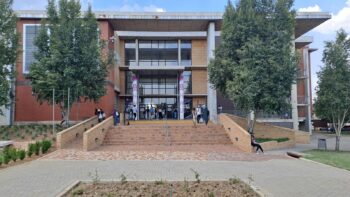
The campus stands out in the metropolis of São Paulo. The green-filled streets, bike lanes and sheer size of the structures are a city inside a city. That, for a graduate life, makes the absolute difference. When it comes to physical space and living the university, USP is unmatched.
As the biggest university in the country, the variety of thought and extra courses offered are a great addition to the student’s development. The bridge between the campus and innovation/ job market is a visible priority.
Some criticism needs to be addressed. Although often ranked high, it has to be said that some courses do feel stagnated, as if held back by antiquated curriculum or accommodated personal. Mine in specific (Communications) is an example: important adaptations always come late to a ever-changing area, and the many professor don’t seem to bother to update themselves.
Nevertheless, a great university that offers an exceptional campus, the possibility to live the graduate life like few other places, and the opportunity to expand critical thinking as it should be.
View moreProgramme: Jourmalism and MediaDegree: Bachelor'sGraduation: 2025Delivery Type: On CampusCampus: Sao Paulo