Universidad Nacional de Córdoba - UNC
speciality:
Communication
What is a Communications degree?
Communications is a universal degree, which explores the traditional forms of communication such as verbal, physical, visual and written communication but also extends beyond that to cover mass communication and social media. There are different types of communications degrees depending on the degree level.
Overall, Communications focuses on teaching effective communication through social media, web, print, mass media and verbal communication. However, there are two types of Communications degrees that exist. For instance, a Bachelor of Arts in Communications in the US is focused on preparing students for careers that are connected to writing, marketing, promotions, journalism and public relations. In contrast, Bachelor of Science in Communications is dedicated to the technology used in the science behind modern communication and prepares students for careers in production or sound engineering.
A Communications degree teaches students about how media and communication influences cultures, societies and people’s identities. It involves a significant amount of critical writing and research and covers different disciplines such as journalism, public relations, entertainment production, marketing, event planning and so many more disciplines, which are somehow connected to exchanging information and conveying messages. There are also different specialization options associated with this degree, including political communication, mass media, journalism, health communication, etc.
It is worth noting that a Communications degree has many intersection points with psychology, sociology, linguistics and in some cases politics.
Benefits of a Communications degree
The main benefit of a Communications degree is its universal nature. It applies to almost any subject or professional setting. For example, some of the top careers in the field of Communications include announcers, art directors, editors, broadcast and sound engineering technicians, reporters, correspondents, broadcast analysts, technical writers, writers and authors, interpreters, translators, etc. Therefore, it keeps students’ career options open and doesn’t require them to have a predetermined career path that they want to follow.
Communications degrees prepare students to make an impact from the start of their careers unlike other degrees, which require further training. This is possible thanks to the multitude of professionally accredited degrees in Communications, which develop students’ abilities based on the established standards in the field. Moreover, there are many Communications courses, which offer work placement opportunities that enable students to gain the required professional skills before they have even started their career.
Another benefit associated with Communications degrees is the fact that they develop students’ written and verbal communication skills significantly.
A major advantage of Communications over other degrees is that in most cases there are no prerequisites required to study Communications.
Communications degree structure
The duration of a Communications degree varies depending on the country and degree level. For example, Higher Education Institutions in the UK offer 3-year Bachelor’s courses. In some cases, the course may extend to four years if students are given the opportunity to spend a year abroad or in industry between the second and third year through a sandwich course. Bachelor’s degrees in Communications in the US usually take around four years to complete.
Over the duration of a Bachelor’s Communications degree, students are expected to learn and be able to apply the established communications theories by developing the technical skills required to work in a professional setting. In the first year of their studies, students learn predominantly how media and communication influences cultures, societies and people’s identities. Optional modules may introduce them to professional communication, journalism, documentary, film-making, marketing, etc. In addition to the introductory topics, this degree allows students to learn about more complex areas of communications such as interpersonal relations, brand management and linguistics at a later stage. For instance, the second and third years enable students to get a deeper understanding of theoretical concepts related to media and culture and develop practical skills in research and communications. Additionally, students may have the opportunity to take optional modules and pursue their interests in different areas related to Communications such as gender, race, youth, culture, digital media, political communication, public relations, etc.
The most common duration of a Master’s degree in Communications is between 1 and 2 years depending on the mode of study (full-time or part-time) and country.
PhD and MPhil degrees in Communications require students to dedicate anywhere between 3 and 6 years to their studies depending on the mode and country of study.
4 Student Reviews
-
Information and ...4 months ago
 Jesus OscareARUniversality and variety
The National University of Córdoba is one of the most important academic institutions in Argentina and Latin America. Founded in 1613, it has educated key figures such as Arturo Illia, leaders of the 1918 University Reform such as Deodoro Roca, and numerous scientists, professionals, and leaders who have shaped Argentine history.
The National University of Córdoba (UNC) has a strong national and international presence, with outstanding projects in health, science, technology, astronomy, and social sciences, in collaboration with universities and organizations worldwide. Its wide range of academic programs attracts thousands of students each year from all Argentine provinces and abroad, making Córdoba a diverse, pluralistic, and globally connected educational hub.
View moreProgramme: Information and Communication Systems EngineeringDegree: Bachelor'sGraduation: 2028Delivery Type: BlendedCampus: Cordoba -
Digital Communication12 months ago Sabrina MagalíARGreat academic environment
The quality of the professors and the strong theoretical foundation
I studied Social Communication at UNC and overall, I had a very enriching experience. The professors were highly trained, committed, and always willing to guide students. The academic environment encouraged critical thinking and a deep understanding of communication theories. However, one major downside was the outdated curriculum. Many subjects didn’t reflect the current trends or tools used in the professional field, which sometimes made it hard to connect theory with modern practice. Despite that, I would definitely recommend the program for its academic strength and the prestige of the university.
View moreProgramme: Digital CommunicationDegree: Bachelor'sGraduation: 2024Delivery Type: On CampusCampus: Cordoba -
Journalism and ...30 Nov, 2022 StudentGBWonderful and worthwhile university
I attended UNC, specifically the Communication Faculty, from 2008 to 2015. There I studied Communications Sciences. UNC is one of the best universities in Argentina, rich in history and cultural heritage. I feel very happy and proud that I was once part of such a remarkable institution.
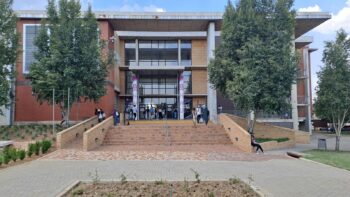
The university has a really big campus, which encompasses libraries, a bar-cafeteria, different sports fields and a variety of buildings, each one corresponding to different faculties.
Most of the buildings are old but well-maintained, the classrooms are spacious, comfortable and have good illumination. On the bad side, sometimes the sound is not so good.Another great aspect of UNC that I really enjoyed is the people who work there. From professors to assistant teachers, they are excellent professionals. Highly qualified in their respective fields, most of them have excellent qualifications and are very committed to their job, to offer the best of their knowledge to the students.
Pro: It’s free, there aren’t so many universities in the world where you can study for free.
Con: Even back in the day, when I was studying, it felt like the programs were old, and needed an update. I think this varies from faculty to faculty, but this was definitely an issue.
Overall, I would say that my experience was very positive. I enjoyed being a student there. I have good memories of the people that I got to know, of the professors, the lessons, and of the time in general that I spent there. Even more importantly, my bachelor’s degree has given me the opportunity to work in the marketing and communications fields, in a variety of companies in Argentina and abroad. It was constructive and beneficial to me, on both a personal and professional level. I would highly recommend and encourage people to attend UNC and study there.
View moreProgramme: Journalism and Mass CommunicationDegree: Bachelor'sGraduation: 2015Delivery Type: On CampusCampus: Cordoba -
Audiovisual Communication07 Feb, 2022
 JuliTradition and innovation
UNC is a public university with one of the largest trajectories in Latin America.
View more
It was pure inspiration to be a student there for 5 years, and I could be an even more accurate option for young communicators if the government would invest more in infrastructure and tech.Programme: Audiovisual CommunicationDegree: Bachelor'sGraduation: 2022Delivery Type: On CampusCampus: Cordoba