APJ Abdul Kalam Technological University - APJAKTU
speciality:
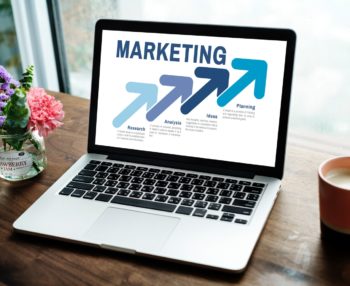
Marketing
What Is a Marketing Degree?
A business cannot survive if its products are not marketed in the proper way. Luckily for all the businesses out there, the number of candidates wanting to pursue a marketing career is growing tremendously.
The aim of this degree is to help students anticipate, manage, and satisfy customers’ needs and wants. By doing so, they will be able to effectively communicate the benefits of any business product to the targeted market.
Due to the fact that marketing is a complex industry, which tackles many areas ranging from market research to advertising and promotion, this degree focuses on all parts of the process before concentrating on a particular area of study.
Benefits of a Marketing Degree
Good news for marketing graduates! If you did not know yet, marketing is an essential aspect of all types of businesses, from all sectors of activity. Thus, all of them rely on marketers to promote and sell their products. A high market demand comes with many job opportunities available.
According to Labor Department Findings, graduates with a marketing degree can earn 98% more per hour than the ones working in the industry without having a specialised degree.
Furthermore, students are equipped with transferable skills, such as excellent communication abilities, strategic thinking, planning, data analysis and so on, that can be used in other industries too.
Marketing Degree Structure
Marketing degrees can be studied either as Bachelor of Arts (BA) or Bachelor of Science (BSc). The major difference lies in the presence of more scientific and technological aspects, which are commonly seen in a BSc rather than a BA.
Like most degrees, marketing courses last between three and four years, depending on the university. However, there are institutions which give students the possibility to do a two-year associate’s degree – also called a ‘foundation’ degree.
Even if graduating from both degrees qualifies candidates to work in this industry, a Bachelor degree has higher chances to lead you to well-paid jobs.
1 Student Reviews
-
Marketing29 Apr, 2025
 StudentINBTech (IT) AKTU (2011–2015): Mixed Experience
Academic Experience: Faculty were supportive and engaged, but the curriculum was overly theoretical, with limited practical exposure and neglected lab work.
Industry Exposure & Placements: Minimal corporate exposure and few internship opportunities. Placement support was mostly for top-tier colleges, leaving others with little assistance.
Administration & Transparency: Lack of transparency in grading, with frequent rumors of bias. The reappear process was frustrating due to technical glitches on the website.
Post-Graduation Support: Retrieving degree certificates or marksheets post-graduation, especially after 2020, was a tedious and unclear process.
Campus Facilities: Facilities varied greatly between affiliated colleges, with some lacking basic resources and updated labs.
Final Thoughts: AKTU suits self-driven students but needs better practical learning, improved administration, and more robust placement support.
View moreProgramme: MarketingDegree: Master'sGraduation: 2018Delivery Type: On CampusCampus: Thiruvananthapuram