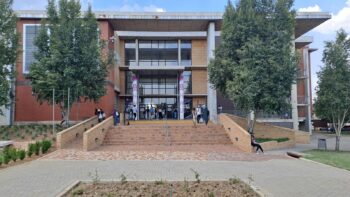
University of Applied Sciences - HTW Berlin
speciality:
Economics
What Is an Economics Degree?
Are you passionate about the business and finance sector? Do you follow the national and international news? Then, an Economics degree is the answer. It has always been one of the most sought-after degrees amongst youth.
Economics degrees are designed to tackle all the issues that have an impact on financial situations, ranging from production to how resources are used. Candidates are trained to understand how the economy suffers fluctuations based on the market’s needs and wants followed by the market’s supply and demand.
By far one of the most crucial elements is that economics is divided into microeconomics and macroeconomic. Microeconomics deals with the economic behaviour at an individual level (companies, buyers, sellers and others), whilst macroeconomics illustrates the bigger picture, on a national or global scale (unemployment, economic growth, inflation and so on).
Benefits of an Economics Degree
Having an economics degree increases anyone’s chances to find a job, regardless of the field. This is mainly due to the fact that graduates hold many transferable abilities, such as analytical and problem-solving skills, that are suitable for any career.
A study made by the London School of Economics and Political Science showed that graduates from an economics course have a starting salary of £33,000 per year. Having a job in the field right after graduation is a major positive aspect and comes with a lot of opportunities for career advancement.
Economics Degree Structure
Economics degrees are usually a three years commitment and sometimes are offered as part of a joint degree. This means that Economics can be studied along with another subject such as engineering, management, law, computer science and others.
This degree can be found either as a Bachelor of Science (BSc) or Bachelor of Arts (BA). The BSc focuses more on economical theory and statistical techniques, while BA is combined with social sciences and qualitative modules.
1 Student Reviews
-
Development Economics28 Jan, 2025
 StudentStrong Foundations, but Needs Practical Exposure
As a current student in the Master’s in Development Economics program, I have found it to be a rich and diverse learning experience that offers a solid foundation in both theoretical and applied aspects of the field. The program’s strengths lie in its interdisciplinary approach, blending economics with development policy, and its emphasis on critical thinking, which encourages students to engage with complex global challenges like climate change, inequality, and sustainable development.
Strengths:
Diverse Curriculum: The program covers a wide range of topics, from quantitative methods to development theories and case studies, giving students the tools to analyze real-world problems effectively.
Engaged Faculty: Professors are knowledgeable and approachable, often encouraging debate and offering valuable insights drawn from their research and field experience.
Networking Opportunities: The program provides opportunities to connect with international students and professionals through seminars, workshops, and conferences.
Flexibility for Research Interests: The ability to tailor the thesis and research projects to your specific interests is a significant advantage, especially for those wanting to explore niche areas.Areas for Improvement:
Practical Experience: While the theoretical foundation is strong, there is a noticeable gap in opportunities for hands-on learning, such as internships or fieldwork integrated into the curriculum.
Lack of Career Guidance: More structured career support, such as mentorship programs or partnerships with development organizations, would be beneficial for students preparing for the job market.
View more
Overall, the program is a great fit for students passionate about exploring development economics through a critical lens and those aiming to contribute to meaningful change in their careers.Programme: Development EconomicsDegree: Master'sGraduation: 2026Delivery Type: On CampusCampus: Berlin