University of National and World Economy - UNWE
speciality:
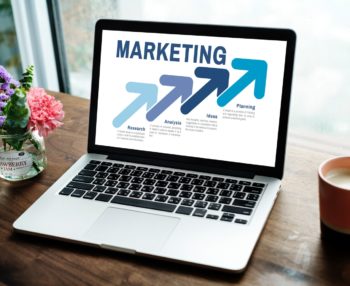
Marketing
What Is a Marketing Degree?
A business cannot survive if its products are not marketed in the proper way. Luckily for all the businesses out there, the number of candidates wanting to pursue a marketing career is growing tremendously.
The aim of this degree is to help students anticipate, manage, and satisfy customers’ needs and wants. By doing so, they will be able to effectively communicate the benefits of any business product to the targeted market.
Due to the fact that marketing is a complex industry, which tackles many areas ranging from market research to advertising and promotion, this degree focuses on all parts of the process before concentrating on a particular area of study.
Benefits of a Marketing Degree
Good news for marketing graduates! If you did not know yet, marketing is an essential aspect of all types of businesses, from all sectors of activity. Thus, all of them rely on marketers to promote and sell their products. A high market demand comes with many job opportunities available.
According to Labor Department Findings, graduates with a marketing degree can earn 98% more per hour than the ones working in the industry without having a specialised degree.
Furthermore, students are equipped with transferable skills, such as excellent communication abilities, strategic thinking, planning, data analysis and so on, that can be used in other industries too.
Marketing Degree Structure
Marketing degrees can be studied either as Bachelor of Arts (BA) or Bachelor of Science (BSc). The major difference lies in the presence of more scientific and technological aspects, which are commonly seen in a BSc rather than a BA.
Like most degrees, marketing courses last between three and four years, depending on the university. However, there are institutions which give students the possibility to do a two-year associate’s degree – also called a ‘foundation’ degree.
Even if graduating from both degrees qualifies candidates to work in this industry, a Bachelor degree has higher chances to lead you to well-paid jobs.
1 Student Reviews
-
Marketing and ...13 months agoYoanaBGFull of opportunities, more or less good
Education & Curriculum
The quality of education here is okay overall. As in many universities, there are professors who are extremely dedicated and willing to go above and beyond to help students learn, but there are also others who seem more motivated by the prestige of the position rather than teaching as a true vocation. Funnily enough this is the weakest point in the university for me.The curriculum itself is fairly well-structured and follows a standard European model. However, one of its drawbacks is the lack of flexibility. Most of the courses feel preset, with limited opportunities to choose electives or explore additional subjects. Another challenge is that some of the materials and teaching methods feel outdated, and there is little emphasis on incorporating modern tools like AI into the learning process. At times, this lack of innovation and enthusiasm among certain staff members can be demotivating.
Administration & Bureaucracy
On the positive side, the university’s administrative system works quite efficiently—especially by Bulgarian standards. Many processes can be completed online, which makes things smoother for students. While there is still room for improvement, the administration generally feels well-organized and responsive.Opportunities & Extracurricular Activities
One of the strongest aspects of the university is the wide range of opportunities it offers. The institution is very active in organizing programs, workshops, and extracurricular academies. I personally benefited from two Erasmus exchange semesters, which were incredibly valuable experiences and easy to access through the university. These opportunities broaden learning beyond the classroom and allow students to explore new interests and perspectives.Since it’s a public university, the tuition fees are very accessible, which is a big advantage. For the price you pay, you actually get access to a wide range of opportunities. That being said, it’s also unrealistic to expect the quality to be above and beyond, given how affordable it is,
Overall Impression
View more
After four years here, I can say I’ve learned a lot, but I also feel I could have learned much more if the system were more modern, flexible, and engaging. The combination of outdated material and sometimes unmotivated teaching can hold students back. However, the international exposure, extracurricular activities, and administrative efficiency tip the balance toward a more positive overall experience.Programme: Marketing and StrategyDegree: Bachelor'sGraduation: 2026Delivery Type: On CampusCampus: Sofia