
- Master’s in Sustainability Management delivers applied, interdisciplinary learning so graduates can implement sustainability within organisations and strategy, says Ekhi Atutxa.
- Professionals with sustainability and climate transition skills have a 46.6% higher hire rate, boosting graduate employability, per LinkedIn data.
- The Deusto Business School Bilbao campus supports sustainability learning within the University of Deusto humanist ethos of ethics and responsibility.
Addressing sustainability is one of the most pressing challenges for businesses today. The topic is, as University of Deusto – Deusto Business School associate professor Ekhi Atutxa remarks, “more relevant than ever.”
It’s this mindset that has inspired the creation of Deusto Business School’s new Master’s in Sustainability Management, which Ekhi leads as programme director. The degree prioritises hands-on and applied learning, ensuring students gain a broad understanding of global sustainability challenges and the ability to actively contribute solutions.
This practical approach to a complex topic has benefits not just for companies, but for business graduates. According to LinkedIn hiring data, professionals with skills related to sustainability and the climate transition have a hire rate 46.6% higher than the average for the overall workforce.
“Sustainability is no longer just an environmental or ethical issue,” explains Ekhi. “It has become a matter of economic security, resilience, and strategy. This requires a much more sophisticated approach than in the past.”
Sustainability foundations with interdisciplinary knowledge
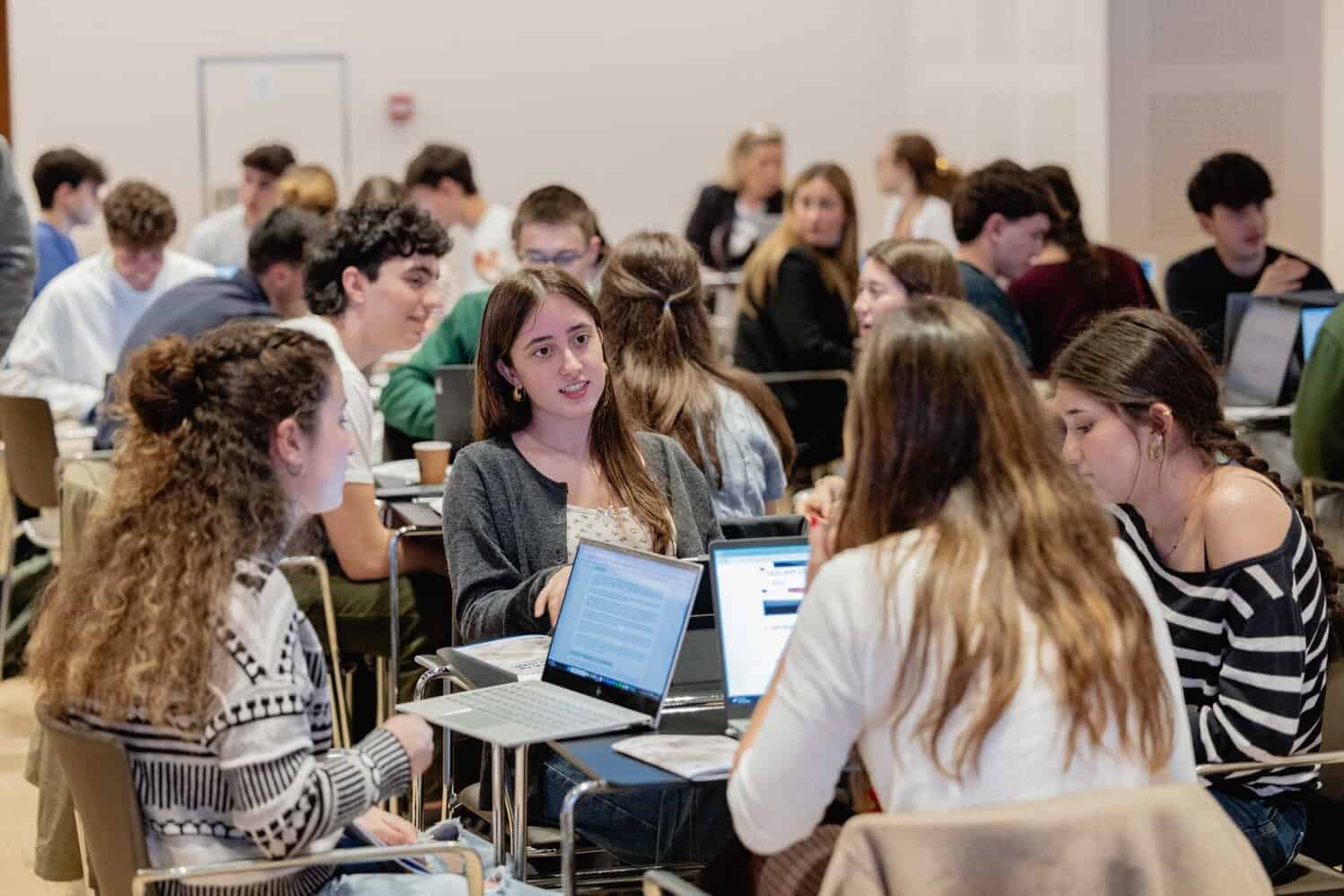
Although the English-taught Master’s programme is led by Deusto Business School at the University of Deusto, it is not only designed for students with a business background. Instead, students with backgrounds in Social Sciences and Humanities, Law, and Engineering and Architecture are also well-placed to benefit from the degree.
Over the one-year programme, students gain a foundational understanding of sustainability before exploring interdisciplinary topics such as change management, reporting, and sustainable business models.
“In practice, this means that graduates are better equipped to connect different perspectives, interpret complex situations, and make informed decisions in environments where economic, regulatory, technological, and social factors are deeply intertwined,” says Ekhi.
“We are looking for students who want to go beyond understanding sustainability as a concept and instead learn how to apply it within organisations, strategies, and decision-making processes,” he adds.
Applying sustainable practices to real companies
The ability to plan and implement solutions in such a complex, interconnected area as sustainability is an invaluable skill – and one that businesses are actively seeking in new green hires.
In addition to exploring sustainability as an interdisciplinary topic, students in the Master’s in Sustainability Management programme have numerous opportunities to meet company leaders across sectors and learn about real-world sustainability challenges.
For example, professionals from industries such as energy, finance, and agri-food participate as lecturers in the core module Understanding the Industry, allowing students to connect classroom learning with the real world.
“These are not hypothetical case studies,” notes Ekhi, “but real issues that organisations are currently facing; from integrating sustainability into business models to managing regulatory pressures or transitioning operations.”
“This approach allows students to develop the ability to apply concepts in complex, real-world contexts, where trade-offs, uncertainty, and multiple stakeholders are always present. We believe that this combination of academic reflection and real-world problem-solving is one of the most effective ways to prepare professionals for the roles they will take on after graduation.”
A unique perspective at Deusto Business School
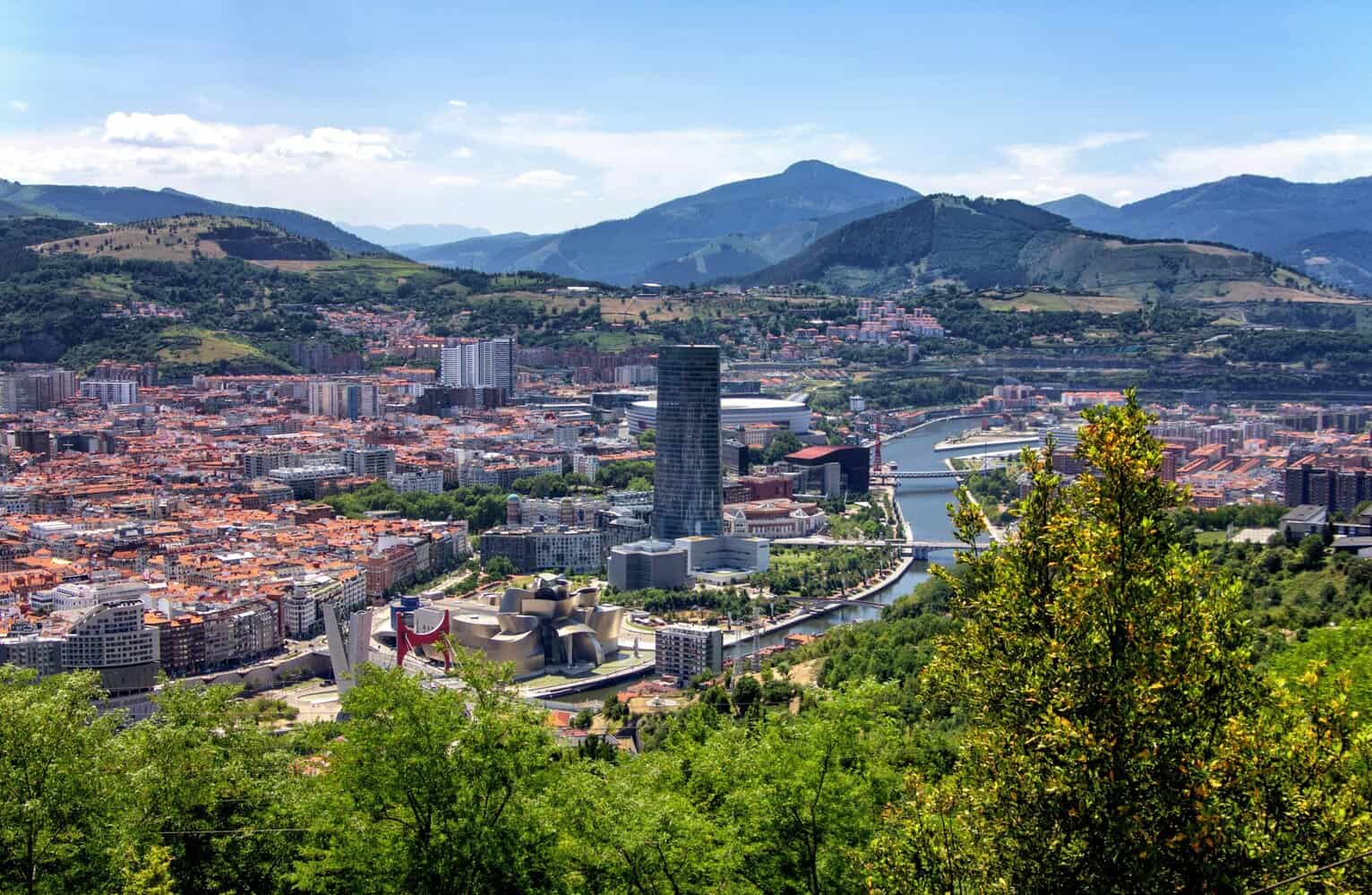
The Master’s in Sustainability Management is taught at Deusto Business School’s Bilbao campus – a city that, incidentally, is well known for its commitment to sustainability.
This year, Bilbao ranked 21st in the GDS-Index, which assesses global destinations’ sustainability efforts. It also appears among the top 200 in the Oxford Economics Global Cities Index, scoring particularly highly in the quality of life and environment categories.
In addition to being part of a vibrant, green student city, students are part of a unique campus community at the University of Deusto. The institution has a strong humanist philosophy, emphasising ethics and social responsibility.
Ekhi says that this defining feature of the university experience at Deusto offers a uniquely valuable lens for viewing sustainability management.
“It raises questions about responsibility, fairness, and the kind of societies we want to build,” he notes. “Our goal is to train professionals who combine analytical skills with judgment, responsibility, and a broader sense of purpose.”
For students who wish to make a practical contribution to sustainability, Deusto Business School offers the tools to do that. By combining real-world experience, interdisciplinary learning, and a strong sense of purpose, the programme prepares graduates to turn ambition into meaningful impact.
“Choosing this Master’s is not only about developing a career in a growing field. It is about positioning oneself at the intersection of some of the most important transformations of our time and contributing meaningfully to them,” concludes Ekhi.
Find out more about the Master’s in Sustainability Management at Deusto Business School.




Recent Posts

Researchers in agricultural science solve some of the most pressing challenges of today’s society – food and water scarcity, crop damage, land ...

NHL Stenden University of Applied Sciences is among the best applied sciences universities in the Netherlands. The Dutch website Keuzegids ranks NHL ...

Bocconi University graduate Alessandro Izzo admits that his career in economic research wasn’t planned. “Research only came late for me. Honestly, I ...

If you want to study business in one of the most iconic cities in the world, there are few choices better than Paris. The presence of top-ranked ...