
In the centre of a vibrant student city in Belgium, thousands of students gather on Thomas More University of Applied Sciences’ Campus De Ham for one thing: to immerse themselves in the media landscape.
Have you always wanted to work in media? Perhaps as a journalist, communications professional, or creative lead? Thomas More is one of the largest Universities of Applied Sciences in Belgium and offers a wide variety of English-language Media courses – from Communication Management to Interactive Multimedia Design – on a campus designed from the ground up to provide a practical study experience.
We spoke to five students currently pursuing Media programmes at Campus De Ham to learn about campus life and how Thomas More is preparing them for a future media career.
Why choose Thomas More?
Thomas More leans hard into learning-by-doing on its English-language courses. For example, International Journalism students publish on the school’s platforms and graduate with a portfolio project rather than a traditional thesis, while International Communication and Media students work on real briefs and client campaigns.
All the students we interviewed said that this aspect was one of the reasons they were drawn to Thomas More in the first place.
“The fact that we get to work with real clients right from the start was an especially nice promise for me, as it felt as though we’re being given a safety net instead of just being thrown out into the real world after 3 years,” says Eliza Patrichi, a Bachelor’s of International Communication and Media student.
Her coursemate Loreta Poheviča had a similar experience. Originally from Latvia, she knew she wanted to study for her Bachelor’s abroad and was seeking a programme that was more practical than theory-based. With the help of an agency, she found Thomas More.
“I wanted something creative and hands-on where I could actually work on projects and apply what I learned, rather than just studying from textbooks,” she explains. “I had multiple options in different countries, but Thomas More just felt like the best fit for me personally.”
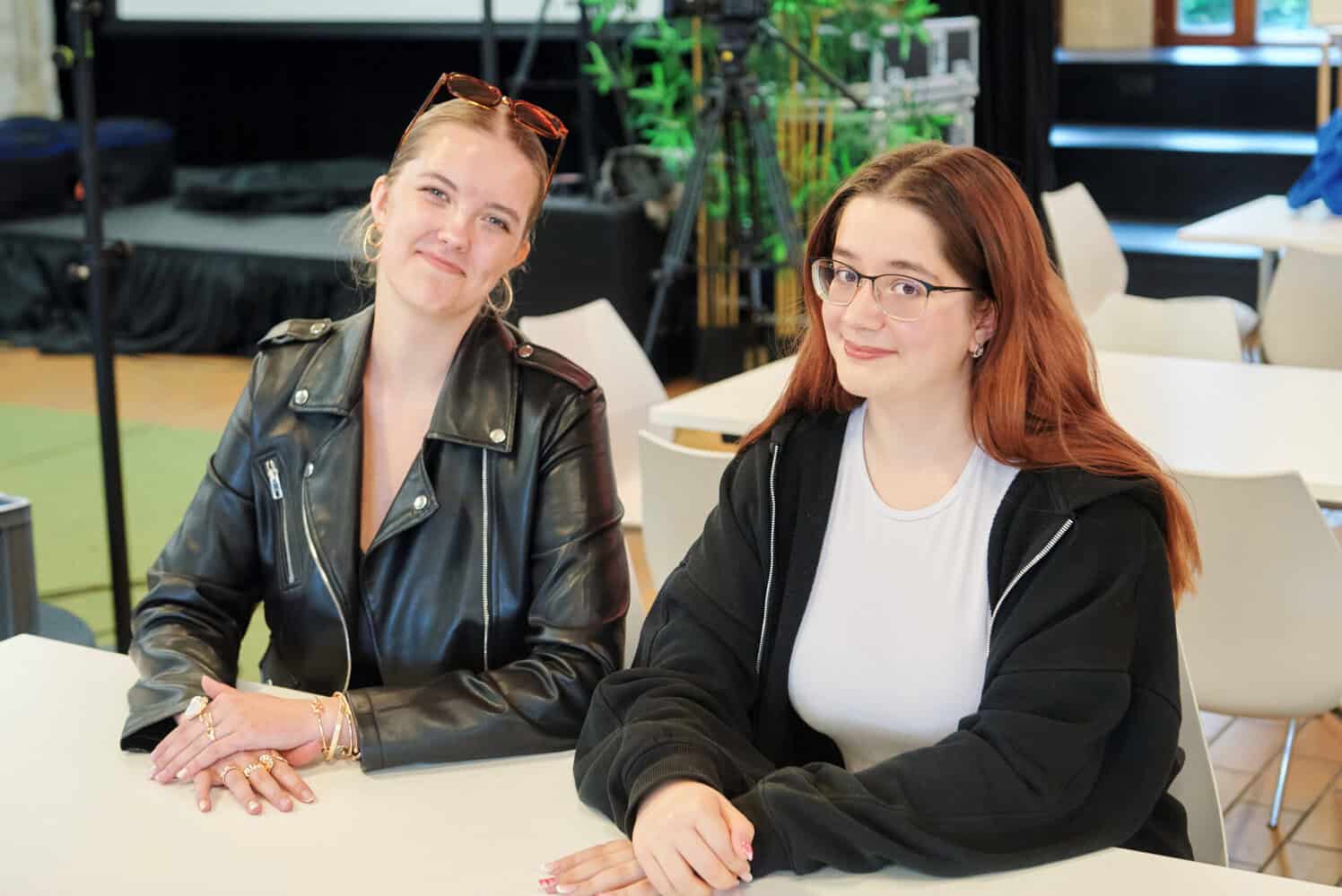
On the International Digital Experience Design programme, the focus is on hands-on learning from the very first day. With no traditional teaching or exams, students learn to apply their problem-solving and technical skills to building real products.
“The iXD programme felt very practical and future-oriented compared to many traditional university programmes, building real digital products and working in teams – pretty much solving problems we were encountering in our everyday lives,” says Filip Stefanovski, a Thomas More student from Macedonia.
Immersion in the media industry
While Thomas More has multiple campuses in Belgium, including one in the bustling Flanders city of Antwerp, Campus De Ham in Mechelen is the hub for the school’s Media courses.
The campus is complete with a TV studio, an editorial newsroom, and a broadcasting studio. This commitment to building an immersive environment is one of the first things students notice when they arrive on campus – that, and how impressive it is.
“Campus De Ham felt extremely overwhelming in a good way,” notes Roj Chaochaicharoenkul, a Bachelor’s in International Media and Entertainment Business student from Thailand. “The atmosphere is similar to that of a media-oriented gathering place. There is so much, you kind of get absorbed and lost.”
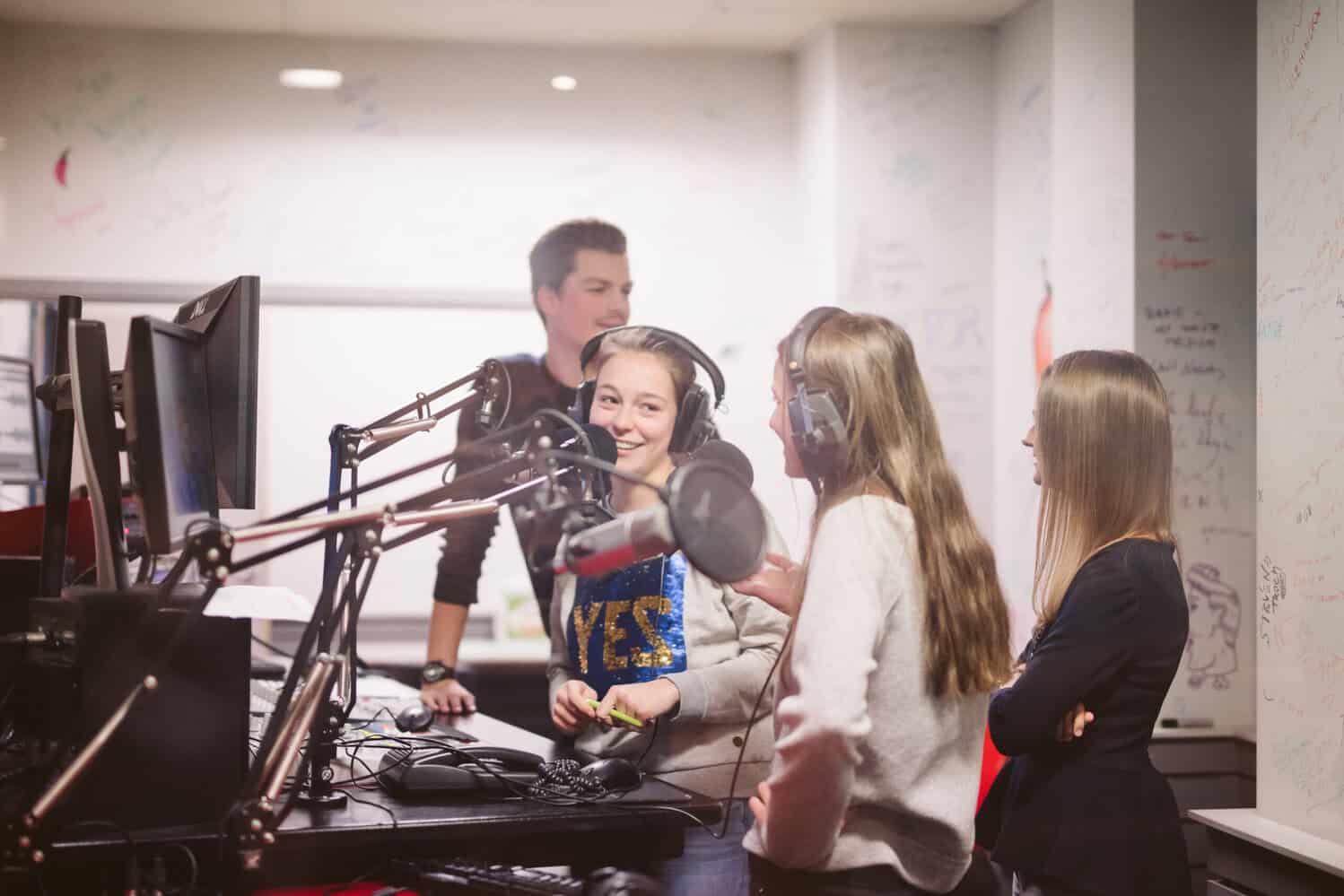
Loreta reports a similar experience as an international student. “It never felt intimidating to me, which helped a lot because moving to another country for university is obviously scary at first. There are almost always people around, students are very open, and it just feels like a place where people actually enjoy spending time.”
The sheer number of facilities available to students on campus also makes it easy to take their studies seriously and prepare for the real world of media. For example, students can pay a small cost (between €55 and €85 annually) to access the ProMediaLab, where they can borrow technical equipment for their projects.
“Campus De Ham feels much more intimate and really gets you into a creative mood. Having access to such spaces and the technology there makes me feel like a real professional,” adds Eliza.
Hands-on learning
Students at Thomas More Campus De Ham have many ways to continue developing their skills (and their CVs) during their studies.
For International Journalism students, this means publishing work on 21bis, the university’s own news site. Students are entirely responsible for planning and publishing articles, including video reports, on the website, and there’s a dedicated English section for those who don’t know Dutch.
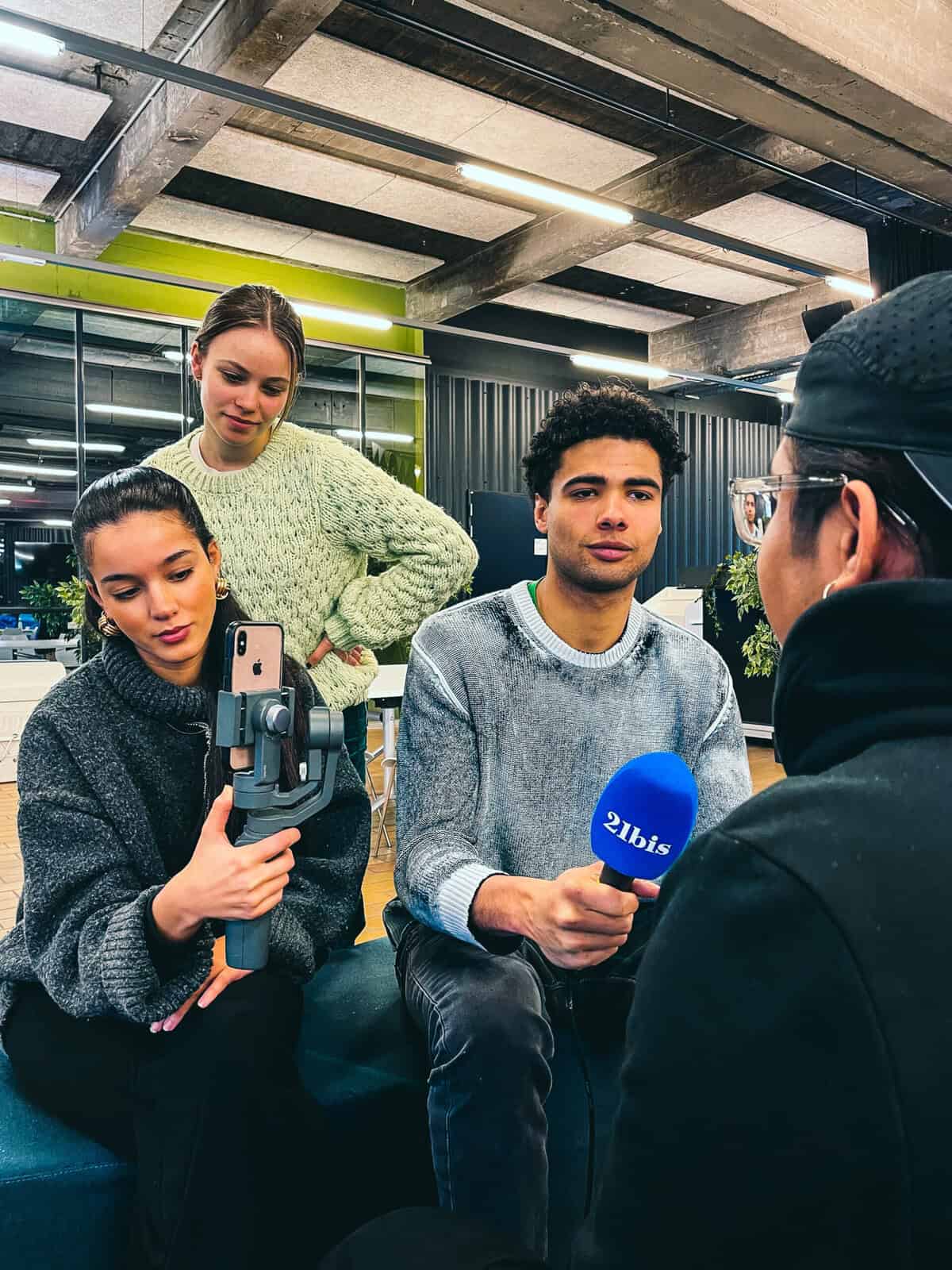
“21bis is a great thing,” affirms Jan Rehaag, a Bachelor of International Journalism student from Germany. “It gives students the possibility to get their work published on a professional-looking website, which is great for the portfolio.”
Loreta, meanwhile, says it feels like her entire experience studying at Thomas More Campus De Ham has been designed around practical, job-focused skills.
“There isn’t one specific class that suddenly prepares you for your future career — it’s more like every subject gives you a different skill or perspective,” she muses.
“Sometimes it genuinely feels less like ‘studying’ and more like actually doing the kind of work you would do in the industry.”
Studying at Thomas More Campus De Ham
Beyond the studios and classrooms for learning and projects, Campus De Ham is built around shared, informal spaces: the Media Forum for working and meeting, and the media café for a coffee or a quick bite between classes.
“In general, the atmosphere is very much that of a coworking space, at least in the Media Café on the ground floor,” notes Jan. “If you want to hang out around the school after class, there are plenty of spaces to choose from. I’m also part of the Erasmus Student Network, and we often use the school facilities for our events.”
The range of spaces available to students on the campus means it’s easy to find a go-to spot for working, whatever your preference is, as Eliza explains.
“Outside of class, I’m mostly in the Media Forum, since a lot of the work in ICM requires spending time editing or creating, and I find that it’s the most comfortable place to do that. The bean bags are usually my go-to, as all creative people know that somehow, the more unconventional the position you sit in, the better your flow is,” she points out.
While most Media students will find everything they need on Campus De Ham, they also have the opportunity to access facilities at other nearby Thomas More campuses.
“I mostly study at De Ham because I like the atmosphere there, but if I really need complete silence and no distractions, I usually go to the library in De Vest,” explains Loreta.
Student Life in Mechelen
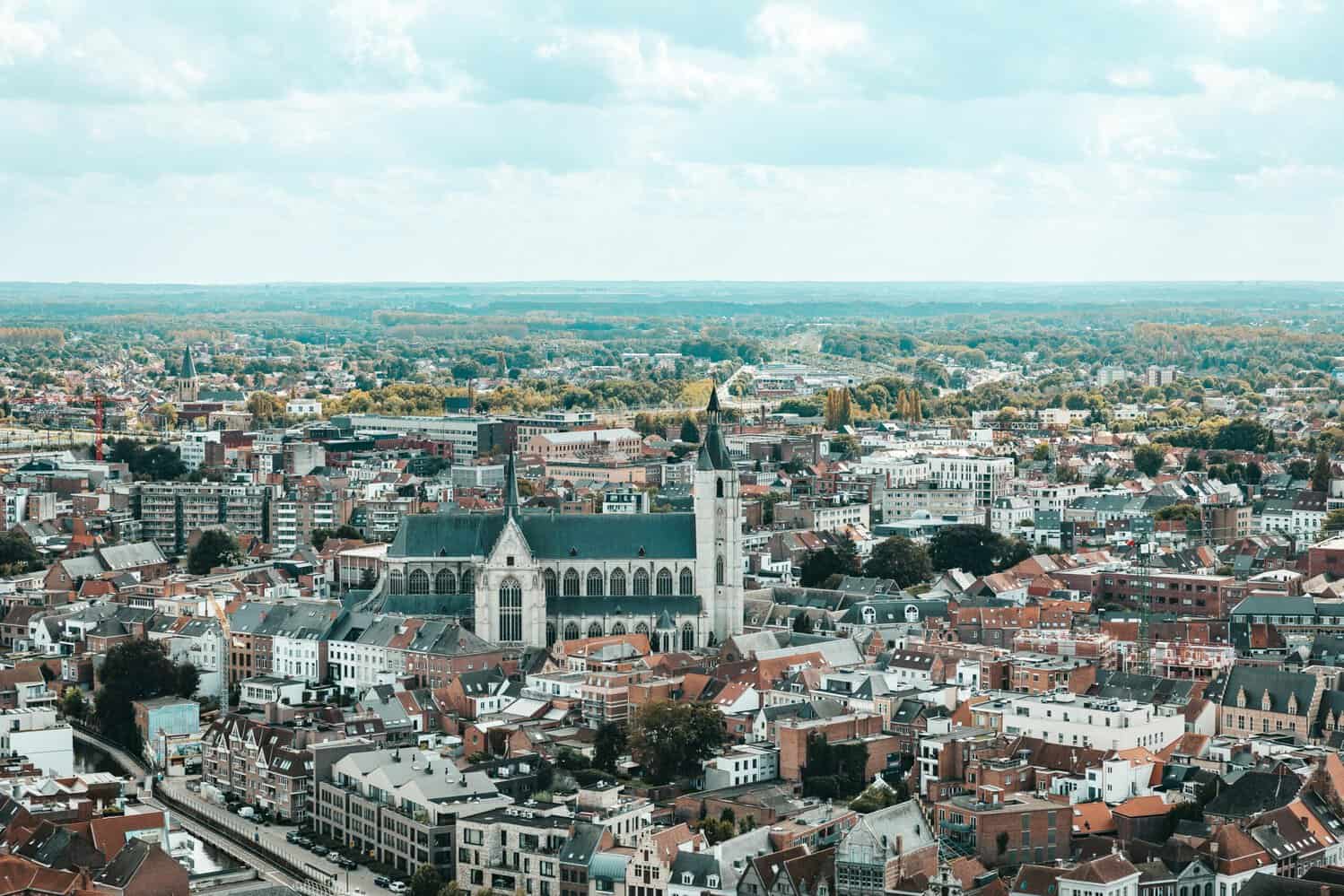
Campus De Ham is a short walk from the centre of Mechelen, on the bank of the River Dyle. Nearby, there’s plenty of parkland and green space where students can make the most of Belgium’s sunnier days when they’re not in class.
“Most of my time outside the classroom I spend by the river when it is warm,” says Filip.
Mechelen is a compact, student-friendly base conveniently located halfway between Antwerp and Brussels — close enough to both cities for day trips and nights out, small enough to get everywhere on study days on foot or by bike.
“If I’m not studying, I’m usually somewhere with friends, either in the park next to campus or in the city centre, since everything is really close by,” adds Loreta.
“It sits in a perfect spot between a small and big city – it’s large enough to feel alive and small enough to remain walkable,” says Jan. “Mechelen also has great beers and bars, but no clubs, unfortunately, so for that you need to go to Leuven, Antwerp, or Brussels. Overall, I’m very happy here!”
The small, cosy size of the city – and Campus De Ham – particularly appeals to those international students who have travelled far to study in Belgium, like Loreta.
“I come from a smaller city in Latvia, so Mechelen feels perfect to me because it’s not too overwhelming, but it’s also not boring or too quiet. It just feels very comfortable and student-friendly,” she explains.
What advice would you give students interested in Thomas More?
Despite coming from different backgrounds and studying varying subjects, all the students we spoke to say that the value of studying at Thomas More comes from taking advantage of all the campus resources – and networking opportunities – on offer.
“View the three years of degree as a time to gain skills, connections in the industry and most importantly to be active outside of university!” says Jan. “Publish articles, launch a podcast or YouTube channel or even better, get a student job in journalism.”
“Before coming here, I was terrified about moving to another country, different languages, meeting new people, basically everything,” says Loreta. “But now I can honestly say it was one of the best decisions I’ve made. I’d also tell myself not to be afraid to talk to people in the beginning because finding your people changes everything.”
On a practical level, Eliza says that it’s important to take your time when finding housing for your studies: “It’s best to know exactly what you’re looking for, know how to check everything inside the building, talk to someone who already lives there, if you can, and be pragmatic.”
The final piece of advice from Roj will be especially helpful for international students.
“Get a part-time job sooner cause I realised quickly the economic difference between Thailand and Belgium was a little rough for my wallet.”





Recent Posts
Bocconi University graduate Alessandro Izzo admits that his career in economic research wasn’t planned. “Research only came late for me. Honestly, I ...

If you want to study business in one of the most iconic cities in the world, there are few choices better than Paris. The presence of top-ranked ...
When Belgian student Sam Leysen arrived in South Africa’s North West Province to start an internship with North-West University (NWU), he expected to ...
At EAIE 2026 in Glasgow, Scotland, EDUopinions announced the 20 winners of the second annual Reputation Barometer Awards. Each of these institutions ...