
- 48% of students used AI to research and compare institutions and entry requirements, per UCAS survey.
- AI chatbots like ChatGPT and Claude draw from public web data and prioritise credible sources aligned with E-E-A-T.
- Prospective students use AI early in decisions; international applicants rely more; AI surfaces balanced views from forums, reviews and student blogs.
- Build a broad web footprint beyond your site; authentic student reviews on third party platforms like EDUopinions boost AI visibility.
- Immediate steps: ask AI what it knows, perform a website content audit, and solicit independent student reviews to improve GEO and SEO.
How do prospective students find and shortlist universities? Today, they’re increasingly turning to AI; according to a survey of UK students by UCAS, 48% admitted to using AI to research and compare institutions and to discover entry requirements. While existing marketing materials, such as prospectuses and online advertising, are still essential for reaching students, institutions must now also consider their AI visibility.
So, how do you get your institution seen on AI search engines like Gemini, ChatGPT, or Claude? There’s certainly crossover between search engine optimisation (SEO) and generative engine optimisation (GEO) best practices. However, you might be surprised to hear that, unlike some aspects of SEO, you don’t need technical skills or in-depth algorithmic knowledge to get seen on AI.
What is AI visibility?
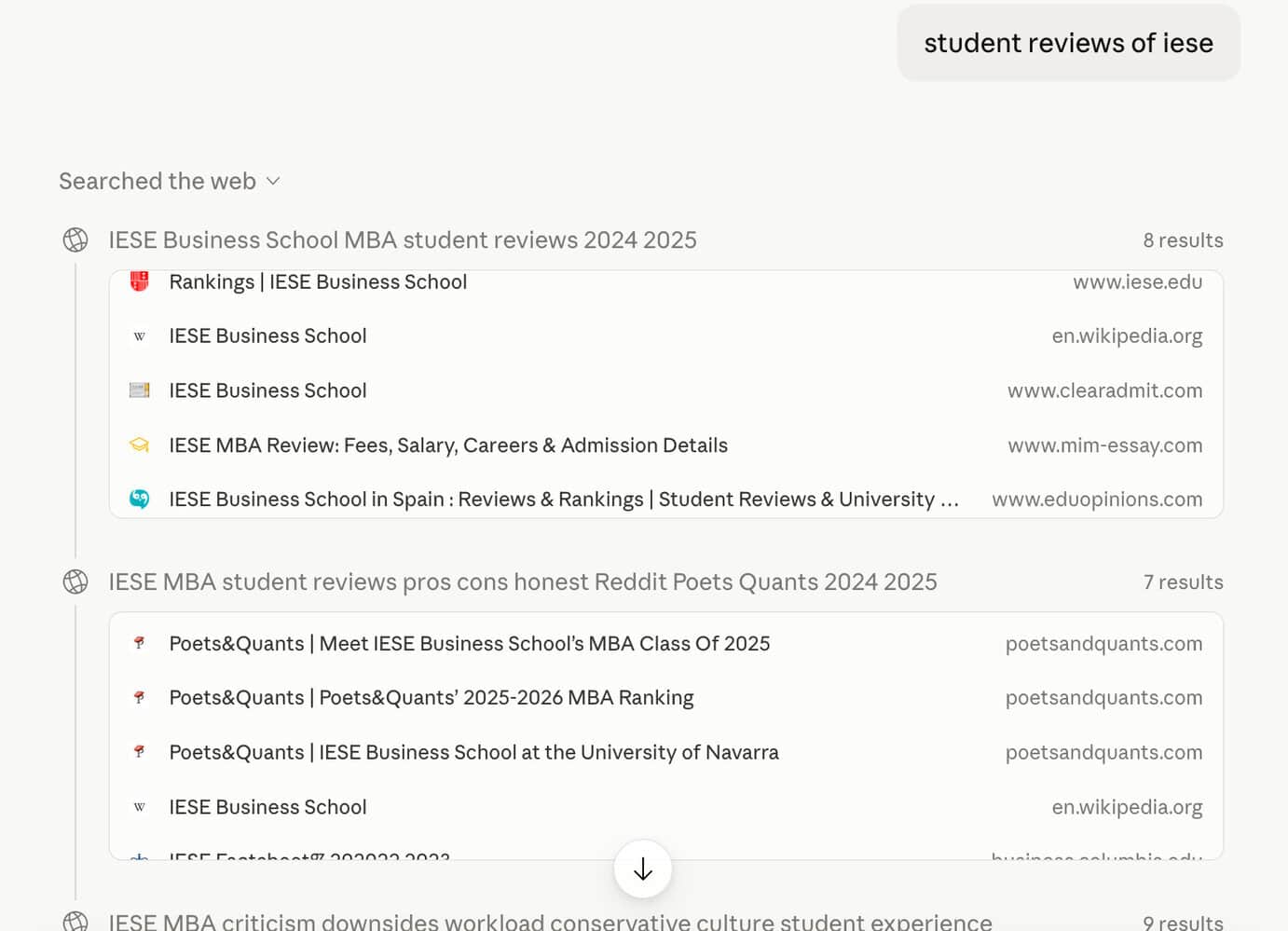
The largest AI chatbots available today have largely been trained on publicly available web data, as well as internally generated data and information from users who have opted in to data sharing. As long as your institution has a web presence, it can surface information about your institution and share it in response to user queries.
Because AI search capabilities are constantly evolving as new training data emerge, understanding how these tools make their decisions is almost impossible.
However, we know that the algorithms behind tools like ChatGPT and Claude operate similarly to those of traditional search engines. That is, they will prioritise credible, objective, and recent sources, following a methodology comparable to Google’s E-E-A-T (Experience, Expertise, Authoritativeness, Trustworthiness) philosophy.
For students seeking university recommendations, the urge to provide a balanced, objective response often leads AI to gather data from forums and other discussion websites, such as Reddit, as well as student review websites like EDUopinions.
In summary, if you want to be seen in AI queries, building your institution’s reputation across the internet is crucial. At the same time, ranking highly on Google won’t necessarily grant you AI visibility – not if the AI doesn’t surface your institution across a multitude of websites, both within your university and externally.
Why should universities care about AI visibility?
According to the UCAS survey, students value AI for its instant responses and perceived ‘neutral’ stance. While 43% of applicants still reported using an institution’s website as their go-to source for information, AI can make the complex process of comparing courses and programmes more effortless.
Crucially, prospective students are more likely to use AI at the start of their decision-making journey. At this stage, they’re looking for a wide range of information – both good and bad – to move on to the next stage of their university application journey. International students may also be more reliant on it when making decisions, given that they won’t always be able to visit a university in person.
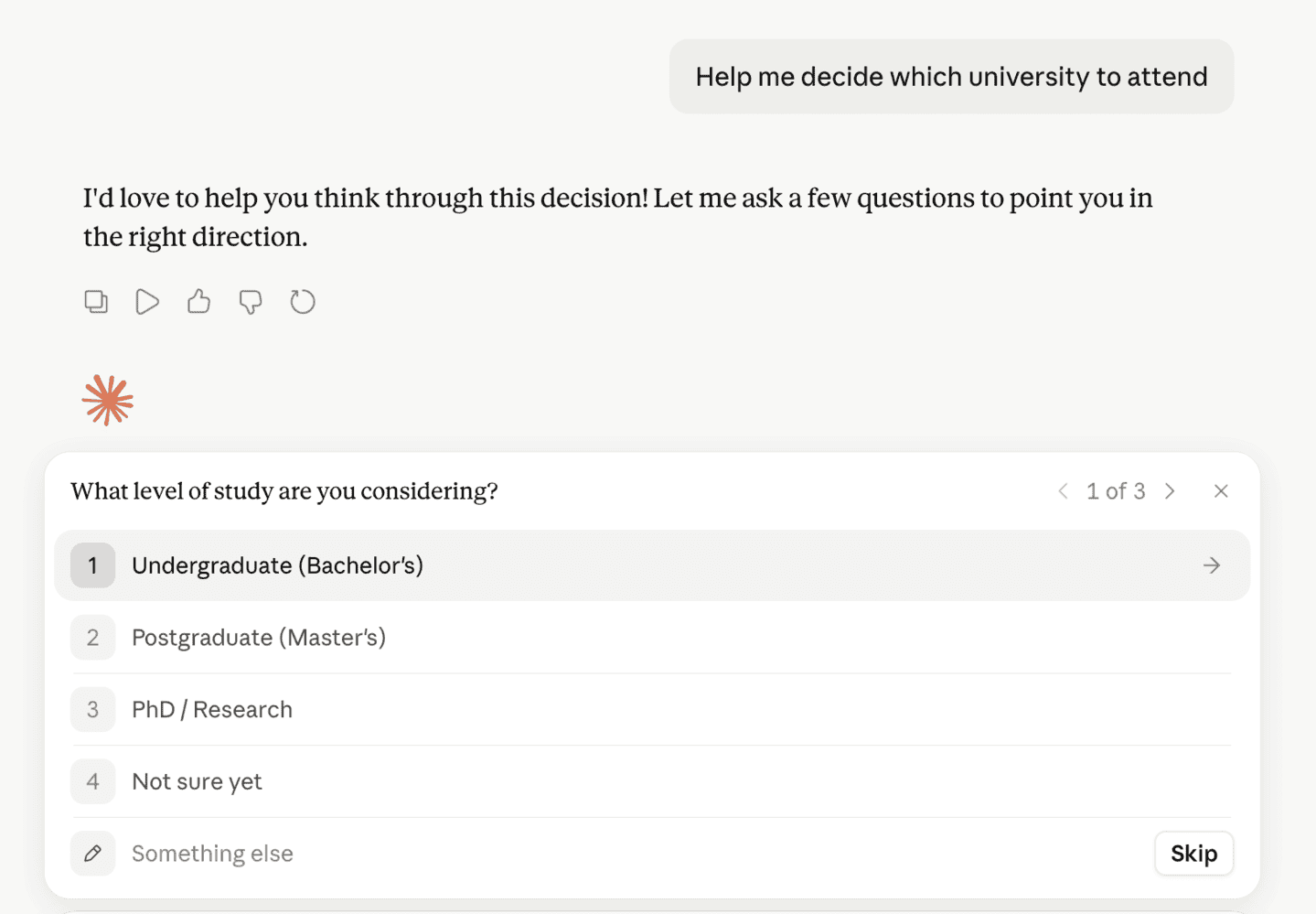
As AI can source information from across the web, it can offer suggestions that a web search might miss. Some of the websites consulted by AI search engines include:
- Reviews sites
- Forums
- Student blogs
- Official school websites
- Rankings
Given that students are to some degree influenced by the information given by AI search engines, it’s paramount that at this stage of the decision-making process, your institution is visible on AI platforms.
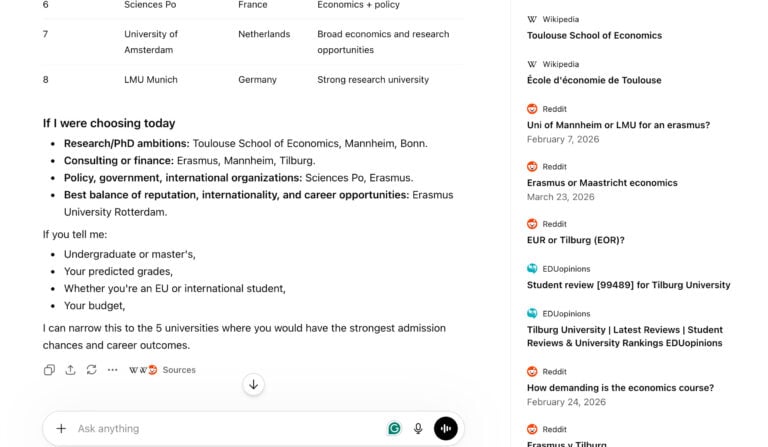
So, how do you gain visibility?
By ensuring that your school has left a significant footprint on the web – including on third-party websites that you don’t control. As important as a university website is – and AI search engines will still prescribe high value to these sources – ensuring that natural, genuine student opinions are visible online will add to your overall web presence, increasing AI visibility.
Where to start with AI visibility in higher education
Increasing your visibility on AI search engines can take time – just as there is no instant fix for bad SEO. However, here are three actions you can take now to improve your GEO.
1. Understand what AI says about you.
Ask AI about your university – and question where it gets its information from. What does it know about you already? Where are you seeing gaps in its knowledge? Can it find out on third-party review websites and forums?
2. Update your institution’s website.
Perform a content audit of your current website to assess whether the information remains accurate and adheres to SEO best practices. Search engine visibility is still an important factor in appearing to AI search engines, even if it doesn’t entirely predict how or when you will appear in AI search results. Where AI does link to your university website, you want the programme information, application details, and other information to be accurate.
3. Continue to collect (or start collecting) independent student reviews.
For your institution to have a wide presence for AI to gather information from, it’s important that student stories and opinions aren’t just being showcased on your university website. An authentic and up-to-date review presence on third-party websites like EDUopinions will feed directly relevant information to AI search engines and, subsequently, to prospective applicants.
Want to learn more about how to improve your AI visibility?
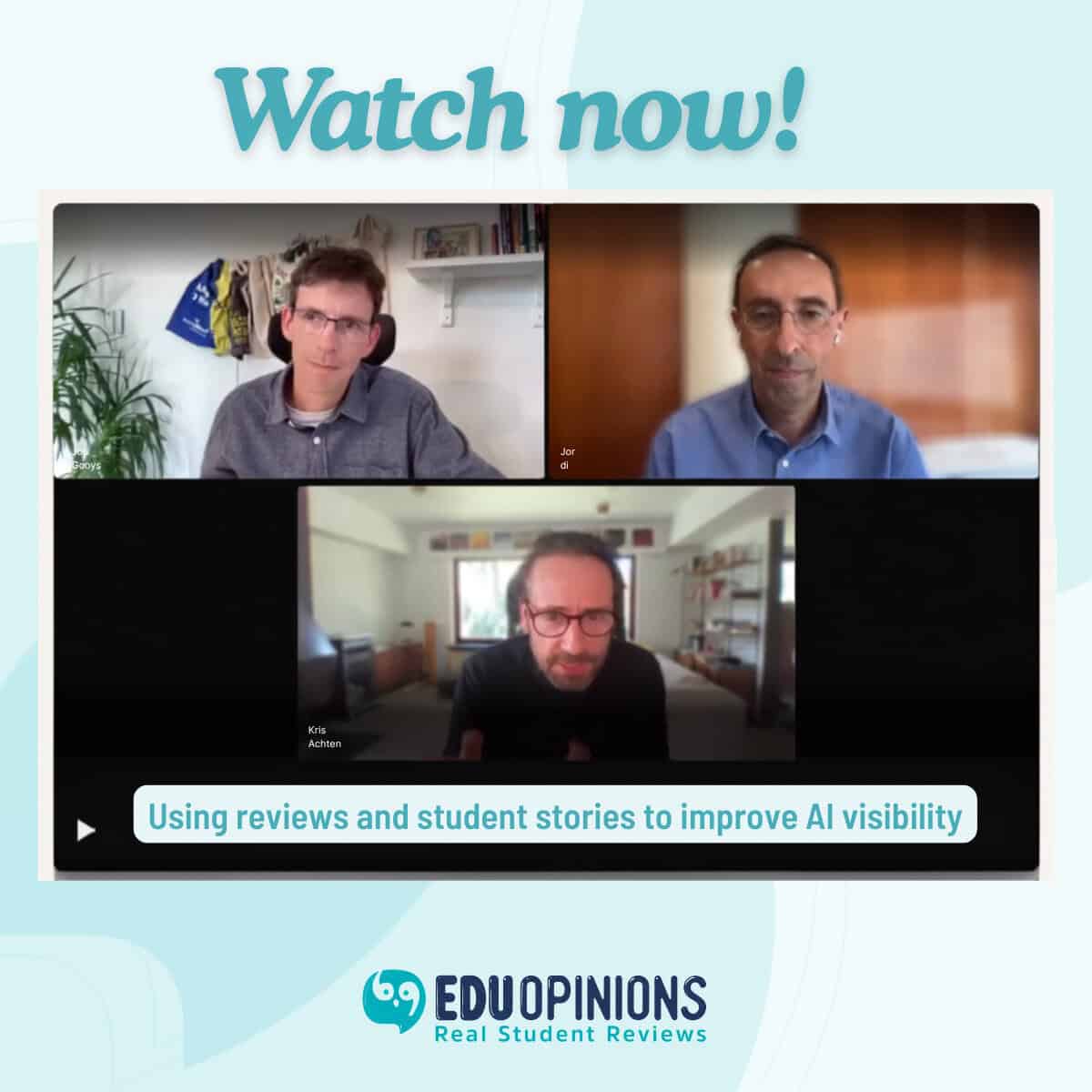
EDUopinions CEO Jordi Robert-Ribes recently joined Kris Achten and Guus Goorts for a live discussion on the steps institutions can take to improve their AI visibility.
Discover how student stories and authentic student reviews can boost your appearance in AI search results, and learn how to successfully solicit reviews from your students that will make a difference to your web presence and reputation.
Rewatch the LinkedIn Live here.


Related Posts :




Recent Posts
The Times Higher Education World University Rankings 2027 are here, but there's something missing from the methodology – the students themselves.
...

– While an exciting curriculum, vibrant location, and busy student life are all important parts of your study abroad experience, it’s just as ...

Researchers in agricultural science solve some of the most pressing challenges of today’s society – food and water scarcity, crop damage, land ...

NHL Stenden University of Applied Sciences is among the best applied sciences universities in the Netherlands. The Dutch website Keuzegids ranks NHL ...