
University of Lusaka - UNILUS
speciality:
Economics
What Is an Economics Degree?
Are you passionate about the business and finance sector? Do you follow the national and international news? Then, an Economics degree is the answer. It has always been one of the most sought-after degrees amongst youth.
Economics degrees are designed to tackle all the issues that have an impact on financial situations, ranging from production to how resources are used. Candidates are trained to understand how the economy suffers fluctuations based on the market’s needs and wants followed by the market’s supply and demand.
By far one of the most crucial elements is that economics is divided into microeconomics and macroeconomic. Microeconomics deals with the economic behaviour at an individual level (companies, buyers, sellers and others), whilst macroeconomics illustrates the bigger picture, on a national or global scale (unemployment, economic growth, inflation and so on).
Benefits of an Economics Degree
Having an economics degree increases anyone’s chances to find a job, regardless of the field. This is mainly due to the fact that graduates hold many transferable abilities, such as analytical and problem-solving skills, that are suitable for any career.
A study made by the London School of Economics and Political Science showed that graduates from an economics course have a starting salary of £33,000 per year. Having a job in the field right after graduation is a major positive aspect and comes with a lot of opportunities for career advancement.
Economics Degree Structure
Economics degrees are usually a three years commitment and sometimes are offered as part of a joint degree. This means that Economics can be studied along with another subject such as engineering, management, law, computer science and others.
This degree can be found either as a Bachelor of Science (BSc) or Bachelor of Arts (BA). The BSc focuses more on economical theory and statistical techniques, while BA is combined with social sciences and qualitative modules.
2 Student Reviews
-
Economics and ...7 months ago
 StudentZMGrowing, Supportive, and Student Friendly
I joined the University of Lusaka in 2022, starting in the law program, but I realized it wasn’t the right fit for me. The school system was flexible enough to allow me to switch to Economics and Finance, which I genuinely enjoy. I’ve been able to maintain strong grades throughout and am now in my final year.
View more
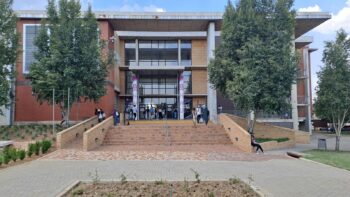
The university environment is very well maintained and student friendly. The classrooms, bathrooms, and overall facilities are clean, and the accommodation is secure with fingerprint check ins. While the security system can limit friend access at times, it’s understandable and doesn’t affect the overall experience. The campus has great amenities, including a netball field, a student gym, and even a hospital on-site. I’ve visited all three campuses, and my favorite is the Silverest campus.
What stood out most for me is the quality of the classes and the engagement from lecturers, who sometimes give practical, real-life advice, especially on topics like investing. I also appreciate the university’s support for entrepreneurship, providing opportunities for students to gain experience and grow their ideas. Additionally, the school has programs to access books and articles online, which makes research and learning easier.
One minor challenge is that sometimes a course may not have a lecturer immediately, which can take a week or two to resolve. Another aspect I personally find limiting is the strict dress code. While I understand the importance of maintaining a professional environment, it can sometimes feel restrictive or boring.
Overall, I think the University of Lusaka is a supportive, flexible, and growing institution. I would recommend it to other students, as it offers excellent academic programs, clean and safe facilities, and opportunities for practical experience and personal growth.Programme: Economics and FinanceDegree: Bachelor'sGraduation: 2026Delivery Type: On CampusCampus: Lusaka -
Economics and ...10 Mar, 2025
 PurityZMEconomics and finance
Amazing course and university , environment friendly and support challenges departments, effective learning and teaching methodology, advanced and great modern building.
View more
Great place to make dreams .
And football pitch , tennis court and poolProgramme: Economics and FinanceDegree: Bachelor'sGraduation: 2027Delivery Type: Online