Politecnico di Milano
speciality:
Architecture
What is an Architecture Degree?
Architecture is a specialisation preferred by many young people who love solving problems, have a passion for creativity, or an innovative imagination ready to be shown off.
Over the years, it has become a very popular speciality. Young people are aware of the importance and diversity of Architecture, but also of the need for a permanent practice, as most Architecture courses aim at the practical part, to implement feasible structures not only on paper, through sketches, but also in real life.
Architects can choose to grow in all markets or follow a single specialisation, such as Landscape Architect, Resident Architect, Urban Designer, Green Design Architect or Interior Designer, according to their preferences.
Benefits of an Architecture Degree
Usually, a major reason that motivates students to study Architecture is the possibility of having an impact on their community. How do they do this? By exploring the world, analysing people’s work on constructions and looking for answers to identified problems, they become more creative, more open to new things, bringing a new vision to the world.
Critical thinking skills are constantly being developed by graduates who study Architecture because they get the opportunity to visualise the structures before they are made.
Upon completion of studies, there are many possibilities for employment, and salaries can be generous. A particular increase in the employment rate is expected to be in the Green Design field. This requires creating environmentally-friendly constructs that do not harm nature and generate sustainability.
Architecture Degree Structure
Young people must have a university degree in Architecture to pursue a career in that field, that is an Architecture Bachelor or Master of Architecture. Often, undergraduate programmes last 5 years, and Master programmes last between 2 and 3 years, depending on the chosen university and the form of education followed. One notable thing is that Master programmes are often for those who have not completed a Bachelor’s specialisation, and that is why the course component can be similar to the Bachelor’s. As far as Doctoral programmes are concerned, the duration is 3 years, and the architects work on research projects.
At the same time, it should be mentioned that the United States and other territories have introduced a professional license Architect Registration Examination. This is a mandatory exam which tests the candidate’s skills, abilities and knowledge. In the UK, for example, the final registration to become an architect is regulated by the Architects Registration Board.
Although the list of courses may differ from one country to another, some of the most important modules for a Bachelor’s degree in Architecture are Computer Assisted Drawing (CAD), Physics, Visualisation, Science, and Technology.
Throughout their studies, students can take part in various internship programmes or choose a tutor architect to work with. In this way, they get a better idea of what this profession is about in practice and gain the necessary experience needed for their professional development.
9 Student Reviews
-
Architecture and ...4 months ago
 StudentITUniversity has many opportunities for scholarships
I transferred here during my bachelors and completed it here. Finished my masters here as well. I was able to do so with the help of scholarships that the university provided as well as many financial aid programs with reduced fees for students from low income backgrounds. The professors are one of the best and the facilities are top notch. I would definitely recommend to other students out there to study here.
View moreProgramme: Architecture and Urban PlanningDegree: Master'sGraduation: 2026Delivery Type: On CampusCampus: Milano -
Architecture9 months ago StudentPositive with a few drawbacks
The course is good, the university and its history is good, the problem lies in location. The architecture faculty, even though nested in Mantua which is a heritage city, the city does not offer anything in return. It’s a very small city with little to no student life. The city is beautiful and you have various lakes as well which add to the charm. The curriculum is very hectic and on top of that, finding a place of your own here is next to impossible. You do have student housing, private, but it is very far from the campus and requires around 20-30 minutes of walk one way. Buses are not on time but for such a small city, public transport is well developed.
View moreProgramme: ArchitectureDegree: Master'sGraduation: 2027Delivery Type: On CampusCampus: Milano -
Architecture Design02 Mar, 2025 StudentCAWell Maintained Environment
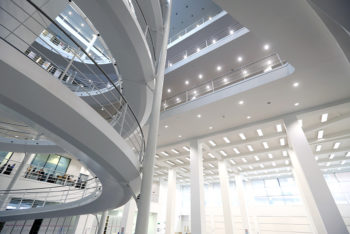
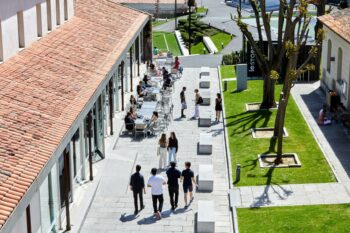
I had the opportunity to learn in a visually appealing and well-maintained environment. The campus was thoughtfully designed, creating a space that was both inspiring and conducive to learning. The pleasant surroundings added to the overall educational experience, making it more enjoyable
View moreProgramme: Architecture DesignDegree: Bachelor'sGraduation: 2028Delivery Type: On CampusCampus: Milano -
Architecture and ...22 Mar, 2024 StudentTREducation
I highly recommend Politenico di Milano in terms of its architectural education. They try to teach their students contemporary approaches in the architecture world. As a first year Master student, I can speak for the Piacenza campus and here we have a very strong student community though we have a small campus. Also, I have to mention that their financial support unit works quite well even though the application process for the scholarships might feel a little frustrating time to time. It’s worth it in the end.
View moreProgramme: Architecture and UrbanismDegree: Master'sGraduation: 2025Delivery Type: On CampusCampus: Milano -
Urban Planning04 Nov, 2023
 SebastianUSThe international feeling of the school
The school promotes high-level university education through lectures and guest speakers but the bulk of learning comes from working in groups together with people from different ethnic backgrounds. The problem-solving ideas that come from stimulated educational conversations help one to learn how to work in teams which is vitally important in the work force.
View moreProgramme: Urban PlanningDegree: Master'sGraduation: 2025Delivery Type: On CampusCampus: Milano -
Architecture24 Mar, 2022 StudentReview
In general, the university is pretty good. I’m studying on the main campus – Leonardo. They have great facilities. However, my impressions of the program so far are that it focuses more on letting you learn by yourself as opposed to teaching the subject.
View moreProgramme: ArchitectureDegree: Bachelor'sGraduation: 2024Delivery Type: On CampusCampus: Milano -
Architecture21 Oct, 2021 StudentHigh level of academic requirement. Intense schedule. Laborious bureaucracy.
Politecnico di Milano is a large technical university with a stellar international reputation. The international outlook of the university is quite high as there are many international students from different parts of the world. The class schedule is quite demanding and students must be willing to commit to their studies in order to keep on top of it. The social life around the university is active and many areas of recreational activities can be found around the campus. The paperwork and the bureaucracy that international students face however are quite burdensome and the university could increase their support for students in this area.
View moreProgramme: ArchitectureDegree: Bachelor'sGraduation: 2024Delivery Type: BlendedCampus: Milano -
Architecture26 Apr, 2020 StudentExcellence with flaws
My experience at Politecnico for the last four years has been excellent. The majority of the professors are competent and the stimulate the interest in their field. Most of the courses have given a lot of personal satisfaction.
View more
In the last year they have renovated the common spaces in the School of Architecture building and the atmosphere has improved.
Although there are a lot of positive qualities, there are a few flaws: bureaucracy in my experience lacks of clarity and sometimes equality; often there isn’t a good management of the spaces (classrooms, common spaces..)Programme: ArchitectureDegree: Master'sCampus: Milano -
Architecture01 Mar, 2019 StudentPOLIMI
I think this university is really renowned which can helps you to found a job very quick. Unfortunately a lot of things are leave out of the programme as the rendering skills, plus they supposed that you have a whole previous culture on what are you going to study.
View moreProgramme: ArchitectureDegree: Bachelor'sGraduation: 2019Campus: Milano