Student review [#103760]
for Environmental Engineering for the Ecological Transition
at Ca' Foscari University Of Venice
Venice, Italy

I picked the Global Change and Sustainability curriculum at Ca’ Foscari because I wanted a programme that treated climate change as the systemic problem it actually is, not just a single-discipline topic, and that’s exactly what this delivered. Courses pull together bio-ecology, oceanography, climatology, paleo-climatic data, socio-economics, and environmental modelling, so you end up learning to read global change from several angles at once rather than through one narrow lens.
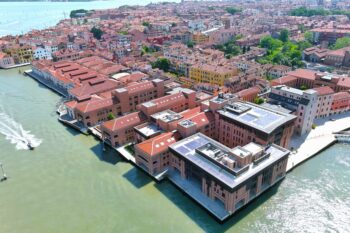
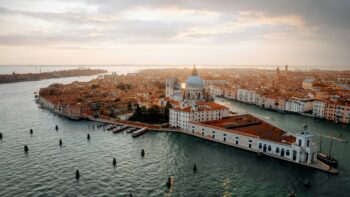
Being based in Venice added something you can’t really get from a textbook. The city itself is basically a live case study in climate vulnerability, from acqua alta flooding to the lagoon’s fragile ecosystem, so a lot of what we studied in lectures was visible just walking outside. That context made the material feel urgent instead of abstract.
The teaching leaned heavily on statistical analysis and modelling tools, which was a steep learning curve if you came in without a strong quantitative background, but it paid off. I left with real technical skills for forecasting and evaluating future scenarios, not just theoretical knowledge. The cohort was genuinely international, and small class sizes meant professors actually knew who you were and had time for discussion rather than just lecturing.
If I’m honest, the workload during the modelling-heavy modules was intense, and coordinating between the more scientific and socio-economic strands of the course took some getting used to. But for anyone who wants to study climate change with real analytical depth, in a city where the stakes are impossible to ignore, this programme delivers