University College Dublin - UCD
speciality:
Environmental Sciences
What is an Environmental Sciences Degree?
Environmental Sciences Degrees are usually undertaken by students who like the natural, physical, and biological sciences.
By studying this specialisation, young people get new knowledge about the processes and phenomenons that affect the environment and find solutions to problems that concern nature.
Students’ interest has increased a lot in recent years due to climate change, pollution and other adverse effects on the environment. Environmental Sciences graduates bring multiple benefits to the world they live in, analysing systems and finding effective solutions to develop sustainability and green processes.
Benefits of an Environmental Sciences Degree
The main advantage of the Environmental Sciences Degree is that students are becoming more aware of how we need to protect the environment, give up chemicals and harmful products that pollute the planet in favour of the ones that are biodegradable or environmentally friendly. By becoming aware of the dangers we are facing, students find innovative ideas for sustainability and sustainable development.
This specialisation encourages young people to develop skills such as critical and creative thinking, teamwork, adaptation. Complex issues are debated through this degree, so students need to be innovative and think outside of the box to use resources wisely, protect and, above all, preserve natural wealth.
Besides the advantages listed, the rate of employment is high, because the jobs are being more and more diversified. It has been noted that there is a greater need for environmental consultation, biologists exploring natural environments, and sustainability consultants. This degree can also be useful for other jobs, such as Landscape Architect.
Environmental Sciences Degree Structure
The structure of the degree includes several subjects, depending on the university a student chooses. Some universities prefer to focus on the theoretical policies and notions discussed in the courses, while others choose to rely on systematic research and practical experience gained in the environment. In principle, these studies require a background in the following sciences: Biology, Chemistry, Geography, Ecology, Physics.
Bachelor Degrees in Environmental Sciences last between 2 and 3 years. Courses are based on the knowledge of the Sciences of Nature and Social Sciences. Most Bachelor programmes are based on college courses, but also on practical projects. A Master’s programme lasts for about 2-3 years and is recommended for those who want to continue with in-depth research into the elements of the environment. Doctoral courses are designed in such a way that students will be guided to conduct independent research, having a much different structure than during their Bachelor. This programme lasts between 3 and 6 years.
It is important to know that students can choose to pursue this degree online. In this way, students can take advantage of the flexibility and save money, as costs are much lower compared to those spent at universities. For example, The Open University offers online courses, the level of information being authentic and useful for the students.
2 Student Reviews
-
Landscape Architecture10 months ago
 AngelIEthe overseas experience
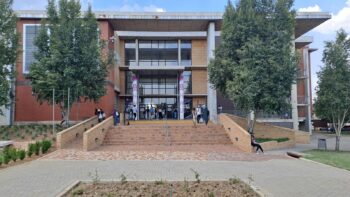
Studying at University College Dublin (UCD) is like getting the best of both worlds, top-tier academics wrapped in a vibrant, international community. It’s one of Europe’s best-kept secrets, especially for overseas students.
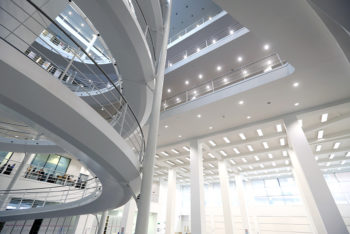
The campus? Massive, green, and modern, with actual lakes and chill spots that make studying feel less like a chore. Academically, UCD delivers. Whether you’re into business, tech, science, or the arts, the programs are well-rounded, and the professors actually care. They challenge you, but they’re also approachable—more mentor, less mystery.
As an international student, the transition is surprisingly smooth. UCD’s global community is active and supportive. You won’t feel like the “outsider”, you’ll feel like you’ve found your tribe. And with Dublin right on your doorstep, you get all the buzz of a capital city with the warmth of a tight-knit student town.
Sure, the weather’s unpredictable, and navigating the sprawling campus takes a minute. But in the grand scheme? Worth it. UCD gives you more than a degree, it gives you a global outlook, a killer network, and an unforgettable experience.
View moreProgramme: Landscape ArchitectureDegree: Bachelor'sGraduation: 2028Delivery Type: On CampusCampus: Dublin -
Environmental and ...04 Jul, 2022
 RashiAnyone can help to save the earth
Hi
View more
My name is Rashi. I completed my master’s from ucd in the year 2015 and i cherish every single learning from that place.
I was always into small things like save water, plant more trees, reduce energy consumption, no to plastic, recycling paper and many more. UCD’s intercultural environment and the new approaches i noticed was the most interesting at first. Later my master gave me a huge opportunity to learn the news ways and technology to save earth Or basically to save us.
The reduction for plastic can be done at verious level of its life. Therefore LCA (life cycle assessment ) modules were of great knowledge.
The reduction of energy consumption and conservation for the animal and plant farming were also very important and new to me.
Teachers and mentors were also excellent help.Programme: Environmental and Energy ManagementDegree: Master'sGraduation: 2014Delivery Type: On CampusCampus: Dublin