The University of Melbourne - UoM
speciality:
Trade
What is a Trade degree?
A Trade degree explores global markets, international business communications and financial theory. It develops students’ understanding of market evaluation and the connections between organizations and nation-states. A Trade degree also teaches students about business and trade relations and looks into how politics, law and culture influence trade in order to help students gain skills in communication, critical evaluation, strategy development, problem solving and ethical awareness as well as understand working in a multicultural environment.
It is worth noting that trade degrees are often combined with international business.
Benefits of a Trade degree
A bachelor’s degree in trade is the path towards high-paying jobs and positions high up in the organizational hierarchy. Individuals with a Bachelor’s degree in Trade have the opportunity to eventually secure international jobs after they gain work experience in a professional setting. A Master’s degree in Trade is a prerequisite for a career with a global corporation and enables individuals to occupy well-paid positions high up in the organizational hierarchy and play managerial roles.
Trade programs often involve work experience or study abroad opportunities. This allows students to gain experience while still at University or explore a new culture and view the discipline from a different perspective.
Trade Degree Structure
Bachelor’s degrees in Trade focus on familiarizing students with the areas of finance, marketing, law, economics and social sciences. They usually cover business communications, business management, business statistics, marketing and economics and often allow students to specialize in a particular area such as global politics or international finance.
Master’s courses are dedicated to developing students’ practical international business skills or exploring international trade theory in depth and students to learn the theories and practices of global economics. Master’s courses in Trade usually cover macroeconomic analysis, economic theory and history, financial markets and mergers and acquisitions.
Doctorate degrees in Trade are rare and Higher Education Institutions usually provide mainly Bachelor’s and Master’s degrees in the field of trade, which are more than enough for students to secure a good position in a global corporation.
The duration of Trade degrees varies depending on the country, degree level and mode of study (full-time or part-time). Below are listed the approximate durations of Trade degrees in some of the most popular destinations among students when it comes to Higher Education:
- Trade degrees’ duration in the UK:
- Bachelor’s in Trade: 3 years (extends to 4 years if students choose a sandwich course, which offers them the opportunity to take a year-long placement between their second and third year)
- Master’s in Trade: 1-2 years
- PhD in Trade: 3-6 years
- Trade degrees’ duration in the Netherlands:
- Bachelor’s in Trade: about 4 years
- Master’s in Trade: 1-2 years
- PhD in Trade: 4 years
- Trade degrees’ duration in Spain:
- Bachelor’s in Trade: 3-4 years
- Master’s in Trade: 1-2 years
- PhD in Trade: 3 years
- Trade degrees’ duration in Germany:
- Bachelor’s in Trade: 3-4 years
- Master’s in Trade: 1-2 years
- PhD in Trade: 3-4 years
- Trade degrees’ duration in France:
- Bachelor’s in Trade: 3 years
- Master’s in Trade: 1-2 years
- PhD in Trade: 3-6 years
- Trade degrees’ duration in the US:
- Bachelor’s in Trade: 4 years
- Master’s in Trade: 2 years
- PhD in Trade: 4-6 years.
10 Student Reviews
Filter reviews-
Commerce13 Nov, 2022
 StudentAUCourse Content
This university has given me a chance to showcase my leadership skills in becoming an ambassador in my accommodation and in my course. I really enjoy the programme as it allowed me to meet more new international students
View moreProgramme: CommerceDegree: Bachelor'sGraduation: 2023Delivery Type: BlendedCampus: Melbourne -
Commerce23 Nov, 2022 StudentLKDynamic and challenging learning environment
I think UoM is an excellent place to hone your skills for the future. The courses can be very tough and verge on hectic, but giving it your all always yields wonderful results. I especially value how frequently there are opportunities to apply theoretical learning to more practical environments and the emphasis on teamwork skills in many courses I have taken and plan to take in my final year. A worthwhile investment in your future.
View moreProgramme: CommerceDegree: Bachelor'sGraduation: 2023Delivery Type: On CampusCampus: Melbourne -
Commerce09 Dec, 2022 StudentBDExcellent Academics
Best place to get your degree as all faculty members are helpful and knowledgeable. Uni reputation is quite high as it is well recognized by almost all employers. Loads of extracurricular activities are available. It has a huge and beautiful campus.
View moreProgramme: CommerceDegree: Bachelor'sGraduation: 2024Delivery Type: On CampusCampus: Melbourne -
Commerce20 Feb, 2023 StudentAUWould Recommend - Great Teaching Techniques
Great subject options and a large number of classes, and smaller tutorials enable you to feel like you are being heard by the teacher. Great access to many libraries which are open late. Great support system both with teachers and well as student services.
View moreProgramme: CommerceDegree: Bachelor'sGraduation: 2023Delivery Type: BlendedCampus: Melbourne -
Commerce01 Mar, 2023
 BruceVNPeople are very polite and friendly
If you walk around campus, you are most likely to be greeted with smiles and welcomes.
I think a big reason why our campus is so friendly is that the University works hard to create a culture where everyone is respectful towards each other. They’ve done this through message boards, email reminders, and various events that encourage and give people the opportunity to learn more about others.
Therefore, whenever I talk about my uni to a relative or a friend, I always highlight the friendliness of peple on campus!
View moreProgramme: CommerceDegree: Bachelor'sGraduation: 2024Delivery Type: On CampusCampus: Melbourne -
Commerce24 Mar, 2024 StudentNLMaintenance of High Academic Standards
The university is dedicated to maintaining high academic standards and ensuring that only professors with extensive backgrounds, skills, and experience are authorized to conduct lectures. By upholding this standard, the university aims to safeguard the quality of education provided to its students. Alongside this commitment, the university also offers extracurricular programs designed to engage and focus students. These programs are structured to offer a variety of opportunities for students to expand their knowledge and acquire practical skills that will prove invaluable in their future careers.
View moreProgramme: CommerceDegree: Bachelor'sGraduation: 2027Delivery Type: On CampusCampus: Melbourne -
Commerce7 months ago StudentFRAcademic environment
The university provides a stable academic framework. The learning process is never hurried, and classes move at a good clip. Teachers ensure that everyone understands their material by bringing a calm professionalism to each session. This strategy is supported by the facilities, which include well-functioning labs, tidy study areas, and well-organized classrooms. The campus itself is quiet and functional, which aids students in focusing on their work. It’s a friendly, focused environment for making consistent academic progress.
View moreProgramme: CommerceDegree: Bachelor'sGraduation: 2027Delivery Type: On CampusCampus: Melbourne -
Commerce15 Nov, 2022 StudentA picturesque campus and student clubs galore!
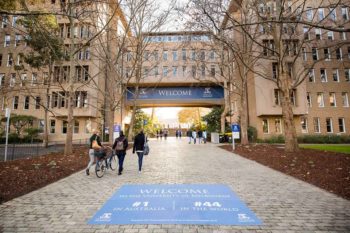
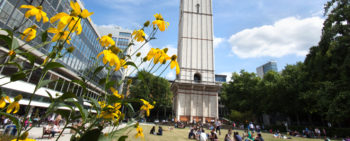
Overall, my experience thus far at the University of Melbourne has been a mix of joy, delight and slight disappointment! The campus itself is definitely a sight for sore eyes, lots of open spaces and majestic architecture; new and old. Students are spoiled for choice with study areas and quaint cafe spots around campus. Not to mention the central location of the university which makes it too easy to go for a nice outing with friends after a long uni day. The reasons for my slight disappointment? The food options on campus are not student-friendly in terms of wallet damage…so beware! On the bright side, it encourages me to pack my own lunch…which i guess turns it into an advantage? Either way, prepare to blow some serious cash if you decide to grab a meal and drink on campus!
View moreProgramme: CommerceDegree: Bachelor'sGraduation: 2024Delivery Type: On CampusCampus: Melbourne -
Commerce05 Dec, 2022 StudentGBPrestige Losing Relevance
I undertook the B-Comm degree in 2020 and am currently in my 3rd year. While the high barriers to entry and impressive name stand to intrigue, the strong private school elitist culture generally dampened the overall experience.
Course satisfaction ratings are less than world-class, reflecting the anti-social environment or perhaps the unbearable group projects with spoon-fed students who never learnt to value other people’s time or efforts.
Although it has been a year since COVID regulations loosened, lectures from 2020 are still being recycled, and many courses are still online, which leads me to often ask myself, ‘what am I paying for?’
I remain in the course as I have come too far not to complete it now. However, I would encourage high school students to look into Monash as opposed to Melbourne for a better culture.
View moreProgramme: CommerceDegree: Bachelor'sGraduation: 2022Delivery Type: Online -
Commerce9 months ago AlexHKBachelors of Commerce review
Studying the Bachelor of Commerce at the University of Melbourne has helped me grow and set up a strong path for my future. The course covers finance, marketing, and economics well, and gives me a clear idea of how business works in the real world.
The accounting and corporate finance subjects are challenging but useful. They train you to think clearly, weigh trade-offs, and make good decisions. But a lot of the course feels theoretical. If you don’t take action like joining case competitions, doing internships, or building side projects, it’s easy to fall into passive learning. It’s good that the uni offers those opportunities, and people from different colleges are generally friendly.
What I like most is the flexibility. I’ve used my electives to explore my business ideas and joined programs like Enactus. The big lectures make it hard to stand out, but there are still chances whether it’s finding a mentor, joining clubs, or turning class projects into something real. The course gives you tools, but it’s up to you to use them well.
One downside is that many Chinese international students tend to stick to themselves. That sometimes makes the class feel divided. Also, the online lecture videos aren’t labeled clearly. For example, in Intro Macro and Quant Methods, the lecture titles look like “ECON10003_2025_BU_SM2” instead of something simple like “Week 3 – Supply and Demand.” It’s small, but it gets annoying when trying to review.
Another issue is that the marketing course is outdated. It doesn’t talk much about current trends like short-form video, TikTok, or Reels. It still focuses on traditional models like the 4 Ps and SWOT, which feel disconnected from how digital marketing works today.
View moreProgramme: CommerceDegree: Bachelor'sGraduation: 2027Delivery Type: On CampusCampus: Melbourne