
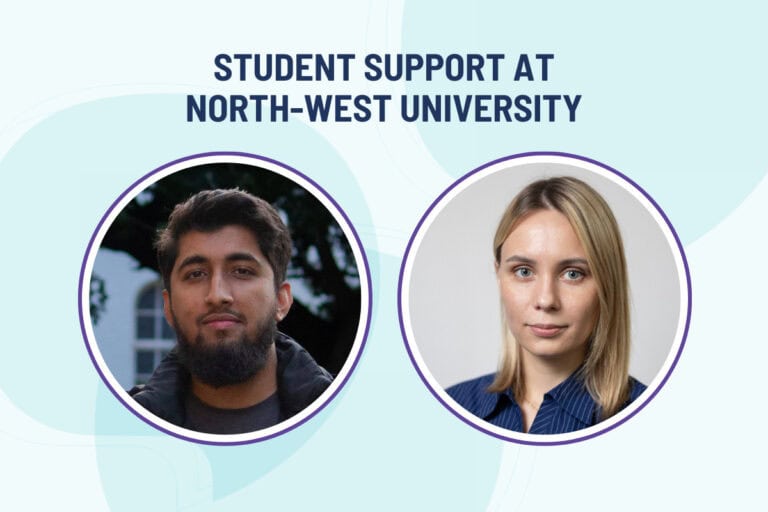
When Belgian student Sam Leysen arrived in South Africa’s North West Province to start an internship with North-West University (NWU), he expected to learn about and develop skills in international research projects. It ended up providing much more than that.
“I did not expect how much I would grow personally by working in a completely different cultural and research environment,” he explains.
Sam is one of two Business students from Hogeschool PXL who travelled to South Africa to complete an internship with NWU’s Africa Unit for Transdisciplinary Health Research (AUTHeR), on a project that aims to improve women’s access to healthcare in underserved communities in the North West Province.
The project is a partnership between NWU and Hogeschool PXL, funded by the international body VLIRUOS. Beyond providing real impact to local communities, the project brings together international researchers and students, providing opportunities to exchange skills and knowledge across borders.
How NWU turns local research into global impact
The AUTHeR project addresses a complex issue: women in underserved communities in South Africa face structural, social and economic barriers that limit their ability to access healthcare, impacting social outcomes for families and communities.
“I wanted to be part of this project because it combined my interest in business and organisational processes with the opportunity to contribute to research that has a real social impact,” Sam says.
Dr Xander Flemming, senior lecturer and programme chair for the MA in Positive Psychology at NWU, explains that much of the existing research identifies these  barriers without exploring solutions.
“Our study addresses this gap by generating contextually grounded, community-led, and transdisciplinary evidence on women’s experiences of healthcare access,” he says.
Dr Flemming’s academic background has also shaped the team’s approach. “My transdisciplinary lens ensures that women’s lived voices are foregrounded, recognising that local perspectives and experiences cannot be ignored,” he explains.
How do NWU students participate in global research?
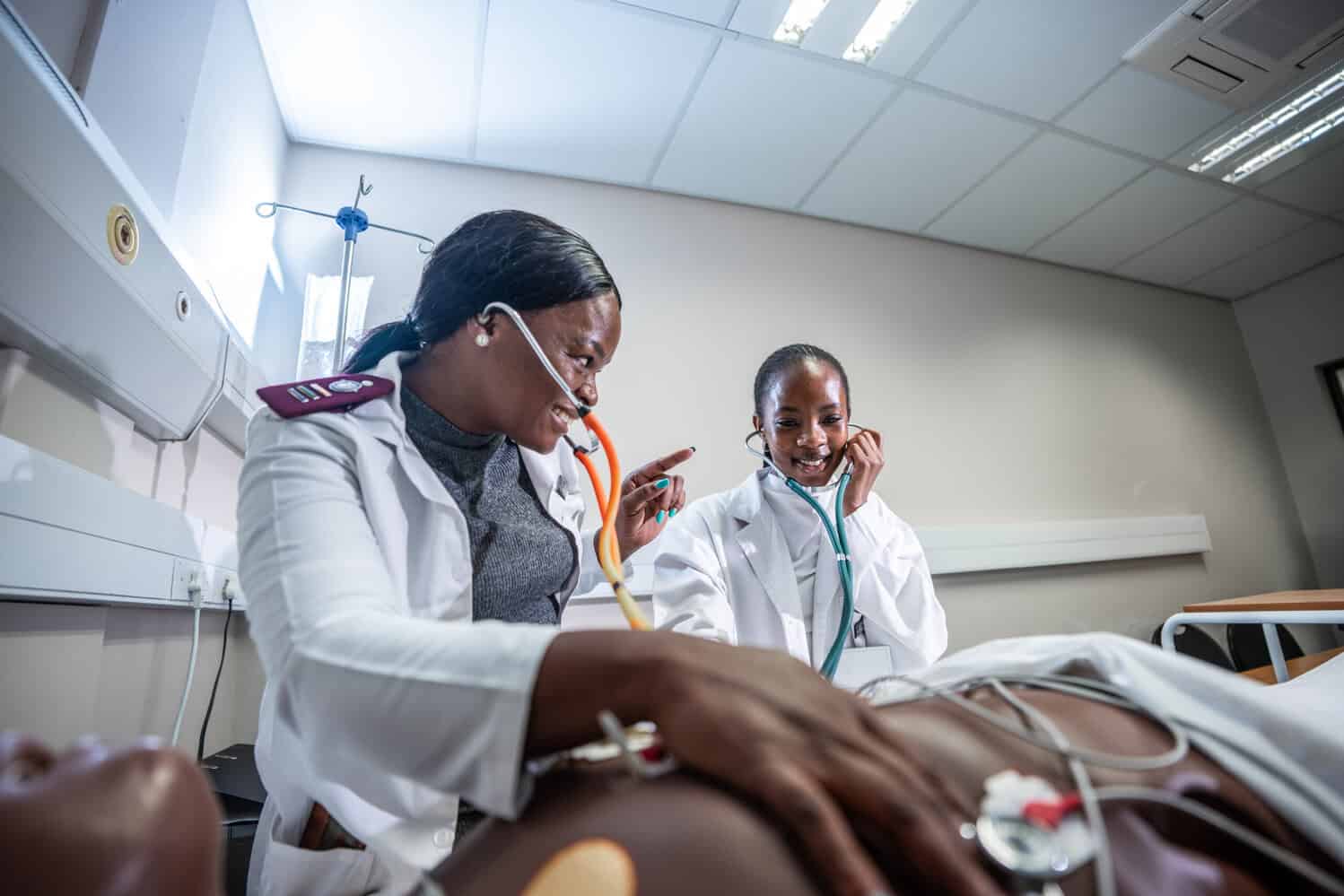
The partnership between NWU and PXL in Belgium brings together international expertise and methodologies, enabling cross-cultural learning between South African and European students.
Sam felt the international atmosphere from day one. “Compared to Belgium, where research is often perceived as more structured and institution-focused, I experienced a much stronger emphasis on community engagement and participatory research,” he says.
This kind of cross-cultural exchange isn’t always straightforward. Dr Flemming points to the challenge of aligning a team spanning very different institutional and cultural contexts. Rural North West Province is a world away from a European university setting, after all.
“Ensuring that Belgian partners understood these lived realities, while South African partners appreciated the comparative insights from European institutional and health systems, requires ongoing reflexivity and mutual learning,” explains Dr Flemming.
Sam’s contribution to the project was centred on streamlining and supporting this international collaboration. “I helped improve project management by developing templates for meeting agendas, minutes, attendance registers, project documentation, and SharePoint folder structures – these tools were designed to support collaboration within research teams,” he explains.
He also attests to the support NWU provided in adapting to this unique research environment. “They made me feel like part of the team rather than just a student completing an internship. This supportive environment allowed me to develop both professionally and personally.”
The importance of developing transferable skills

In addition to providing practical support to AUTHeR, Sam and fellow student Yinthe’s time with AUTHeR helped them develop valuable skills for future academic or business careers.
For example, Sam used the internship as the basis for his bachelor’s thesis by examining the factors that make multi-stakeholder collaboration succeed.
“I developed a much broader perspective on collaboration and the value of involving different stakeholders in solving complex societal challenges,” Sam reflects. “I believe these experiences will influence both my future studies and my career, particularly in roles involving project management, organisational improvement, or collaborative research.”
Both students also entered communities directly, building relationships with local stakeholders and taking part in fieldwork. Occasionally, this meant practising flexibility, adaptability, and problem-solving.
“During one data‑gathering day,” Dr Flemming recalls, “students arrived at the venue only to find that things had not gone as planned. With support provided, the students had to re‑strategise in real time, balancing respect for community priorities with the need to collect meaningful data.”
“Experiences like this teach students to embrace uncertainty, remain flexible, and collaborate beyond disciplines to find practical solutions. They learn that research in community settings is rarely linear, and that success depends on resilience, adaptability, and strong communication.”
Sam’s own reflections echo that. “I improved my communication, qualitative research, interviewing, thematic analysis, project organisation, and stakeholder management skills,” he says. “I also became more confident working independently in an international environment.”
How to measure project success
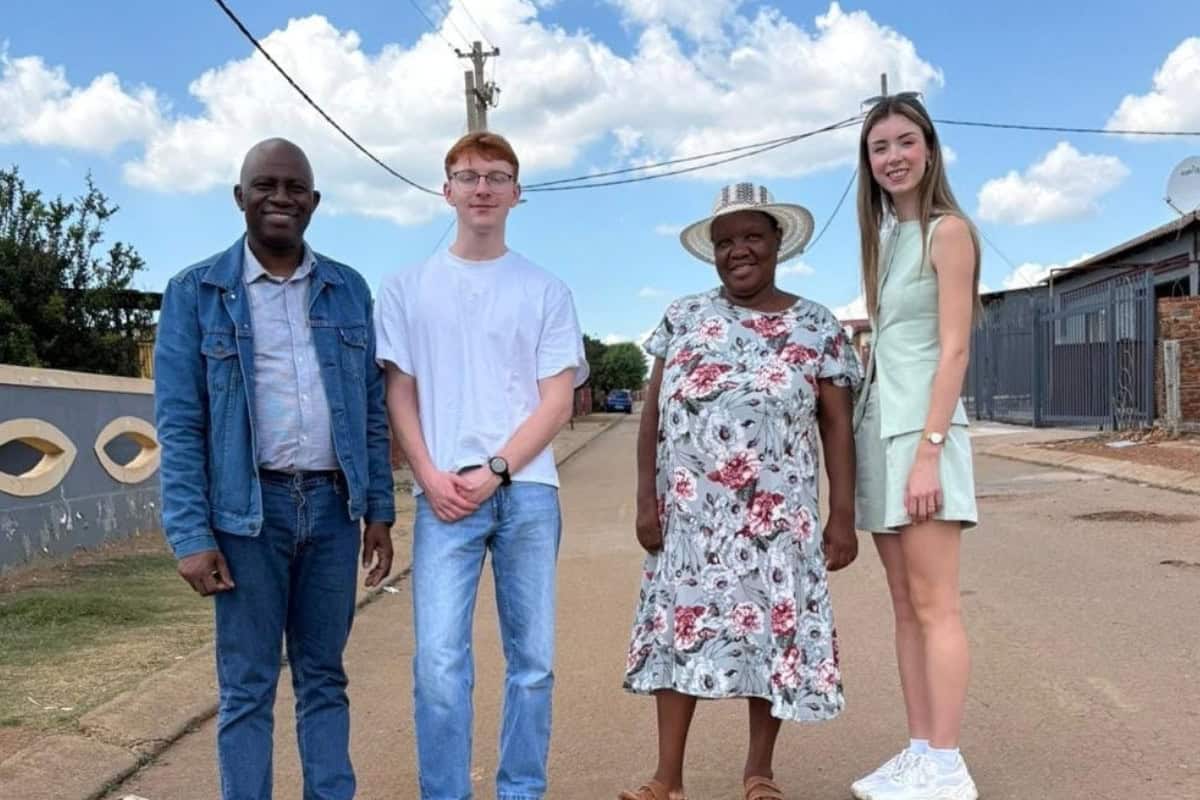
Success can be difficult to quantify in complex, multi-stakeholder research projects like this one. However, for Dr Flemming, the question is: has research influenced tangible policy decisions?
“A project like this demonstrates what is possible when academic work is deeply connected to communities and international partners,” he says. “Students see that they can contribute to projects where their work has immediate relevance, shaping health interventions, strengthening organisational processes, and amplifying the voices of underserved communities.”
The project has also impacted Sam and Yinthe in valuable ways. “One of the biggest eye-openers was realising that successful research is not only about collecting data or producing scientific results – it is about building trust with communities and involving stakeholders throughout the entire process,” says Sam.
“Working within an international and multidisciplinary research team taught me the importance of communication, flexibility, and respecting different perspectives,” Sam adds. “Researchers from different academic backgrounds often approached the same problem in different ways, but these different viewpoints actually strengthened the quality of the discussions and the project outcomes.”
Ultimately, the project shows that when international institutions work together to tackle a problem, the impact may reach far beyond one university campus.
“It shows that postgraduate studies and research is not confined to libraries or lecture halls, but can involve fieldwork in real-world contexts, collaboration across and beyond disciplines, and the opportunity to co‑create knowledge that directly informs policy and practice,” Dr Flemming says.
Related Posts :


Recent Posts
When Belgian student Sam Leysen arrived in South Africa’s North West Province to start an internship with North-West University (NWU), he expected to ...
At EAIE 2026 in Glasgow, Scotland, EDUopinions announced the 20 winners of the second annual Reputation Barometer Awards. Each of these institutions ...
It's the time of the year when everyone's eyes are on the rankings tables, waiting to see which business school is going to come out on top. Most ...

Madrid runs on cheap metro rides, long lunches and free museum afternoons, which is a big part of why so many students end up here. Before you ...