
- International students often need to work part-time to manage expenses while studying abroad.
- Work regulations vary by country, visa status, and institution; EU students have specific advantages.
- Students should consider the time commitment of work vs. studies; balancing is crucial for success.
- Finding a part-time job may depend on language skills and local job market conditions.
Studying abroad can be an expensive undertaking. You have to think about visa costs, tuition fees, and finally, the cost of actually enjoying yourself! Being an international student is an incredible experience, and to make the most of your time studying abroad, you’ll probably want to immerse yourself in the culture and explore. Given the cost of studying, it’s common for international students to work while living and studying abroad. But can international students work part time?
Sadly, this isn’t an easy question to answer. The rules for working while studying vary per country, and are also complicated by visa restrictions for students from certain countries.
However, to help put your mind at ease and help you prepare your finances for studying abroad, this guide will explain everything you need to know about studying abroad.
Can International Students Work Part Time?

The question of whether you’re permitted to work part time during your course will depend on:
- Your country of citizenship
- Your destination country
- Your visa.
For EU students going to study in the EU, you can work during your studies without a visa or permit. This even applies to full-time work, say if you wish to stay in that country after your studies have ended.
However, there may be restrictions on how many hours you can work part-time or the pay you can earn depending on the country you’re in. Some countries have strict hourly limits to students each week.
For non-EU students in the EU, your visa may apply restrictions to whether you can work or not. These restrictions will usually consist of a limit to the number of hours you can work, or when during the year you can work.
You should also check if your university imposes any part time working rules for international students. For example, some rigorous academic institutions may advise students not to work during term-time to preserve time for their intensive study programmes. We’ll go into these exceptions in the country-specific restrictions below.
Working Restrictions in the Top Study Destinations
To explore actual working restrictions on international students, we’ve chosen five popular European destinations for internationals students. These five countries attract a high number of internationals students each year for bachelor’s and master’s degrees and are also ranked in EDUopinions list of the best countries in the world for international students.
Germany

EU students can work for 20 hours per week while studying in Germany. These are the same restrictions that apply to German students. During semester breaks, there’s no limit to how much you can work as an EU student.
Students from non-EU countries studying in Germany are restricted to 140 full days or 280 half days of work each year. These numbers might look different to the information you’re seen before—they were updated in March 2024.
If you want to work more than the 140 full days/280 half days, you’ll have to get permission from a government agency (the Argentur für Arbeit).
Important notes on working while studying in Germany:
- If your part time wages exceed €520 per month, you’ll have to start paying taxes on your earnings. This will likely not be the case if you work less than 20 hours per week.
- You can’t work as self-employed if you’re a non-EU student in Germany.
- Your home country’s health insurance won’t cover you if you take a part time job in Germany – you’ll have to take out healthcare insurance with a German provider.
- Academic assistant jobs (with your host university) allow you to bypass the day restrictions and work for 20 hours a week maximum.
Student Review – Berlin School of Economics and Law

Incorporating a “learning-by-doing” methodology, will enable students to apply classroom knowledge to real life, without sacrificing their development of critical abilities like communication, cooperation, and problem-solving. These abilities will later help us students stand out in the job market because by then we’d have had a knack for it already. The addition of varied student body provides excellent opportunities for us to gain real experience and gain knowledge from people with various experiences and viewpoints. The program requires resources in the first few months and sometimes may leave you with long hours, all things considered, this is an excellent school.
Student Review – HafenCity University Hamburg

The college’s focus on career enhancement and placements is striking, enabling exceptional chances and networks for students to succeed outside of the classroom. Strong placement programs offer internships and job opportunities, giving graduates the experiences and skills they need to succeed in their new fields.
United Kingdom
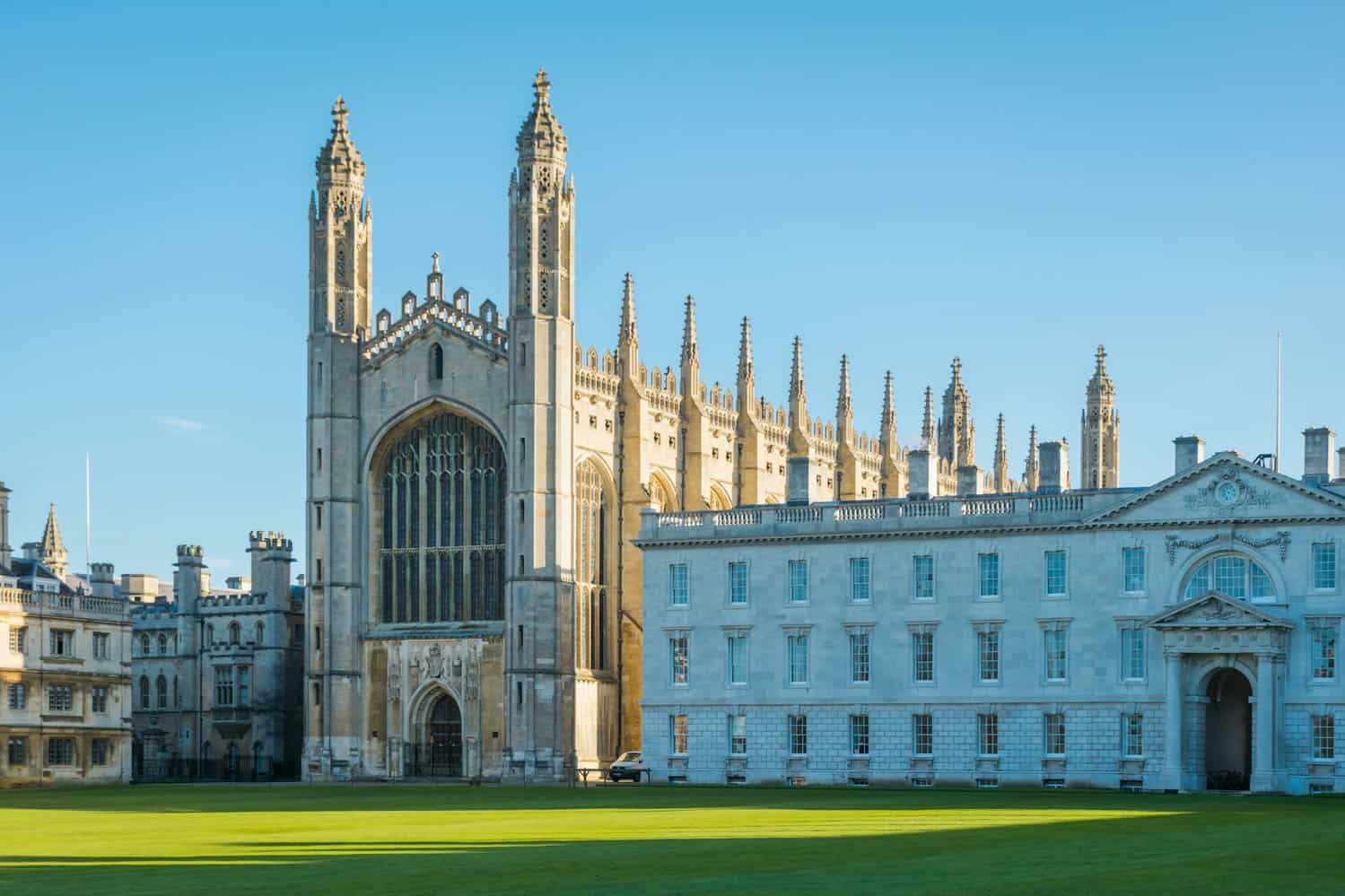
Both EU and non-EU students require a student visa to study in the UK if your course lasts longer than six months. Non-EU students may still need a visa for a short course lasting less than six months, though this might not be a student visa specifically.
The student visa allows international students to study for 20 hours per week. There are no restrictions on hours during semester breaks, so you can work full time during these breaks.
Important notes on working while studying in the UK:
- Roles as a Student Union Sabbatical Officer, which is a specific kind of academic assistant in the UK, do not count towards the 20 hours per week.
- The University of Oxford and the University of Cambridge place additional restrictions on students’ completing part-time work. At both institutions, bachelor’s students are not expected to work during their studies, and the university might enforce this if your tutor considers your studies to be suffering from the amount of time you’re working. There are also restrictions on master’s students depending on whether your course is full-time or part-time.
Student Review – Birkbeck University of London
Birkbeck provides you with a lot of flexibility in terms of learning as all their classes are in the evening. This could work well for you if you’re a working student or prefer learning during the evening.
Student Review – Newcastle University
I like the fact that the business buildings are modern, and have many features available to students such as free wifi, monitors for student use and numerous charging outlets around teh buildings and in lecture halls. The teachers are generally very kind and helpful, they certainly go the extra mile to ensure students are confident and taught. I would criticise the lack of help whilst applying for internships, Newcastle University has no programmes designated for students to easily get some work experience which some other universities do.
France

All international students can work part time in France, regardless of whether you are from the EU or a non-EU country. However, there are still limits, and non-EU students require a student visa.
As an international student, you can work a maximum of 964 hours a year while studying (that totals 60% of full-time working hours).
There are more limits to student jobs to allow students enough time to dedicate to their studies. So, if you get a student job at your university, you may work up to 670 hours between September and June and up to 300 hours from July to August.
Important notes on working while studying in France:
- The 964 hours limit does not apply to students from Algeria. Instead, Algerian students can work up to 50% of the hours of a maximum working week.
- If there’s an internship in your study programme, these hours don’t count towards the limit.
Student Review – SKEMA Business School
Skema’s special strength is its administrative and professoral opportunities. For anyone involved and willing to take part in the school’s activities, a door will be opened for you. I’ve been given the opportunity to work as an IT support during my two years at SKEMA, while studying for my Master of Science
Student Review – Grenoble école de management
The PGE program is really at the top, and the feeling of the level is perfect after having spent so many years in prep class to suffer, once arrived here we notice that the program is quite complete and without being excessively difficult.
Which means we have time to have fun and work, but also to carry out certain personal projects for those who have them.
The balance is felt more in this program. When you spend two to three years in prep class, it’s like comfort but with added value.
And then, given that it is a PGE program, the opportunities are also good regarding work.
It is in fact easier to find a good internship or well-paid job after this training.
The Netherlands

There are no restrictions to how many hours EU students can work while they study in the Netherlands.
Students from non-EU countries have a choice: you can either work for a maximum of 16 hours per week during semesters, or full time in June, July, and August. Unfortunately, you can’t get a part-time job during your studies and then increase your hours to full-time in the summer. Whichever route you choose, you’ll need a work permit to start working.
However, international students can work on a self-employed basis while they’re in the Netherlands, with no restrictions and no permit needed.
Important notes on working while studying in the Netherlands:
- Your employer will be responsible for applying for your work permit at least five weeks before your employment contract begins. You can’t do this yourself.
Student Review – Erasmus University Rotterdam
I strongly recommend this university because it is one of the best The Netherlands. It offers a huge variety of degrees, international programs to study abroad, experts in research, job opportunities, activities, huge varieties of programs etc. It also should encourage us the good level of the students in this university, making the environment competitive and pleasant to learn. As a downside, I think the quality of teaching can be improved in some courses to put the teaching part at the same level as the research part.
Student Review – Tilburg University
My program of study is psychology, and I do think Tilburg University is doing an amazing job in shaping my future.
I really like the classes, they are very relevant for being a therapist, and we have the opportunity to choose a major. Having a major keeps students motivated since we are working in a direction that we like and all of the classes are very relevant for each individual.
There are a few things that could be improved, I think the mental support can do much better. The study workload is very high and I do think teachers should be a bit more understanding at times when students are struggling.
Poland

International students, whether you’re from the EU or a non-EU country can work in Poland while they study. However, you’re restricted to 20 hours per week during term time and 3 months of work during holidays.
However, these limits may vary depending on your institution, so it’s worth checking with the International Students Office (ISO) when you arrive at your university.
Student Review – Vincent Pol UNiversity
I found the experience initially challenging due to the language barrier in Poland. However, the fact that classes are taught in English made it easier to adjust. The tuition fees are affordable, making it accessible for international students. There are plenty of part-time job opportunities for students, which is a great way to support oneself financially. I am currently living in shared accommodation, which is practical and conveniently located near the school and other amenities. The quality of education at Vincent Pol University is good overall, although some teachers are not as friendly or approachable as I would have liked. Despite this, I have found that the university offers a supportive environment for students.
Student Review – Cracow University of Economics
Professori, campus activities, curriculum, after school work (ie, jobs), all make going to this university fulfilling. The guarantee that you’d get a job at least 1-2 years after graduating with a bachelor is comforting, I’ve heard from several alumni of this institution that are from my hometown tell success story.
Should international students work Part time while studying?

Aside from the question of can international students work while studying, you should also consider whether you should work part time during your studies.
Studying abroad can be an intensive experience, and particularly in your first semester, you probably don’t want to be splitting your time between your studies and your work.
However, towards the end of your year, you might find it easier to balance your hours of part time work with getting stuck into your degree.
If you do take part-time work, always remember the restrictions that apply to you (if any). Working over your hourly limits is a bad idea – the government will say you’re working illegally, and may ask you to leave the country.
Conclusion
Working while studying can be a great option if you need to make a bit of extra cash during your studies. However, there are other reasons why students might decide to work part time while studying abroad, like to improve their language skills or get experience in a particular industry before they graduate.
Finding a part time job as an international student can be challenging. If you don’t know the local language, it might restrict you to non-customer-facing roles, perhaps in admin or more labour-intensive work.
However, in a country where the level of English is high (for example, the Netherlands), many international students can find work in the same workplaces as Dutch students.
So, before you consider finding part-time work, think about how easy it’ll be to find a position, and whether your studies might suffer.
If you want to study somewhere affordable where you might not need to take a part time job, check out our rankings of the most affordable cities and countries for international students in Europe.

Related Posts :




Recent Posts
The Times Higher Education World University Rankings 2027 are here, but there's something missing from the methodology – the students themselves.
...

– While an exciting curriculum, vibrant location, and busy student life are all important parts of your study abroad experience, it’s just as ...

Researchers in agricultural science solve some of the most pressing challenges of today’s society – food and water scarcity, crop damage, land ...

NHL Stenden University of Applied Sciences is among the best applied sciences universities in the Netherlands. The Dutch website Keuzegids ranks NHL ...