
Writing your research proposal is an essential stage of your PhD journey. In your proposal, you’ll outline what you want to achieve with your years of dedicated academic study and why it’ll be a valuable project for your university to be involved in. Given the importance of your PhD research proposal – which could make or break your efforts to gain funding for your project – many prospective students are daunted by the prospect.
So, how can you write a research proposal that will allow you to embark on your academic journey?
We spoke to Dr Christi Niesing, a senior lecturer at AUTHeR, the Africa Unit for Transdisciplinary Research, in the Faculty of Health Sciences of North-West University. She received her PhD in sustainable development in 2017 and has since led research projects in South Africa focused on improving healthcare and sustainable outcomes in the North West Province.
Dr. Christi regularly supervises PhD students and has also contributed her postgraduate experience to advisory sessions for prospective PhD students. In this article, she provides her best advice for PhD students embarking on the challenge of writing a successful proposal.
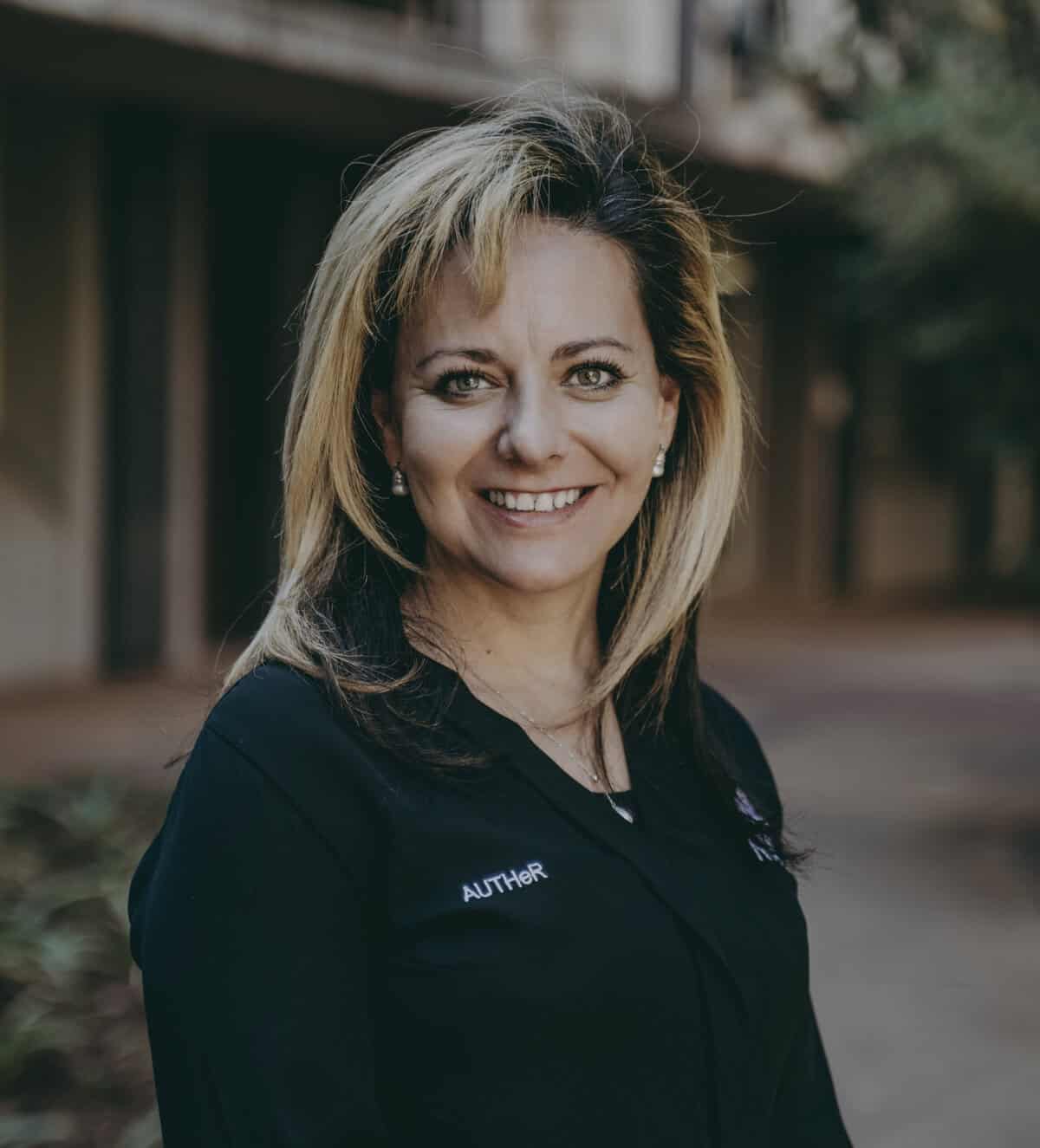
Dr Christi Niesing, North-West University
5 top Tips for Writing Your PhD Research Proposal
1. Ensure your proposal flows.

Think of your research proposal as a comprehensive guide to your future project. It should be clear, persuasive, and make complete sense when considered as a whole.
“I always tell students, your proposal is your roadmap, and the better your roadmap is, the better your research process will be once you embark on it,” Dr Christi recommends.
Although the specifics about what to include in your research proposal can vary depending on your university and field of study (for example, research with test subjects will require a rigorous ethics proposal), you’ll typically have to prepare the following sections:
- Title
- Introduction
- Problem statement or hypothesis
- Aims and objectives
- Background, including key literature, case studies, or research findings
- Method and timetable for research
- Key references for your project
Although you may write each section separately – for example, compiling the context for your studies by reading the key literature and research in your field – your research proposal is read as a complete document. So, it’s vital that each section of your proposal logically follows the previous section and informs the next one.
“The words you can use in your title should be your keywords, and they should be part of your introduction and your background,” Dr Christi advises. “That would then guide your literature search, and all of those [keywords] should be in your problem statement, and that should align with your aims and your objectives.”
Your research method should also match the fundamental statement or question you’ll address. “There’s no use in asking a question about exploring the experiences of a specific community and then wanting to do it in a quantitative way because it doesn’t make sense,” Dr Christi adds.
2. Identify the ‘so what?’ element.

Your research may make complete sense to you – but can you convince your supervisors, university peers, and, eventually, an examining board that you’ve contributed something valuable with your research?
“I want to see the ‘so what?'” Dr Christi explains. “Because it’s a lot of effort and a lot of time that goes into doing a study, and it will never be perfect. Even a PhD will never be perfect, but it must be a contribution to the body of knowledge.”
Your ‘so what?’ should link to your intrinsic motivations for pursuing a PhD. What do you want to contribute? Why? What difference do you think your project will make?
After you’ve solved the ‘so what?’ question, Dr Christi advises students to consider how they will contribute their knowledge to the wider academic world.
“I want to see how you’re going to disseminate these results back to your community or your participants. And if you’re going to do academic articles, which journals are you aiming for?” she explains.
3. Keep It Focused.

If you’re genuinely passionate about your research project, chances are you could write pages and pages of words about your background knowledge, reasons for doing the project, and what it will achieve. However, keeping it clear and focused is the key to a successful PhD research proposal.
Dr Christi has a simple test for prospective students: “If you cannot tell me in one sentence what you’re going to do, then you don’t know what you’re going to do, and it’s not clear.”
“The proposal should only include what is important for this study – no added fluff,” she adds.
However, PhD students must balance the need to keep a proposal lean with the need to make it persuasive.
“It has to have the gravitas to convince a reader that this is, firstly, worth the money and the time spent on it, and, secondly, that you will actually be able to produce new knowledge going through this process.”
If you’re unsure how to persuade, look at an example of a successful research proposal – your supervisor will have one! The first chapter of a PhD is typically a more comprehensive version of the first proposal, so read it and consider the language used and how it was written.
4. Be Ready to accept criticism and feedback on your PhD Research proposal.

Completing a PhD is no easy task. All prospective postgraduate students know this, but it’s a very different thing to be suddenly thrown into the competitive world of academia from the moment you start writing your research proposal.
As a result, to begin this process, you must be willing to receive criticism on your work and accept the feedback offered by your supervisors and mentors. Remember, your supervisors will also have to sign their name to your completed thesis, so they’re invested in your success.
“My role as a supervisor is for you to produce the best product that you can produce. To do that, I have to push you to your own limits, critique you the whole time and get you into a space where you move beyond what you thought you could do,” Dr Christi explains.
In addition to your supervisor, ask other people for feedback on your research proposal. This might include professors you speak to regularly, friends who have pursued academia, or even family members.
External input from people who know your field of research or have no idea about it will help you fine-tune your proposal and take notice of errors like spelling or grammar mistakes.
If you’re in the process of writing your proposal already, you’ve probably already found a supervisor for your project. However, if you haven’t, Dr Christi has crucial advice for choosing your supervisors.
“Try to find a supervisor that you will be willing to take a lot of critique and criticism from and that you know how to manage conflict with,” Dr Christi says.
5. Show your passion for your project.

Your passion for your project should be woven into your proposal so that any reader is convinced that you have what it takes to complete this years-long process.
“A really good proposal convinces the reader from the first sentence – actually, from the title – that I’ve got this, I know what I’m doing,” Dr Christi advises.
You won’t have all the knowledge in your field of study yet – that’s the purpose of an advanced degree such as a PhD, after all – but your research proposal should prove that you are on your way to being an authority on your chosen subject.
Your belief in your project should be revealed through your comprehensive background reading, a focused research question, and accurate referencing. But it’s also shown in your intrinsic enjoyment of the subject.
“Show your reader that you’re knowledgeable about the subject, you know what you want to do, and that you’re enjoying it – in the end, they will also enjoy reading it.”
Conclusion
Completing a PhD is an incredible achievement, but that success starts with your research proposal. A well-written (and well-argued) PhD research proposal can help you start your project in the right place, confident that you have the ability to carry it through to the end.
If you’re considering doing a PhD, Dr Christi has one last piece of advice. “It’s not for the faint-hearted,” she admits. “The only reason to do a PhD is to do it for yourself. If you’re doing a PhD for somebody else, please don’t do it.”
So, there you have it: all the best advice for writing a top-tier PhD research proposal. If you’re interested in hearing more about Dr Christi’s research at AUTHeR, you can find more information on North-West University’s website.
Want to know what it’s like to study in South Africa? Check out our blog on five reasons to choose the country for your studies.





Recent Posts

A Master of Science (MSc) degree from a French business school can prepare you for careers in a wide range of industries – but how do you decide on ...

Rennes School of Business is located in the historic town of Rennes, the capital of Brittany. This is one of France’s most popular student cities, ...

We created the EDUopinions Student Reviews Guide to highlight students' opinions of universities. All of the rankings we produce as part of the Guide ...

The University of Pécs in Hungary ranks among the top 1,000 universities in the world, and in the top 300 in Europe. Located in one of Hungary’s best ...