Royal University of Phnom Penh
speciality:
Management
What is a Management degree?
A Management degree builds a strong foundation in a wide variety of fields including business, finance, economics and marketing. It develops students’ understanding of business practices, structures, business theory, business strategy and research as well as global economies and financial markets. Doing a Management Degree also allows students to gain skills that enable them to work with financial and numerical data effectively.
Management degrees cover different managerial roles, such as Human Resource (HR) management, hospitality management, innovation management, operations management, etc. They can be specialized into one of the areas mentioned above or follow a more general approach that covers most of these areas.
The range of management degrees is huge and includes Business Management, Management, Marketing Management, etc. They are predominantly offered in the business departments/business schools/management schools of different universities.
Benefits of a Management degree
One of the main benefits of this degree is that Management is a broad discipline, which keeps students’ career options open.
Management degrees could have a very practical focus, which is an opportunity for students to gain experience in the process of completing their degree before having started their professional careers. Management courses usually offer work placements and practical modules, which include business simulations and business creation in a simulated environment. Acquiring practical experience through these opportunities could make students stand out from the crowd in the job market once they graduate. Research-oriented Management degrees also exist for those who prefer the theoretical aspects of such a degree. Most courses, however, have established a good balance between theory and practice in order to meet the needs of all students.
Management degrees also prepare students to serve the managerial role across a wide range of areas, including HR management, hospitality management, innovation management, operations management, etc. Students can specialize in one particular area or focus on gaining knowledge across all of these areas thanks to the high availability of different management courses.
Additionally, there is a high demand for management professionals in the contemporary business world. Therefore, taking a management course is an opportunity for students to kick-start their careers and occupy a higher position in the organizational hierarchy.
management degree Structure
Management courses usually begin by introducing students to different areas covered by the managerial role, such as organizational management, business environment, statistics, accounting and finance, business growth, etc. After the first year, institutions allow students to explore the management discipline into more depth by delivering specialized modules and offering optional modules, which enable students to choose subjects that interest them the most and are most relevant to their career aspirations.
Management degrees take 3 years to complete in the UK. However, their duration could extend to 4 years if students choose to spend a year in industry between their second and third year, which is a popular option among the student community. Setting placement opportunities apart, the duration of a Management degree depends on three main factors – country, mode of study (part-time or full-time) and degree level. Below are listed the approximate durations of Management degrees in the most popular countries for Higher Education in Europe:
- Management degrees’ duration in the UK:
- Bachelor’s in Management: 3 years full-time and 6 years part-time
- Master’s in Management: 12 months full-time and 36 months part-time
- PhD in Management: 3-6 years
- Management degrees’ duration in the Netherlands:
- Bachelor’s in Management: 3-4 years
- Master’s in Management: 1-2 years
- PhD in Management: about 4 years
- Management degrees’ duration in Spain:
- Bachelor’s in Management: 3-4 years
- Master’s in Management: 1 year
- PhD in Management: 3 years full-time and 5 years part-time
- Management degrees’ duration in Germany:
- Bachelor’s in Management: 3-4 years
- Master’s in Management: 1-2 years
- PhD in Management: 3-4 years
- Management degrees’ duration in France:
- Bachelor’s in Management: 3 years full-time
- Master’s in Management: 1-2 years
- PhD in Management: 3-6 years.
- Management degrees’ duration in the US:
- Bachelor’s in Management: 4 years
- Master’s in Management: 2 years
- PhD in Management: 4-6 years.
2 Student Reviews
-
Tourism & ...20 Feb, 2025
 SopheaKHA Cultural and Academic Gem The Royal
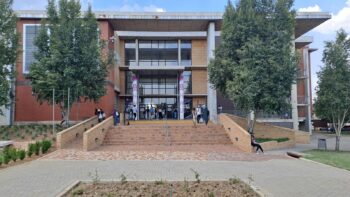
University of Phnom Penh is a gem in the heart of Cambodia. The campus is a mix of modern and traditional Khmer architecture, with lush greenery everywhere. The library is my favorite spot—it’s quiet, spacious, and has an amazing collection of books and resources. What I love most is the sense of community here. The professors are incredibly supportive, and the students are friendly and collaborative. The university also hosts cultural events that celebrate Cambodian heritage, which makes me feel connected to my roots. The streets around the campus are lively, with food vendors and small shops, making it a vibrant place to study and hang out. It’s not just a university; it’s an experience.
View moreProgramme: Tourism & Hospitality ManagementDegree: Bachelor'sGraduation: 2024Delivery Type: On CampusCampus: Phnom Penh -
Tourism & ...16 May, 2024 RomamKHTourism course
While studying at the Royal University of Phnom Penh, I’ve found the tourism course to be incredibly insightful and practical. The curriculum covers a wide range of topics, from cultural heritage preservation to sustainable tourism practices. The professors are knowledgeable and experienced, often incorporating real-world examples into their lectures. Additionally, the university provides ample opportunities for hands-on experience through field trips and internships with local tourism agencies. I believe this course equips us well for the job market, as it not only teaches theoretical knowledge but also emphasizes practical skills that are highly sought after in the industry.
View moreProgramme: Tourism & Hospitality ManagementDegree: Bachelor'sGraduation: 2025Delivery Type: On CampusCampus: Phnom Penh