University of Venda - Univen
speciality:
Environmental Sciences
What is an Environmental Sciences Degree?
Environmental Sciences Degrees are usually undertaken by students who like the natural, physical, and biological sciences.
By studying this specialisation, young people get new knowledge about the processes and phenomenons that affect the environment and find solutions to problems that concern nature.
Students’ interest has increased a lot in recent years due to climate change, pollution and other adverse effects on the environment. Environmental Sciences graduates bring multiple benefits to the world they live in, analysing systems and finding effective solutions to develop sustainability and green processes.
Benefits of an Environmental Sciences Degree
The main advantage of the Environmental Sciences Degree is that students are becoming more aware of how we need to protect the environment, give up chemicals and harmful products that pollute the planet in favour of the ones that are biodegradable or environmentally friendly. By becoming aware of the dangers we are facing, students find innovative ideas for sustainability and sustainable development.
This specialisation encourages young people to develop skills such as critical and creative thinking, teamwork, adaptation. Complex issues are debated through this degree, so students need to be innovative and think outside of the box to use resources wisely, protect and, above all, preserve natural wealth.
Besides the advantages listed, the rate of employment is high, because the jobs are being more and more diversified. It has been noted that there is a greater need for environmental consultation, biologists exploring natural environments, and sustainability consultants. This degree can also be useful for other jobs, such as Landscape Architect.
Environmental Sciences Degree Structure
The structure of the degree includes several subjects, depending on the university a student chooses. Some universities prefer to focus on the theoretical policies and notions discussed in the courses, while others choose to rely on systematic research and practical experience gained in the environment. In principle, these studies require a background in the following sciences: Biology, Chemistry, Geography, Ecology, Physics.
Bachelor Degrees in Environmental Sciences last between 2 and 3 years. Courses are based on the knowledge of the Sciences of Nature and Social Sciences. Most Bachelor programmes are based on college courses, but also on practical projects. A Master’s programme lasts for about 2-3 years and is recommended for those who want to continue with in-depth research into the elements of the environment. Doctoral courses are designed in such a way that students will be guided to conduct independent research, having a much different structure than during their Bachelor. This programme lasts between 3 and 6 years.
It is important to know that students can choose to pursue this degree online. In this way, students can take advantage of the flexibility and save money, as costs are much lower compared to those spent at universities. For example, The Open University offers online courses, the level of information being authentic and useful for the students.
2 Student Reviews
-
Environmental Sciences05 Feb, 2025
 StudentZAA university at a semi-rural town
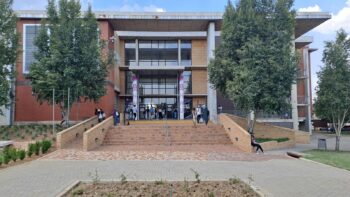
The University of Venda is an academic institution found in the town of Thohoyandou. It prides its self with academic excellence and research. However, there aren’t a lot of activities for students besides academics and sports. A normal routine for a student would be attending morning classes, having lunch at one of the food outlets(there are 3 on campus), going to the library, attending their practicals at the labs, going to the student gym then back to their dorms.
View moreProgramme: Environmental SciencesDegree: Bachelor'sGraduation: 2026Delivery Type: BlendedCampus: Pretoria -
Ecology16 May, 2024 StudentZAShaping Me for Environmental Work
Having graduated with a Bachelor of Environmental Sciences (BEnvSc) from the University of Venda in 2021, I can honestly say the program was a great experience. It opened my eyes to the challenges facing our environment and equipped me with the skills to tackle them.
The classes covered a wide range of topics, from ecology and resource management to pollution control and sustainability. The professors were knowledgeable and passionate about the environment, making even complex issues understandable. They also had a strong focus on the environmental issues specific to South Africa, which I found very relevant.
What I enjoyed most was the program’s balance between theory and practical learning. We didn’t just learn about environmental problems – we participated in field trips, conducted research projects, and even learned how to use specialized software. These hands-on experiences were invaluable and helped me develop important skills for a career in environmental science.
The program at Univen is well-respected in South Africa, and the faculty connections helped me land an internship with a local environmental NGO (Non-Governmental Organization) during my studies. This internship gave me real-world experience and helped me solidify my career path.
I heartily endorse the University of Venda’s BEnvSc curriculum. This demanding yet fruitful degree will get you ready for a profitable career in environmental science. This program is an excellent place to start if you have a strong desire to protect the environment!
View moreProgramme: EcologyDegree: Bachelor'sGraduation: 2021Delivery Type: On Campus