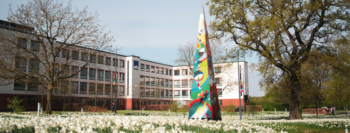

Kuban State Medical University
speciality:
Medicine And Surgery
What Is a Medicine Degree?
Saving someone’s life is perhaps one of the most remarkable feelings in the world. Even so, not so many of us have the chance to experience this. It takes passion, a strong personality and years of study to be able to work in the medical field.
Pursuing a Medical degree is not only challenging and demanding but also competitive. Medical degrees are shaped for people who show high motivation and commitment as well as interest for sciences.
Throughout a Medicine degree, candidates are equipped with a wide range of competences, from practical abilities required for specialized hands-on tasks to communication skills needed to interact with the patients. Thus, any medical students will be able to take a simple blood sample as well as perform a complex surgical procedure.
Benefits of a Medical Degree
Undoubtedly, medicine is one of the most vital fields of work – therefore there will always be a high demand of workforce needed. The employment rate for a medical graduate student is of 90%.
Due to its diverse branches, graduates from a Medical course have a variety of career choices, according to their expertise. Nursing, radiology, anaesthetics are just some of the many specialities offered in this field. Regardless of the speciality, the most important aspect needed to be taken into consideration is that medical professionals are well-respected and well-paid all over the world.
Additionally, graduates possess a series of transferable skills, such as logical reasoning, critical appraisal, listening, written and oral communication and many others. These assets are sought and highly valuable in most fields of work.
Medical Degree Structure
Medical courses are usually a six-year commitment, but it can vary according to the university. Most of the modern universities integrate clinical education with basic sciences from the beginning of the academic curriculum, while traditional institutions divide them into preclinical and clinical education.
Most schools understand the importance of practical knowledge, especially in this field, therefore they encourage the students to observe professional healthcare practitioners. Another way to gain practical experience is to go to different clinics and receive specialised training, followed by actual practical work.
No matter the practices of the university, always keep in mind that medical courses are structured differently in every country. Therefore, medical qualifications gained in one country are not necessarily recognised in another country.
1 Student Reviews
-
Medicine and ...10 months ago
 StudentAEMBBS program in southern city of russia
⭐ Student Review: Kuban State Medical University (2021–Present)
As a current student in the English-medium medical program at Kuban State Medical University, my journey has been a mixed experience of learning, adapting, and overcoming challenges.🧠 Academics
The academic structure is decent — some lectures and practicals are well-organized, and many professors are knowledgeable and supportive. However, for students in the English-taught program, it can be challenging to gain real clinical exposure. While clinical sessions technically begin from the first year, the hands-on experience is quite limited, especially when compared to Russian-speaking students.🩺 Clinical Training
Opportunities to interact with patients or participate in real medical practice are comparatively less for English-medium students. The structure exists, but actual involvement feels passive more often than not.🌍 International Student Life
As an international student, the transition was difficult — both culturally and linguistically. There is a clear language barrier, and navigating daily interactions outside the classroom can be tough. That said, the university has provided consistent support in helping us adjust, especially during the initial phase. The medium of instruction is English, but since most staff and hospital personnel are primarily Russian-speaking, communication gaps do occur frequently.🏙️ Campus Life & Living
Life in Krasnodar is average in affordability — not too expensive but not cheap either. Hostel facilities are basic, and students mostly cook for themselves, which gives a certain level of independence. There are activities and events on campus, but it’s often hard to find out about them unless you’re actively looking. Safety and freedom within the hostel are fair, with minimal restrictions.💭 Final Thoughts
What I appreciate most is the supportive nature of the university during difficult times and the effort they are putting into building the English program, even though it’s still in its early phases. However, they definitely need to improve clinical involvement for English-medium students and provide better integration opportunities for international students in terms of language support and extracurricular access.Would I recommend this university? That’s a personal decision. As one of the early batches in the English program, we’ve had to deal with many growing pains. If you’re someone who can adapt, self-learn, and manage through some structural limitations, it may work for you — but be aware of the language barrier and limited clinical exposure.
View moreProgramme: Medicine and SurgeryDegree: Bachelor'sGraduation: 2027Delivery Type: On CampusCampus: Krasnoyarsk