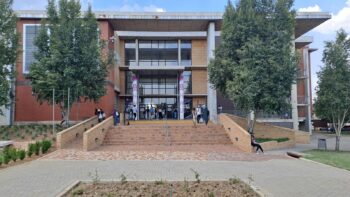

Islamia University of Bahawalpur - IUB
speciality:
Computer Science
What Is a Computer Science Degree?
The passion for technology can lead you to choose the specialisation of Computer Science. This field has become increasingly popular in recent years, the development being so rapid that people are trying to keep up with it.
A Computer Science degree deals with the theoretical and practical foundations of information technology and computers. The scientific part merges with the practical one in various algorithms, information processing or in computational models. This specialisation often aims to study methodological processes, making representations on a computer, storage, or accessing information.
At the same time, the study of Computer Science focuses on the learning of programming languages, which are extremely important for any student. Python, C ++, Java are just a few of the programming languages that are explored in depth by students in order to solve the applications received from the faculty. Furthermore, on the labour market, programming languages are highly appreciated and integrated, being a useful tool for optimal performance of industries.
Benefits of a Computer Science Degree
The most important skill that young people learn following this degree is the use of programming languages. Once they grasp the logic of programming, they will easily be able to master the languages and build or develop WEB applications. Additional skills that are acquired can be: network design and engineering, software engineering, multimedia design. In addition, classical skills such as teamwork, leadership, problem-solving or time management are also gained by students.
According to recent studies, 6 of the 10 best jobs chosen by graduates are linked to Computer Science. These include Web Design, Computer Support Specialist, IT Operations Technician or Database Administrator. Moreover, the employment rate is favourable to the students, being over 70%. Due to the rapid advancement of technology, it is expected that the supply will grow in the future, requiring computer science specialists in any field.
Computer Science Degree Structure
To study Computer Science, students can either pursue university courses or follow courses online, depending on their availability and income. Online or outside-university courses include disciplines such as: Information Systems Management, Game Programming, Web Development, Network Fundamentals. They usually have a duration of 2 years. Although these courses provide important skills in this specialisation, students may be disadvantaged when competing with a student who has a Bachelor’s Degree. Some of the most important campuses in the world include Penn State World Campus, University of Massachusetts, Lowell (The Division of Online Learning and Continuing Education), Saint Leo University.
The Bachelor in Computer Science lasts around 3 to 4 years, depending on the university. Throughout the programme, students acquire mathematical knowledge, theoretical and practical foundation in programming. Some of the subjects discussed are: Computer Programming, Data Structures, Databases, Algorithms, Linear Algebra, Probability Theory or Statistics. These vary according to the curriculum of the university.
A Master’s program complete the students’ necessary career skills. In this way, they have a greater understanding of computing softwares, tools, packages, and computer architecture.
There are Master programs that can be followed even by those who have not undertaken undergraduate studies in Computer Science, such as those offered at the University of Birmingham for example. These programs can take either 2 to 5 years.
A PhD program is especially dedicated to those who want to research or become university professors and can last between 4 to 5 years.
1 Student Reviews
-
Information Technology8 months ago
 HamzaPKThe Reality of Studying IT at IUB
I am currently studying at The Islamia University of Bahawalpur in the third year of my Bachelor in Information Technology. Overall, the university provides a good learning environment, and the academic process is satisfactory. However, like every institution, it has both strengths and weaknesses.
On the positive side, the DSA (Directorate of Student Affairs) is highly responsive and cooperative when it comes to addressing students’ concerns. This creates a supportive atmosphere where students feel that their issues are heard.
On the other hand, there are several areas that need improvement. Some members of the teaching staff are not as cooperative or engaging as they should be, and the university often fails to give proper attention to individual students. Additionally, the student population exceeds the capacity of the campus, which sometimes affects the quality of education. Another major concern is that the curriculum is outdated, with limited opportunities for practical lab work, which is essential in a field like Information Technology. Moreover, the fees are relatively higher compared to other universities, making affordability a challenge for many students.
In conclusion, while the university offers a decent academic experience and responsive student support through DSA, it still needs to work on modernizing its courses, enhancing practical learning opportunities, ensuring better faculty-student interaction, and revising its fee structure to make education more accessible.
View moreProgramme: Information TechnologyDegree: Bachelor'sGraduation: 2027Delivery Type: On CampusCampus: bahawalpur