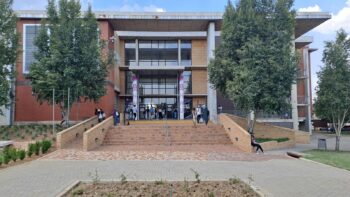

Michael Okpara University of Agriculture Umudike - MOUAU
speciality:
Computer Science
What Is a Computer Science Degree?
The passion for technology can lead you to choose the specialisation of Computer Science. This field has become increasingly popular in recent years, the development being so rapid that people are trying to keep up with it.
A Computer Science degree deals with the theoretical and practical foundations of information technology and computers. The scientific part merges with the practical one in various algorithms, information processing or in computational models. This specialisation often aims to study methodological processes, making representations on a computer, storage, or accessing information.
At the same time, the study of Computer Science focuses on the learning of programming languages, which are extremely important for any student. Python, C ++, Java are just a few of the programming languages that are explored in depth by students in order to solve the applications received from the faculty. Furthermore, on the labour market, programming languages are highly appreciated and integrated, being a useful tool for optimal performance of industries.
Benefits of a Computer Science Degree
The most important skill that young people learn following this degree is the use of programming languages. Once they grasp the logic of programming, they will easily be able to master the languages and build or develop WEB applications. Additional skills that are acquired can be: network design and engineering, software engineering, multimedia design. In addition, classical skills such as teamwork, leadership, problem-solving or time management are also gained by students.
According to recent studies, 6 of the 10 best jobs chosen by graduates are linked to Computer Science. These include Web Design, Computer Support Specialist, IT Operations Technician or Database Administrator. Moreover, the employment rate is favourable to the students, being over 70%. Due to the rapid advancement of technology, it is expected that the supply will grow in the future, requiring computer science specialists in any field.
Computer Science Degree Structure
To study Computer Science, students can either pursue university courses or follow courses online, depending on their availability and income. Online or outside-university courses include disciplines such as: Information Systems Management, Game Programming, Web Development, Network Fundamentals. They usually have a duration of 2 years. Although these courses provide important skills in this specialisation, students may be disadvantaged when competing with a student who has a Bachelor’s Degree. Some of the most important campuses in the world include Penn State World Campus, University of Massachusetts, Lowell (The Division of Online Learning and Continuing Education), Saint Leo University.
The Bachelor in Computer Science lasts around 3 to 4 years, depending on the university. Throughout the programme, students acquire mathematical knowledge, theoretical and practical foundation in programming. Some of the subjects discussed are: Computer Programming, Data Structures, Databases, Algorithms, Linear Algebra, Probability Theory or Statistics. These vary according to the curriculum of the university.
A Master’s program complete the students’ necessary career skills. In this way, they have a greater understanding of computing softwares, tools, packages, and computer architecture.
There are Master programs that can be followed even by those who have not undertaken undergraduate studies in Computer Science, such as those offered at the University of Birmingham for example. These programs can take either 2 to 5 years.
A PhD program is especially dedicated to those who want to research or become university professors and can last between 4 to 5 years.
4 Student Reviews
-
Computer Engineering ...6 months ago
 SomadinaNGLack of Infrastructure maintenance.
As a past student of MOUAU Nigeria, I did enjoy my academic experience. My main qualms with the school was it’s lack of maintenance for already existing infrastructure. The management was focused on raising new buildings and gave little attention to old ones. The inter-campus shuttles were abandoned.
I will commend the security at the school and the dedication of lecturers and staff. They always went out of their way to ensure students had a pleasant learning experience.
View moreProgramme: Computer Engineering and Computer ScienceDegree: Bachelor'sGraduation: 2016Delivery Type: On CampusCampus: Umudike -
Computer Science7 months ago
 StudentSlow school processing and non digital access
MOUAU has a very good environment for learning with qualified staff. They offer many courses that prospective students can take up and excel in it.
View more
But there processes are too slow, from the admin to the publishing of results by head of offices. They take so long to fulfill a particular procedure needed by a very large number of students and the worst is that there digital experience is backward. Because I believe if they have introduced some digital help in some of there activities, it’s going to help to fasten the slow processes thereby making students more happy and delighted.Programme: Computer ScienceDegree: Bachelor'sGraduation: 2025Delivery Type: On CampusCampus: Umudike -
Computer Engineering7 months ago StudentNGSocial Connections
The best part of my school experience was the friendships made along the way and the social aspect of the school. While the structure was solid, poor maintenance, dull lectures, and weak administration made it less enjoyable.
View moreProgramme: Computer EngineeringDegree: Bachelor'sGraduation: 2021Delivery Type: On CampusCampus: Umudike -
Computer Engineering16 Sep, 2024 EnochNGUniversity Isn’t for the Faint of Heart
My Experience at MOUAU
Attending university is often described as a life-altering experience, and for me, Michael Okpara University of Agriculture, Umudike (MOUAU) has been no exception. The journey at MOUAU is not one for the faint of heart—it’s a place where challenges shape character and resilience, but it also offers incredible opportunities for growth, academically and personally.
MOUAU is a specialized institution, particularly known for its focus on agriculture and related disciplines. For anyone with a passion for fields like Agricultural Engineering, Food Science, or Environmental Management, this university can provide a strong foundation. The hands-on approach to learning, especially in practical courses, is one of the highlights of the institution. As a student, you’ll find yourself working not just in classrooms but also in the field, laboratories, and other practical environments that give a real-world perspective on what you’re studying.
However, there are challenges that come with attending MOUAU. Infrastructure can be an issue at times, and the academic system, like many in Nigeria, may not be as streamlined as one would hope. It’s essential to be mentally prepared for delays or administrative issues that can cause frustration. But if you’re determined, you can make the most out of the resources available, including excellent lecturers who are passionate about their subjects and willing to support students through thick and thin.
Would I recommend MOUAU to prospective students? It depends on what you’re looking for. If you’re passionate about agriculture and related fields, and you’re ready to navigate some of the typical hurdles in Nigerian universities, MOUAU offers a strong platform to build your career. But if you’re someone who values ultra-modern facilities and seamless processes, you might find it a bit challenging here.
In conclusion, MOUAU isn’t a university for everyone—it requires resilience, focus, and a genuine interest in your course of study. But if you’re ready to take on the challenge, it can be a rewarding experience that prepares you well for the professional world.
View moreProgramme: Computer EngineeringDegree: Bachelor'sGraduation: 2024Delivery Type: On CampusCampus: Umudike