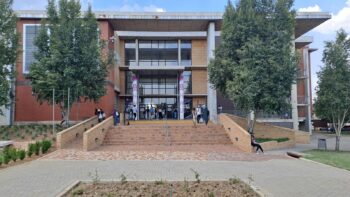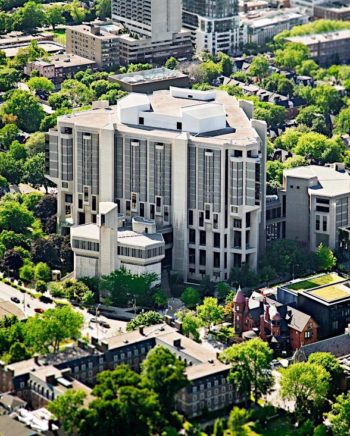

Ladoke Akintola University of Technology - LAUTECH
speciality:
Medicine And Surgery
What Is a Medicine Degree?
Saving someone’s life is perhaps one of the most remarkable feelings in the world. Even so, not so many of us have the chance to experience this. It takes passion, a strong personality and years of study to be able to work in the medical field.
Pursuing a Medical degree is not only challenging and demanding but also competitive. Medical degrees are shaped for people who show high motivation and commitment as well as interest for sciences.
Throughout a Medicine degree, candidates are equipped with a wide range of competences, from practical abilities required for specialized hands-on tasks to communication skills needed to interact with the patients. Thus, any medical students will be able to take a simple blood sample as well as perform a complex surgical procedure.
Benefits of a Medical Degree
Undoubtedly, medicine is one of the most vital fields of work – therefore there will always be a high demand of workforce needed. The employment rate for a medical graduate student is of 90%.
Due to its diverse branches, graduates from a Medical course have a variety of career choices, according to their expertise. Nursing, radiology, anaesthetics are just some of the many specialities offered in this field. Regardless of the speciality, the most important aspect needed to be taken into consideration is that medical professionals are well-respected and well-paid all over the world.
Additionally, graduates possess a series of transferable skills, such as logical reasoning, critical appraisal, listening, written and oral communication and many others. These assets are sought and highly valuable in most fields of work.
Medical Degree Structure
Medical courses are usually a six-year commitment, but it can vary according to the university. Most of the modern universities integrate clinical education with basic sciences from the beginning of the academic curriculum, while traditional institutions divide them into preclinical and clinical education.
Most schools understand the importance of practical knowledge, especially in this field, therefore they encourage the students to observe professional healthcare practitioners. Another way to gain practical experience is to go to different clinics and receive specialised training, followed by actual practical work.
No matter the practices of the university, always keep in mind that medical courses are structured differently in every country. Therefore, medical qualifications gained in one country are not necessarily recognised in another country.
2 Student Reviews
-
Human Physiology6 months ago
 AjigbotoshoNGChallenging but Rewarding
Studying at LAUTECH was a rewarding experience. The lecturers were dedicated and approachable, ensuring that students received both theoretical knowledge and practical exposure. The campus facilities, especially the laboratories and library, were resourceful and conducive to learning. Beyond academics, I gained leadership and interpersonal skills through student organizations and events.
View more
What stood out to me at LAUTECH were the engaging classes. They were well-structured, practical, and always connected theory to real-world applications, which made learning more meaningful.
The professors at LAUTECH were dedicated and approachable. They not only taught with depth but also mentored students, encouraging us to think critically and push beyond our limits.
Campus life at LAUTECH was vibrant and supportive. From student groups to social events, the community provided opportunities for growth outside the classroom.
Studying at LAUTECH was a transformative experience. The practical classes, supportive professors, and lively campus environment combined to make my academic journey rewarding and memorable.
LAUTECH has shaped me into a confident graduate ready to take on professional challenges, and I highly recommend it to aspiring students.Programme: Human PhysiologyDegree: Bachelor'sGraduation: 2023Delivery Type: Online -
Computer Science ...19 Jul, 2022 FalanaEducation
I love the way lecturers in lautech teach the students. I won’t say the location of the university is really good but it’s okay. The university buildings are underdeveloped. There is no valid bus system. But it’s okay in general. One thing I dislike about my school is that they go for indefinite strikes which affect students academic life.
View moreProgramme: Computer Science and BiologyDegree: Bachelor'sGraduation: 2022Delivery Type: On CampusCampus: Ogbomosho