University of Benin
speciality:
Environmental Sciences
What is an Environmental Sciences Degree?
Environmental Sciences Degrees are usually undertaken by students who like the natural, physical, and biological sciences.
By studying this specialisation, young people get new knowledge about the processes and phenomenons that affect the environment and find solutions to problems that concern nature.
Students’ interest has increased a lot in recent years due to climate change, pollution and other adverse effects on the environment. Environmental Sciences graduates bring multiple benefits to the world they live in, analysing systems and finding effective solutions to develop sustainability and green processes.
Benefits of an Environmental Sciences Degree
The main advantage of the Environmental Sciences Degree is that students are becoming more aware of how we need to protect the environment, give up chemicals and harmful products that pollute the planet in favour of the ones that are biodegradable or environmentally friendly. By becoming aware of the dangers we are facing, students find innovative ideas for sustainability and sustainable development.
This specialisation encourages young people to develop skills such as critical and creative thinking, teamwork, adaptation. Complex issues are debated through this degree, so students need to be innovative and think outside of the box to use resources wisely, protect and, above all, preserve natural wealth.
Besides the advantages listed, the rate of employment is high, because the jobs are being more and more diversified. It has been noted that there is a greater need for environmental consultation, biologists exploring natural environments, and sustainability consultants. This degree can also be useful for other jobs, such as Landscape Architect.
Environmental Sciences Degree Structure
The structure of the degree includes several subjects, depending on the university a student chooses. Some universities prefer to focus on the theoretical policies and notions discussed in the courses, while others choose to rely on systematic research and practical experience gained in the environment. In principle, these studies require a background in the following sciences: Biology, Chemistry, Geography, Ecology, Physics.
Bachelor Degrees in Environmental Sciences last between 2 and 3 years. Courses are based on the knowledge of the Sciences of Nature and Social Sciences. Most Bachelor programmes are based on college courses, but also on practical projects. A Master’s programme lasts for about 2-3 years and is recommended for those who want to continue with in-depth research into the elements of the environment. Doctoral courses are designed in such a way that students will be guided to conduct independent research, having a much different structure than during their Bachelor. This programme lasts between 3 and 6 years.
It is important to know that students can choose to pursue this degree online. In this way, students can take advantage of the flexibility and save money, as costs are much lower compared to those spent at universities. For example, The Open University offers online courses, the level of information being authentic and useful for the students.
4 Student Reviews
-
Environmental Management6 months ago
 StudentNGStrong academics, but very tight schedules
Studying at the University of Benin has been a rewarding experience overall. The programme is comprehensive, exposing students to a wide range of courses that provide both depth and breadth in the field. Lecturers are knowledgeable and approachable, always ready to provide guidance and ensure that students understand the material. The university also encourages critical thinking through group projects, research opportunities, and interactive lectures.
One major challenge, however, is the heavy workload. Each semester is packed with many courses, leaving students with little to no resting breaks. This often makes the schedule stressful and requires extra effort to balance academics with personal well-being. Despite this, the rigorous structure has also helped me build resilience, discipline, and time-management skills.
Overall, I would recommend UNIBEN to prospective students who are ready for a challenging but rewarding academic journey. The quality of teaching, diverse programmes, and supportive academic environment make it a strong choice for higher education.
View moreProgramme: Environmental ManagementDegree: Bachelor'sGraduation: 2025Delivery Type: On CampusCampus: Benin -
Environmental Management8 months ago StudentNGGood academic training, poor administration
I studied Environmental Management and Toxicology at the University of Benin. The academic content was strong, with a good mix of theory and practicals. I gained great skills in environmental analysis, public health and research. Some lecturers were very committed and supportive.
However, the administrative processes were often frustrating: delays in results, poor communication and limited career guidance. Facilities were also stretched, and there was minimal access to tech tools or lab equipment.
Overall, I would recommend the university if you’re self-motivated and ready to push through system inefficiencies. It gave me the foundation I needed, but there’s room for improvement, especially in student support and modernisation.
View moreProgramme: Environmental ManagementDegree: Bachelor'sGraduation: 2025Delivery Type: On CampusCampus: Benin -
Environmental Management25 Jul, 2023 StudentNGThe in-between sweetness of the Highs and Lows
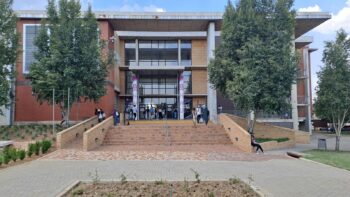
The university of Benin is one of the first generation schools in Nigeria. It’s a citadel of learning that usually stands out in not only academic performances but also, character building. It’s has one of the highest number of admission applicants in Nigeria yearly because of its impeccable qualities expressed in the way of life of it’s students.
The university of Benin is foremost in teaching, research development and character moulding. I love the fact that each administration strives to make a long lasting impact on the school’s society.
Areas where the school needs to improve include but not Iimited to security, quality water for residents students, Improved infrastructure and renovations of old buildings , as well as transparency in dealings.
Overall, the University of Benin is a wonderful place to be with loads of fun and life changing experiences coupled with great intellectual development.
View moreProgramme: Environmental ManagementDegree: Bachelor'sGraduation: 2024Delivery Type: Online -
Urban Forestry25 Jun, 2022
 OlisaAbout my experience during my school year
Our school provides education in a more understandable way.
View more
Our school follows strict rules in discipline and timing and hence we are punctual in our work. I like the campus. It’s really fun and has a lot of space to goof off, and places to explore if you can figure out how to access them. (That sounds super edgy, doesn’t it?)
I like the fact that there are computers available all over the school for me to use and mess with.
I like the classes that I can take. I have learned a lot of cool stuff that is hard to learn at home.Programme: Urban ForestryDegree: Bachelor'sGraduation: 2017Delivery Type: On CampusCampus: Benin