University of Malta
speciality:
Management
What is a Management degree?
A Management degree builds a strong foundation in a wide variety of fields including business, finance, economics and marketing. It develops students’ understanding of business practices, structures, business theory, business strategy and research as well as global economies and financial markets. Doing a Management Degree also allows students to gain skills that enable them to work with financial and numerical data effectively.
Management degrees cover different managerial roles, such as Human Resource (HR) management, hospitality management, innovation management, operations management, etc. They can be specialized into one of the areas mentioned above or follow a more general approach that covers most of these areas.
The range of management degrees is huge and includes Business Management, Management, Marketing Management, etc. They are predominantly offered in the business departments/business schools/management schools of different universities.
Benefits of a Management degree
One of the main benefits of this degree is that Management is a broad discipline, which keeps students’ career options open.
Management degrees could have a very practical focus, which is an opportunity for students to gain experience in the process of completing their degree before having started their professional careers. Management courses usually offer work placements and practical modules, which include business simulations and business creation in a simulated environment. Acquiring practical experience through these opportunities could make students stand out from the crowd in the job market once they graduate. Research-oriented Management degrees also exist for those who prefer the theoretical aspects of such a degree. Most courses, however, have established a good balance between theory and practice in order to meet the needs of all students.
Management degrees also prepare students to serve the managerial role across a wide range of areas, including HR management, hospitality management, innovation management, operations management, etc. Students can specialize in one particular area or focus on gaining knowledge across all of these areas thanks to the high availability of different management courses.
Additionally, there is a high demand for management professionals in the contemporary business world. Therefore, taking a management course is an opportunity for students to kick-start their careers and occupy a higher position in the organizational hierarchy.
management degree Structure
Management courses usually begin by introducing students to different areas covered by the managerial role, such as organizational management, business environment, statistics, accounting and finance, business growth, etc. After the first year, institutions allow students to explore the management discipline into more depth by delivering specialized modules and offering optional modules, which enable students to choose subjects that interest them the most and are most relevant to their career aspirations.
Management degrees take 3 years to complete in the UK. However, their duration could extend to 4 years if students choose to spend a year in industry between their second and third year, which is a popular option among the student community. Setting placement opportunities apart, the duration of a Management degree depends on three main factors – country, mode of study (part-time or full-time) and degree level. Below are listed the approximate durations of Management degrees in the most popular countries for Higher Education in Europe:
- Management degrees’ duration in the UK:
- Bachelor’s in Management: 3 years full-time and 6 years part-time
- Master’s in Management: 12 months full-time and 36 months part-time
- PhD in Management: 3-6 years
- Management degrees’ duration in the Netherlands:
- Bachelor’s in Management: 3-4 years
- Master’s in Management: 1-2 years
- PhD in Management: about 4 years
- Management degrees’ duration in Spain:
- Bachelor’s in Management: 3-4 years
- Master’s in Management: 1 year
- PhD in Management: 3 years full-time and 5 years part-time
- Management degrees’ duration in Germany:
- Bachelor’s in Management: 3-4 years
- Master’s in Management: 1-2 years
- PhD in Management: 3-4 years
- Management degrees’ duration in France:
- Bachelor’s in Management: 3 years full-time
- Master’s in Management: 1-2 years
- PhD in Management: 3-6 years.
- Management degrees’ duration in the US:
- Bachelor’s in Management: 4 years
- Master’s in Management: 2 years
- PhD in Management: 4-6 years.
1 Student Reviews
-
Administration6 months agoVivianNGUniversity of Malta
The University of Malta is a well-regarded institution that offers a unique blend of academic excellence and cultural diversity. Here’s my honest review based on the experiences of various students:
*Academics*
– The university’s academic programs are robust and designed to provide a deep understanding of the industry, particularly in fields like tourism, law, and philosophy.
– Professors are mostly experts in their fields and willing to assist students in achieving success. However, some classes could benefit from greater practical interaction and application of theoretical knowledge.
– The Faculty of Laws is particularly well-regarded, with qualified lecturers who are knowledgeable in their areas.*Campus Life*
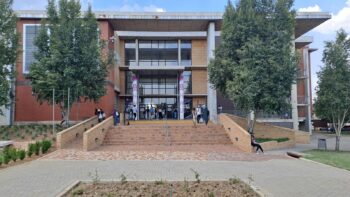
– The university’s campus is organized and well-kept, with a student-friendly environment.
– Campus life is somewhat limited, with activities taking place mostly outside the university/student environment.
– Students interact with the local community without much university involvement, which can be a great way to experience Maltese culture.*Student Life*
– Malta is an excellent destination for students, with a warm climate, beautiful beaches, and a vibrant cultural scene.
– The university residence is a great way to meet new people and make friends, but some students have reported noise and limited study space.
– Apartments off-campus can be a better option for those seeking quieter living arrangements.*Cost and Expenses*
– Malta can be expensive for students, particularly when it comes to housing and food.
– Some students have reported that the university’s administration and services are worth the cost, but others have found it to be overpriced.*Language*
– English is the primary language of instruction, and most Maltese people speak English fluently, making it easy for international students to communicate.
– However, some students have noted that the Maltese accent can be distinct and may take some time to get used to.*Overall*
– The University of Malta is a good choice for students seeking a unique cultural experience and a well-rounded education.
View more
– While it may not have the most extensive facilities or campus life, the university’s strengths lie in its academic programs.Programme: AdministrationDegree: Master'sGraduation: 2025Delivery Type: Online