
École Polytechnique Paris (reviews)



Study at École Polytechnique Paris
École Polytechnique Paris ratings and description
Since its creation in 1794, Ecole Polytechnique has been producing and sharing multidisciplinary knowledge at the highest level, for its students, for companies and for society, by developing an entrepreneurial spirit, boldness and a sense of general interest in its three fundamental missions of education, research and innovation.Show more
FREQUENTLY ASKED QUESTIONS ABOUT École Polytechnique Paris
Our campus is a little outside of Paris, accessible with a metro.
Ecole Polytechnique X was ranked 2nd best University in France in the QS ranking 2023 behind HEC Business School.
Depending on your personal situation, Ecole Polytechnique can grant you a scholarship based on social criteria and needs or based on merit and academic accomplishments.
A lot of our students live on campus. Ingénieur Polytechnicien students are always housed on campus and Bachelor students as well as Master students can apply for accommodation with the help of our designated teams.
TOP Hired Employers




Studies with verified reviews



17 Student Reviews
Filter reviews-
Bachelor of ...2 months ago StudentFRExcellent opportunities
It is a great university, highly regarded in the STEM world. There are many opportunities we can enjoy during out time there, including research projects or student life involvements. The only downside is the campus which is a bit old.
View moreProgramme: Bachelor of ScienceDegree: Bachelor'sGraduation: 2026Delivery Type: On CampusCampus: Palaiseau -
Mathematics and ...9 months ago AlexandreFRAn Amazing Launchpad
TL;DR – Despite a heavy workload, the BX program allows you to meet amazing people as well as gain incredible amounts of knowledge and experience while being an amazing launchpad for graduate education.
Studying in the Bachelor of Science of École Polytechnique is a journey, in the good sense. To start with a bit of background, we are a cohort of about 140 students, of whom approximately half are francophone (French people that lived around the globe + people from Northern Africa and Lebanon), and half from dozens and dozens of countries (with the most prominent ones being Romania, Russia, Serbia, Poland, Germany, Spain, Italy, India, China, Vietnam, Brazil and maybe a few more). Students have a very high academic level, despite some variance.
Over the first year, you learn to cope with the high-workload of the program. You discover the basis of mathematics through Analysis, Linear Algebra, and Calculus (roughly the program of “prépa”). Meanwhile, you also study Computer Science, Physics, and Economics—all at a less intensive rate. Second-majors are beginner-friendly, but their difficulty ramps up very quickly. In parallel, you make friends, join the « bachelor family », and join committees. Depending on the student board and the time of year, there are also parties to attend and fun events to take part in. In addition, there is a campaign week full of fun activities where first-years compete to be elected as student board. It is perfect to add 24/24hr crêpes to your study sessions, or have fun in bouncy castles as if you were four. These are nonetheless all still side activities as the Bachelor program requires you to keep working continuously if you want to keep a high GPA.
During the second year, this is when work really starts to kick in (at least for me). After experimenting during the first year, you are a bit more comfortable with your routine, but can still struggle to maintain a healthy lifestyle. After choosing a major (Math + CS/Physics/Econ), courses become harder and the ~3 core courses per major really start to stack up. Meanwhile, you often have to deal with academic problems. Whether it is about poor organization, grading scales, or other questionable rules, you will feel like losing your mind at some point. Don’t panic though; it is still fun, you are always surrounded by friends, and the study environment is nice.
The third year is split into three parts. Over the fall, depending on motivation and GPA, about half of the students go on a semester abroad. For those who stay (from what I have heard), it is pretty similar to the second year. For those who go, it is always an incredible experience. You get to discover an amazing country and university while having the opportunity to travel. Students usually enroll in third year and master’s classes and the general sentiment is that the workload is lighter than in the Bachelor Program. Following the semester abroad, over the winter, you also write a Bachelor’s thesis which consists of an 8-10 week research internship in a lab or a company. It is usually a very nice experience where you get to work on what you like best. Lastly, over the spring, you get a few more courses before graduation. By this point, students usually know what they are going to do the following year so everyone is pretty chill. Everyone is rejuvenated by their experiences and glides through the last few months simply enjoying the improving weather, campaign week, and the various fun events. There is still work, but by this point people are acquainted with the style of classes and are much less stressed than before.
After graduation, people go all over the world in the best programs and universities to continue what they like best. Overall, in three years, you will have met a set of amazing people, learned enough to pursue any MSc or PhD track, have had plenty of research or industry experience, maybe have gone on a semester abroad on the other side of the globe, and probably been accepted to a top university in the postgraduate program of your choice.
F.A.Q
Is it that much work ?
It can be a lot at times but is reasonable in my opinion overall. It also depends on who you are and what you want. If you are looking to pass the year with a decent GPA, you’ll be fine with working a decent though not crazy amount of time. If you are aiming for the first quartile, chances are you’ll have to put a lot of effort in, of course depending on your comparative base level. You’ll have to do some late-night study sessions, some days stuck in the library, but you’ll still have some time to hang out with friends and go out often enough.What’s the campus like ?
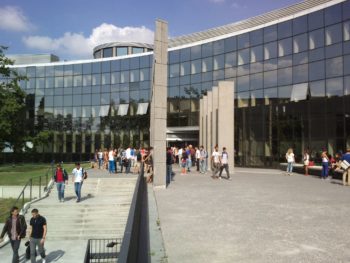
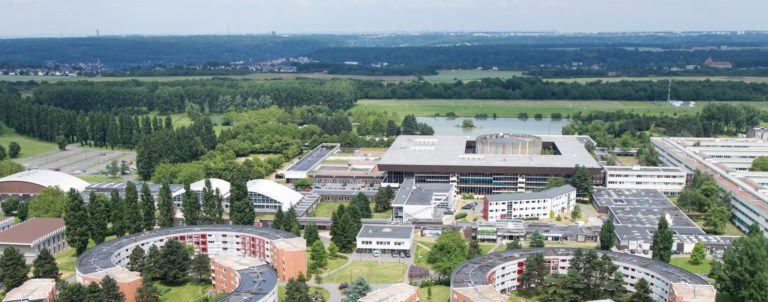
The campus is nice. Some parts are outdated, but ongoing renovations should slowly solve that problem in the coming decade. You are in a small student city in the middle of nowhere, which is 20km south of Paris—1hr from the center in RER and 30 min by car. There are sports facilities which are almost always accessible and free of charge. Building 103 really feels like home, as it is where all bachelor students live. You have a nice private bedroom and bathroom with a kitchen shared among four students. The only notable downside is that common areas are poorly maintained.How would you compare it to a “prépa” ?
The Bachelor program has a very different objective than prépa. The goal is not to prepare you for a set of written and oral exams, but to give you the theoretical and practical foundations and experience to pursue any graduate program you desire. Over three years, you get to have much more experience. You have the opportunity to do three summer internships, one research internship, one research project class, go on a semester abroad, all while acquiring industry-ready skills. In comparison, after two (or three) years of prépa, you may (or may not) have entered the school of your dreams, and will have had no experience whatsoever. Academically speaking, our mathematics curriculum during the first two years of the program (and I guess physics for Maths-Physics students) closely resembles the prépa one. As we also study applied topics, I think that we go slightly less in depth, but we still acquire all of the necessary bases for further study. In terms of workload, I believe that we have less work than prépa students. There is still a lot of work, but it is hard to compare any workload to those of students in the best prépas.What is your relationship with Engineering students ?
We usually have a chill relationship with engineering students. Most of them don’t mind us, and some are close friends. We study in the same places, share some professors, and have a pretty similar life, except for the fact that we don’t live in the same building. Your engagement with engineers depends mostly on you. You can join “binets” (engineer’s version of committees), go to their parties, and become close friends with them. If you want to never talk to a single engineer over the whole three years, it is also possible. Nonetheless, one thing to remember is that you are not an engineering student. You don’t have military status, you don’t parade on the 14th of July, and you don’t have an engineering degree.Who gets to go on exchange ? Can I go wherever I want ?
I think the semester abroad generally follows the same distribution : 80% of students would want to go abroad, 70% of students have the minimum requirements to go abroad, and 50-60% end up going abroad. There are two types of universities in which you can go: the partner ones and the non-partner ones. Partner ones have an agreement with École Polytechnique, whereas non-partner universities can be any institution outside of France. From the top of my head, partner universities are, organized by region: McGill, UToronto, Dalhousie, Brown, UChicago, UC San Diego, UC Berkeley, Monterrey, Católica de Chile, ETH Zurich, EPFL, DTU, King’s College London, TUM, PoliMi, Bocconi, Kaist, Peking University, HKU, NTU, Taiwan National University, UoMelbourne), there is only an internal selection, and you pay as if you were still at École Polytechnique. You can also consider any institution which has a semester abroad program and courses in one of your major. Examples include the University of Oxford, Harvard, UPenn, and Columbia University. In any case, there is an internal selection process based on your GPA, a motivation letter, and a wishlist. As a side note, students in the X-Columbia BS/MS program do not participate in the semester abroad.Can you work directly after graduation ?
Most students don’t work directly after graduation, even though it is definitely possible. In France, it is much harder (except maybe in entrepreneurship) to work with only an undergraduate degree. So most people that don’t go to postgraduate programs usually either do a six-month or one-year internship before applying to MSc/PhD programs or start working internationally as Software Engineers, Data Scientists, Quantitative Traders/Researchers, Investment Bankers, etc.Where do people usually go for Master’s ?
View more
If you are roughly in the first quartile (best 25% of students), you can pretty much aim for any program in any university. Then, in the second and third quartiles, you can get into very good programs but it will be a bit more up to luck and experience. In the last quartile, students usually go for programs that are less competitive but still very good in essence. Taken from a non-exhaustive alphabetical list, past students have gone in America to CalTech, Carnegie Mellon University, Columbia University, Cornell Tech, Harvard, MIT, Princeton, Stanford, UC Berkeley, UChicago, Yale, in Europe (excluding France) to Bocconi, Cambridge, DTU, King’s College, KTH, EPFL, ETH Zurich, Heidelberg University, Imperial College, London Business School, LSE, Oxford, Saarland University, TU Delft, TUM, University of Bonn, and in France to CentraleSupélec (Engineering program), Chimie ParisTech, Dauphine Paris, École Polytechnique (Engineering Program and MSc&T program), ENS Ulm, ESCP, HEC Paris, INSEAD, IP Paris (PhD Tracks), Isae-Supaero, PSL, Sciences Po, Université Paris Dauphine, Université Paris-Saclay.Programme: Mathematics and Computer ScienceDegree: Bachelor'sGraduation: 2025Delivery Type: On CampusCampus: Palaiseau -
Mathematics and ...12 months ago
 RomainFRwould recommend to anyone who can get in!
10/10
I took the Math/CS double major, and I’m now a PhD student at MIT.
The program has insane master’s/phd placements internationally. Very few ppl work directly afterward.The curriculum is very demanding and the classes are rigorous.
The student body is friendly and cooperative — the cohort is small and elite (160 students per year across all 3 majors), it really feels like a family, and you get to know everyone.
It is super international (iirc 80% of international or bi-national students).
Student life is as good as you make it. The sports facilities etc doesn’t match those of elite US or Swiss unis and there are less students clubs because of the cohort size. However, we all live in the same building in flats of 4 students. each student has their own bedroom bathroom and share a kitchen (cleaned by staff!).
Affordable overall — the university’s restaurant is subsidized, and you can get away with $4/meal. Rent is ~$550/month and tuitions ~$15k/year.
You are an hour away from Paris in public transportations.
Campus is peaceful
View moreProgramme: Mathematics and Computer ScienceDegree: Bachelor'sGraduation: 2024Delivery Type: On CampusCampus: Palaiseau -
Master of ...12 months ago StudentFRBest experience ever - Master IoT
It was one of the best experiences of my life, with very strong opportunities for development on academic, personal and professional levels. Within the Masters community, the student body is very diverse and caring for one another. However, some courses could be taught in a more dynamic way, especially the scientific classes.
View moreProgramme: Master of Engineering, Science and TechnologyDegree: Master'sGraduation: 2025Delivery Type: On CampusCampus: Palaiseau -
Mathematics and ...12 months ago StudentFRBachelor of Science: Maths&CS
Overall really good program, small classes that allows you to know more or less everyone in your promn and top notch professors. Except the poor location of the University, the campus was quite lively (thanks to the effort of the bachelors’ students associations).
View more
However, be prepared to have problems with the administration which can be quite slow…Programme: Mathematics and Computer ScienceDegree: Bachelor'sGraduation: 2024Delivery Type: On CampusCampus: Palaiseau -
Mathematics and ...13 months ago StudentFRGreat Bachelor of Science
– Useful courses
View more
– Good student life
– Great exchange semester
– Awesome offers at the end
– International cohort
– Palaiseau is not a very fun place though, good if you can go to Paris on the weekendProgramme: Mathematics and EconomicsDegree: Bachelor'sGraduation: 2024Delivery Type: On CampusCampus: Palaiseau -
BSc Mathematics ...13 months ago StudentAmazing program in mathematics and physics
The bachelor of Polytechnique is a rigorous program with a high workload, excellent professors, and brilliant students. The courses are extremely interesting and allow us to explore a variety of fields before specializing. The program is heavily focused on mathematics, which I particularly enjoy. While the courses are very challenging, the professors and teaching assistants are always happy to help, and there is a lot of collaboration between students. The student body is very diverse and highly inclusive.
The campus in Palaiseau is quite far from Paris, but this allows the school to offer excellent sports facilities. While the campus itself may not be particularly exciting, campus life is very active, with many committees and a strong sense of camaraderie between students, especially since we all live in the same building.
Overall, it is a fantastic scientific program at the best engineering school in France, ideal for highly motivated students who are curious and eager to be challenged.
View moreProgramme: BSc Mathematics and PhysicsDegree: Bachelor'sGraduation: 2027Delivery Type: On CampusCampus: Palaiseau -
Bachelor of ...13 months ago StudentThe Bachelor ticks all the boxes
Campus life is amazing, with everyone living in the same building, you can do anything with anyone at anytime.
Courses are very good quality, math level very advanced compared to similar universities.
Professors are very nice, easily find an Research Assistantship.Main disadvantage, not too connected with industry, but improving very fast.
View moreProgramme: Bachelor of Science in Economics and MathematicsDegree: Bachelor'sGraduation: 2026Delivery Type: On CampusCampus: Palaiseau -
Master of ...13 months ago PeirongCNAcademic, Professional, and Creative Growth
Academic Opportunities: Building Connections and Research Experience
Studying both my Bachelor’s and Master’s at École Polytechnique has been an incredibly enriching experience, particularly in terms of academic development and networking. The school provides exceptional opportunities to connect with academic officers who offer valuable guidance on CV-building and career pathways. Additionally, the support from the economics department and faculty members has been instrumental in shaping my career aspirations.
Currently, I am working as a research assistant, and I am about to embark on my fifth research experience. My journey so far has included both voluntary and contractual positions under the guidance of two professors. These experiences have spanned multiple disciplines, including economics, statistics, mathematics, and coding. The interdisciplinary nature of these projects has allowed me to develop a well-rounded skill set and a deep appreciation for research.
With aspirations to pursue a PhD, I find the academic environment at École Polytechnique highly supportive. The connections I have built with faculty members and researchers have been invaluable in shaping my future career path. The guidance and mentorship provided by the faculty have significantly contributed to my academic and professional growth.
During my Bachelor’s, tutoring sessions taught by engineering students were incredibly helpful in improving my understanding of difficult mathematics concepts. These sessions have often been a lifesaver, helping me grasp complex topics and ultimately succeed in exams.
Communication Challenges and Professional Development
I participate in English programs, but some projects in collaboration with the city of Paris involve French professionals and authorities. As a non-native French speaker with Chinese as my mother tongue, communication with professionals at École Polytechnique has sometimes been challenging, especially when some professors or professionals are more comfortable speaking French rather than English. However, through group projects, navigating complex team dynamics, and facing tough situations with professionals, I have developed essential communication skills. These experiences have allowed me to gradually build my professional toolbox, equipping me with the necessary skills to adapt and thrive in an international academic and professional environment.
Extracurricular Engagement: Fostering Creativity and Community
Beyond academics, École Polytechnique has been a vibrant space for my passion for the arts. The school’s strong support for extracurricular activities has allowed me to work alongside like-minded, art-loving peers and receive guidance from faculty members who facilitate event organization and club development.
During my Bachelor’s, I established the Art Committee, and in my Master’s, I co-founded MX-ARTS, an art and performing arts club. Through these initiatives, we organized showcases, art exhibitions, and talent shows, gradually expanding our network to collaborate with 12 different clubs across Bachelor’s, Master’s, and Engineering programs.
Career Support: Training and Professional Opportunities
École Polytechnique provides comprehensive career training and consulting services to prepare students for professional success. The school’s company forums and networking events serve as excellent platforms for students to connect with industry professionals and secure internships. Many of my classmates have successfully leveraged these resources to find rewarding internship opportunities in top firms and research institutions.
Conclusion: A Transformative Experience
Overall, my time at École Polytechnique has been transformative, offering a perfect balance between academic rigor, research exposure, creative expression, and career development. The institution’s emphasis on interdisciplinary learning, mentorship, and extracurricular engagement has played a pivotal role in shaping my personal and professional journey. As I continue toward a PhD, I am grateful for the incredible support system and the opportunities that this institution has provided.
View moreProgramme: Master of Science and Technology in EconomicsDegree: Master'sGraduation: 2026Delivery Type: On CampusCampus: Palaiseau -
Data Science ...18 Mar, 2025 SheetalINChallenging but fun!
I am studying for the Masters in Data Science for Business which is a combined program by HEC Paris and Ecole Polytechnique – two of the most prestigious schools in France. The program is highly dynamic, the courses are challenging so you are always on your toes and the professors are incredibly knowledgeable in their field. It’s a bit theoretical in the beginning as classes focus on the mathematical foundations of Data science but overall, it’s a great program. Finding internships could be a bit difficult if you do not speak French as many companies require you to have a certain fluency but it’s not impossible. Regarding campus life, it is extremely beautiful with a lake, arcade, swimming pool, cafeteria, bar, music rooms and much more. There is always something happening on campus so you will be entertained throughout the year!
View moreProgramme: Data Science and Business AnalyticsDegree: Master'sGraduation: 2026Delivery Type: On CampusCampus: Palaiseau
Questions and Answers
This section is only for questions about the university. Please avoid posting reviews here.