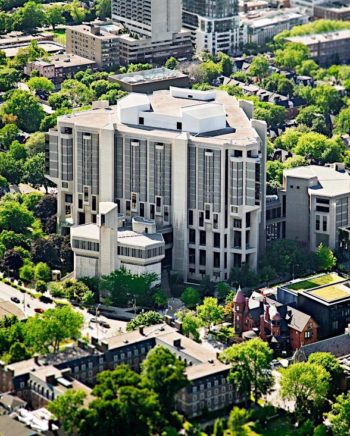

University of Yaoundé 1 - UY1
speciality:
Architecture
What is an Architecture Degree?
Architecture is a specialisation preferred by many young people who love solving problems, have a passion for creativity, or an innovative imagination ready to be shown off.
Over the years, it has become a very popular speciality. Young people are aware of the importance and diversity of Architecture, but also of the need for a permanent practice, as most Architecture courses aim at the practical part, to implement feasible structures not only on paper, through sketches, but also in real life.
Architects can choose to grow in all markets or follow a single specialisation, such as Landscape Architect, Resident Architect, Urban Designer, Green Design Architect or Interior Designer, according to their preferences.
Benefits of an Architecture Degree
Usually, a major reason that motivates students to study Architecture is the possibility of having an impact on their community. How do they do this? By exploring the world, analysing people’s work on constructions and looking for answers to identified problems, they become more creative, more open to new things, bringing a new vision to the world.
Critical thinking skills are constantly being developed by graduates who study Architecture because they get the opportunity to visualise the structures before they are made.
Upon completion of studies, there are many possibilities for employment, and salaries can be generous. A particular increase in the employment rate is expected to be in the Green Design field. This requires creating environmentally-friendly constructs that do not harm nature and generate sustainability.
Architecture Degree Structure
Young people must have a university degree in Architecture to pursue a career in that field, that is an Architecture Bachelor or Master of Architecture. Often, undergraduate programmes last 5 years, and Master programmes last between 2 and 3 years, depending on the chosen university and the form of education followed. One notable thing is that Master programmes are often for those who have not completed a Bachelor’s specialisation, and that is why the course component can be similar to the Bachelor’s. As far as Doctoral programmes are concerned, the duration is 3 years, and the architects work on research projects.
At the same time, it should be mentioned that the United States and other territories have introduced a professional license Architect Registration Examination. This is a mandatory exam which tests the candidate’s skills, abilities and knowledge. In the UK, for example, the final registration to become an architect is regulated by the Architects Registration Board.
Although the list of courses may differ from one country to another, some of the most important modules for a Bachelor’s degree in Architecture are Computer Assisted Drawing (CAD), Physics, Visualisation, Science, and Technology.
Throughout their studies, students can take part in various internship programmes or choose a tutor architect to work with. In this way, they get a better idea of what this profession is about in practice and gain the necessary experience needed for their professional development.
1 Student Reviews
-
Urban Planning28 Jan, 2025
 Hannah TakorCMComprehensive education with excellent faculty
University of Yaounde 1 provided me with a comprehensive professional education in urban planning and development, despite the challenge of adapting to French language instruction as someone which is more English speaking. But giving that my country is bilingual i knew i could do it. The university offers knowledgeable faculty, diverse student body and practical learning opportunities. However, it also has limited resources and bureaucratic processes as well as the language system of learning is not balance as 80% of the courses are in french which is not proper for a university that says they offer bilingual education.
View more
I will recommend this university to prospective students willing to adapt to a french speaking environment because it offers well-rounded education and the faculty is committed to helping students achieve their academic and professional goals.Programme: Urban PlanningDegree: Master'sGraduation: 2023Delivery Type: On CampusCampus: Yaounde