
Universidade de Brasília - UnB (reviews)
Study at Universidade de Brasília - UnB
Universidade de Brasília - UnB ratings and description
FREQUENTLY ASKED QUESTIONS ABOUT Universidade de Brasília
- Computer Science
- Engineering
- Medicine And Surgery
- Communication
- Economics
- Brasilia, Brazil
Studies with verified reviews




8 Student Reviews
-
School of ...7 months ago
 StudentBRReally good enviroment for grow.
It is a good university with some big problems but it is a place where we grow a lot, good networking, good teachers and it is the best university in Brasília. Lacks a little in struture, organization but it is life changing.
View moreProgramme: School of Engineering/TechnologyDegree: Bachelor'sGraduation: Prefer not to sayDelivery Type: On CampusCampus: Brasilia -
Economics25 Mar, 2025 LucasBRNetworking
Pursuing a degree in Economics at the University of Brasília (UnB) offers a blend of academic excellence and real-world political and economic insights that few institutions can match. One of the program’s standout features is the chance to learn from professors who have held high-ranking positions in the Federal Government, including former ministers, secretaries, and renowned policy experts like Nelson Barbosa, Daniela Freddo and José Guilherme Lara Resende. These instructors bring more than just textbook knowledge—they share firsthand experiences on policymaking, economic crises, and international negotiations, providing students with a rare and valuable perspective.
View more
However, studying at a federal university like UnB is no easy feat. The academic environment is demanding, with highly rigorous professors, heavy workloads, and constant pressure to perform at a high level. Students often juggle challenging exams, complex group projects, and even scientific research—all while navigating the bureaucratic hurdles common in public education systems.
Yet, these very challenges are what make the experience so rewarding. UnB doesn’t just train economists—it shapes critical thinkers, well-informed professionals, and future leaders equipped to tackle real-world economic and policy challenges.
For this reason, I strongly recommend the program to anyone seeking a top-tier education combined with a transformative academic journey. If you’re willing to embrace the hard work and demands, graduating from UnB will leave you not just with a degree, but with an intellectual and professional foundation unlike any other. The effort is truly worth it!Programme: EconomicsDegree: Bachelor'sGraduation: 2025Delivery Type: On CampusCampus: Brasilia -
Public Administration11 Mar, 2025
 JoyceBRAcademic excellence, but challenges in practice
The Business Administration course at UnB offers a solid theoretical foundation, with highly qualified professors and a well-organized academic structure. I especially liked the courses focused on strategic management and marketing, in addition to the opportunities for extension. However, I missed a greater connection with the job market, such as more internships and partnerships with companies. The bureaucracy involved in resolving academic issues can also be a challenge. Overall, I recommend it to anyone looking for a strong academic background and who is willing to complement it with practical experience on their own.
View moreProgramme: Public AdministrationDegree: Bachelor'sGraduation: 2025Delivery Type: BlendedCampus: Brasilia -
Applied Statistics02 Feb, 2025 StudentBRVery good university
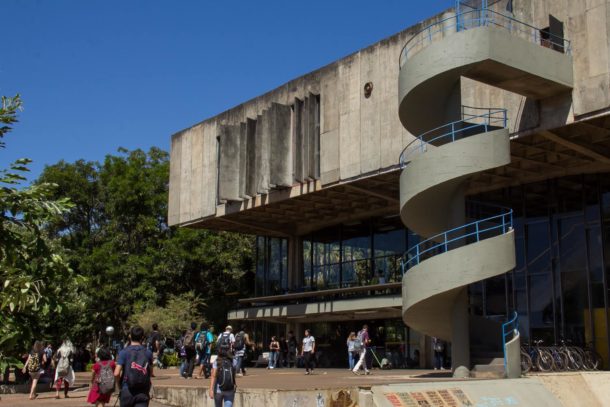
Most teachers are not concerned with “doing their job”, but with making sure that students learn what they need to. The university has many different types of spaces. The campus is very large, giving a large capacity for many students to study.
View moreProgramme: Applied StatisticsDegree: Bachelor'sGraduation: 2028Delivery Type: On CampusCampus: Brasilia -
Software Engineering28 Dec, 2024 StudentBRMy Experience at UnB: Opportunities and Challenges
I have been studying at UnB for a year, and I find the program well-structured, with highly qualified professors. The greatest advantage, without a doubt, is that it is a public Brazilian university, which means it is free and receives public funding. Moreover, the university offers free exchange programs and encourages the creation of junior enterprises and competition teams, significantly expanding opportunities for students.
However, UnB also has some challenges. One issue I would highlight is the lack of standardization in teaching. For example, in the Introduction to Programming course, some professors teach in C, others in Java, and even in C with explanations in Portuguese. Additionally, teaching methods vary greatly: some use only slides, while others rely solely on verbal explanations. This diversity of approaches can be confusing and hinder learning. I believe it would be more effective if there were standardization, where all professors in the same course adopted a single programming language and more balanced methodologies, including practical lessons instead of being limited to theory.
Overall, I would recommend UnB because it offers many opportunities that outweigh its flaws. With some improvements in standardization and teaching methods, I believe the academic experience could be even more enriching.
View moreProgramme: Software EngineeringDegree: Bachelor'sGraduation: 2028Delivery Type: On CampusCampus: Brasilia

Register for free to see all reviews
Register / LoginQuestions and Answers
This section is only for questions about the university. Please avoid posting reviews here.
Featured Reviews from other universities






You might like these Universities