
- AI tools like ChatGPT are reshaping the university application process, providing students with personalised insights about institutions.
- Universities must adapt marketing strategies, prioritising student reviews to enhance reputation and attract prospective students.
- Engaging with internal stakeholders about AI trends is crucial for adapting recruitment efforts and amplifying student voices.
The higher education landscape is changing rapidly, driven by students’ shifting educational priorities and the increased use of AI. This means the application process is changing, too. Today, applicants don’t need to visit a university website during the decision-making process, not when tools like ChatGPT can help them research, compare and evaluate institutions, all in one effortless conversation. And as more university applicants use AI, how your recruitment teams engage with prospective students will also change.
Young adults increasingly use generative AI tools like ChatGPT in the same way as traditional search engines like Google. In one study, 53% of teenagers reported using AI to gather information, and it’s not unlikely that this information-gathering includes finding info on universities and programmes.
But what does the rise of AI in university research mean for your institution’s recruitment and marketing strategy? Quite a lot, as it turns out.
How do University Applicants uSe Ai?

Over one-third of prospective international students today say that the introduction of generative AI is influencing their decision of what and where to study. With so much interest in this on-trend technology, it’s not unlikely that many applicants will use it to assist with university and course research.
According to research from SEMrush, almost half (46.7%) of ChatGPT’s users are between 18 and 24 years old, representing 264.5 million people. Although Google still commands a larger share of global searches, just 24.7% of Google users are in the same age bracket. Furthermore, the research shows that ChatGPT’s audience contains more students.
When university applicants use AI instead of a traditional search engine, they’re not just looking for a link to a university website but seeking a more holistic answer. ChatGPT combines information from a primary source (your university website) with third-party insights from across the web to give users a broader answer to their query.
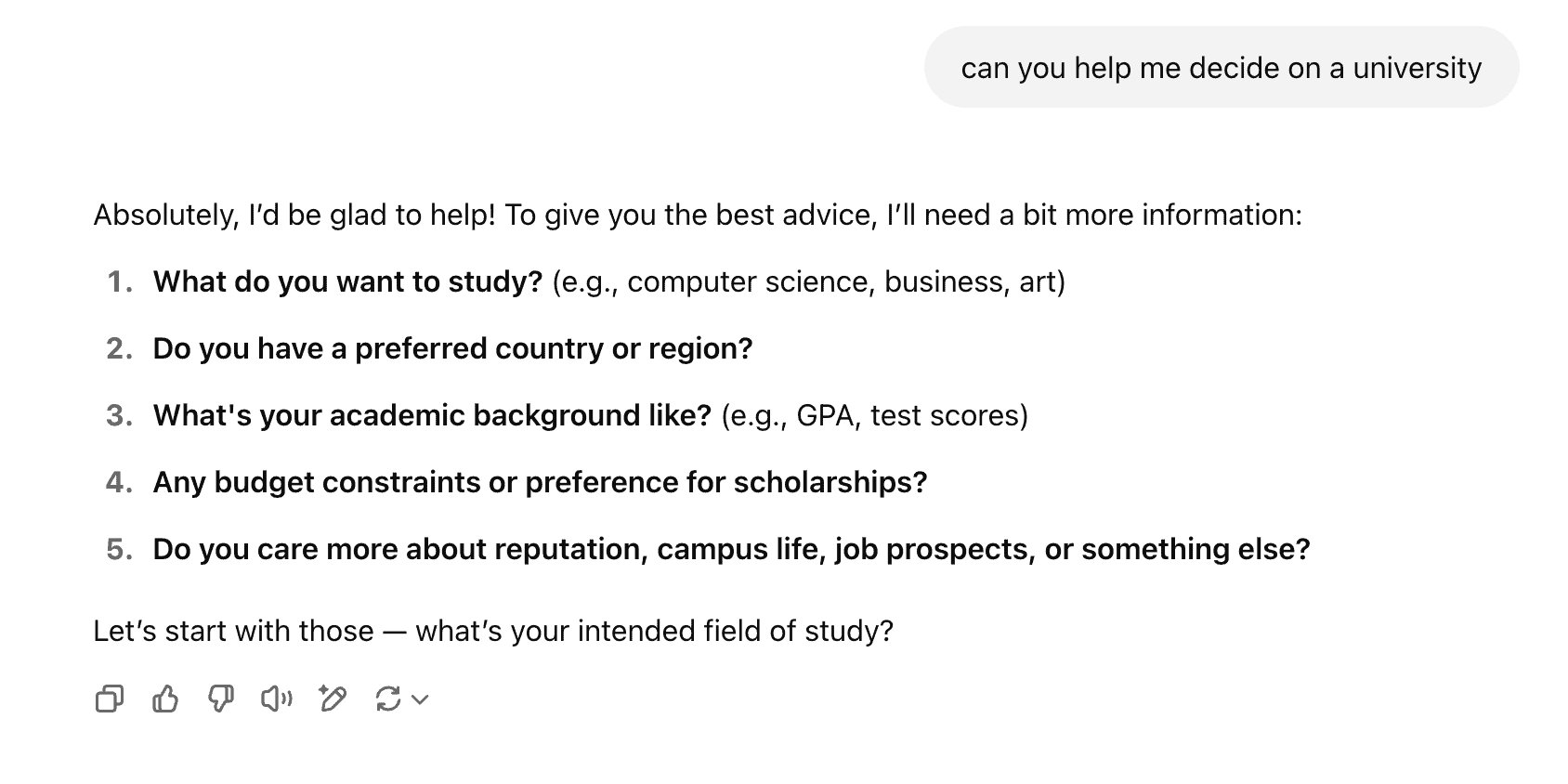
This means that a prospective student asking ChatGPT, “What’s it like to study at [your institution]?” might receive an answer based not just on your website, but also on what past and current students have said on public review sites such as Reddit and student review sites like EDUopinions.
The benefit to applicants is receiving personalised advice that considers their preferences and concerns, without the bias associated with speaking to university recruitment advisors.
The biggest takeaway for institutions is this: you no longer have complete control over your university’s brand, and your marketing and recruitment teams must adapt.
How do Applicants make their university decision?
There are many reasons why a student might settle on a particular university. Factors given most prominence in the decision-making process will vary depending on the student’s home country, course preferences and study destination. However, some of the most common factors that students say are important when choosing a university include:
- Course content
- Student satisfaction
- University atmosphere
While details on a particular course can be gathered from a university website or prospectus, evaluating a university’s atmosphere and student satisfaction is more of a challenge, especially for international students who may not be able to visit a university campus or speak to students and graduates face-to-face.
However, one place students can find these honest, unfiltered opinions is through third-party reviews and testimonials.
Student Reviews: From Optional Extra to Strategic Essential
In 2023, 28% of international university applicants said that reading other students’ real experiences of studying abroad was the most helpful factor when making their study decision. Students want to know what a university is like before they consider applying, so testimonials should be an essential part of your marketing and recruitment strategy.
With reviews being pulled directly into AI-generated answers, encouraging your students and graduates to write reviews isn’t a ‘nice to have’ anymore – it’s integral to building your brand reputation online.
Simply put: if your students aren’t talking about you online, AI search results will reflect that – and could make or break another student’s decision to study at your university.
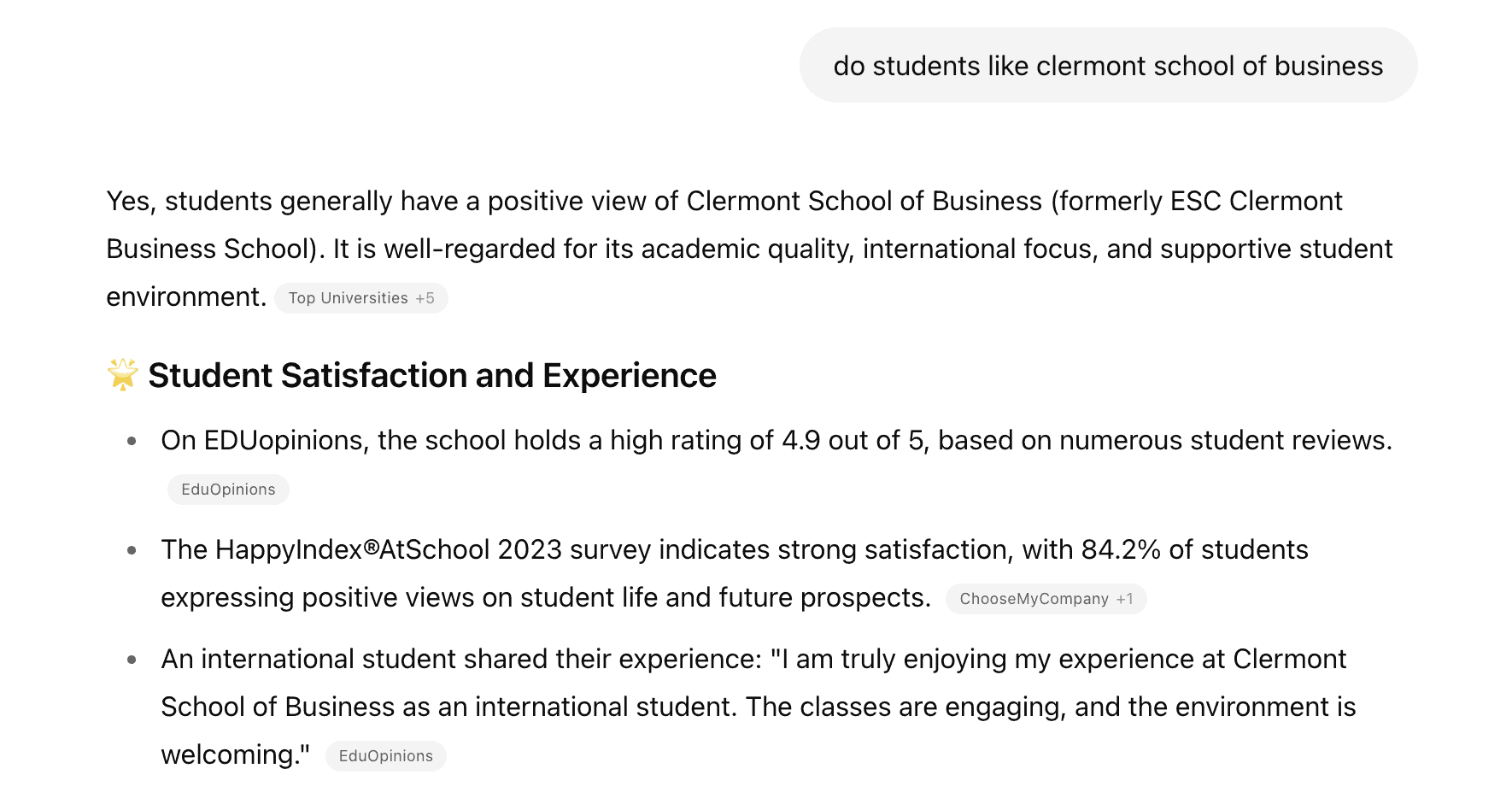
The ripple effect on recruitment is significant. If ChatGPT is a student’s starting point (and we can say for sure that many teenagers are already using it), and the AI is pulling in genuine reviews to answer their questions, then the recruitment funnel is being shaped before a student ever visits your website or speaks to your team.
However, this certainly doesn’t mean you can’t influence that process. Investing in student reviews and testimonials prioritises authenticity, amplifies student voices, enables your community to help prospective students, and will ultimately drive the right students to your university.
Three Practical Actions for Universities
1. Prioritise Student Review Platforms
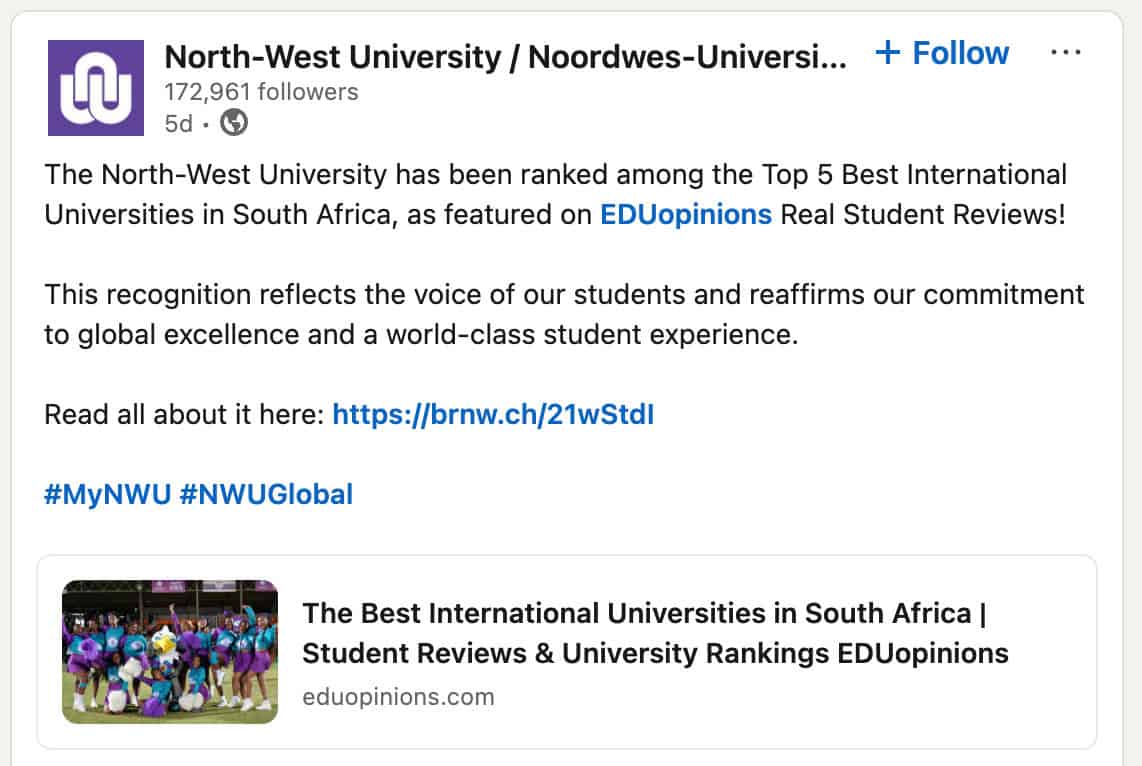
Make platforms like EDUopinions part of your formal marketing strategy. Encourage satisfied students to leave reviews – especially final-year students and recent graduates who can reflect on the complete student experience.
Your work doesn’t end once a student has left a review. Monitor what’s being said about your institution on these platforms, and respond where appropriate, including to negative reviews. This will show applicants you’re proactive about responding to feedback and improving your institution.
This isn’t just good PR, it’s essential for building your AI search visibility.
2. Educate Internal Stakeholders About AI Search Trends
From your marketing team to academic departments, help your colleagues understand how AI tools change student research habits. Run workshops, share examples and explore how your university appears in AI-generated content.
When your entire organisation, from faculty members to the marketing team, knows the value in student reviews, you’ll build a community that values student perspectives – perhaps providing benefits beyond recruitment.
3. Leverage Student Voices in your marketing content
Beyond third-party reviews, you should showcase student stories across your website, social channels and campaigns. Blogs, testimonials, Q&As and student-produced videos all contribute to the broader narrative, and much of that content will eventually feed into AI algorithms, strengthening the case for your university.
Prioritising the student experience in your marketing will strengthen your brand reputation and help your future applicants make the right decision about their education.
Conclusion
You can think of AI search tools such as ChatGPT as a trust filter. By cutting through marketing noise and going straight to an ‘unbiased’ (though occasionally hallucinatory) artificial intelligence source, applicants find student-led content and information that feels real, balanced and – ironically – human.
Consequently, institutions that embrace transparency, student feedback and peer-led content will stand out in a landscape where authenticity wins.
Ultimately, we’re at a tipping point. The way students evaluate universities is changing, with AI becoming increasingly more present in the decision-making process. By understanding how tools like ChatGPT work – and how student reviews feed into them – universities can better position themselves to meet prospective students where they are: online, curious and looking for real answers.
Want to know how EDUopinions can help you increase your brand awareness and visibility? Get in touch with us today.


Related Posts :





Recent Posts

We created the EDUopinions Student Reviews Guide to highlight students' opinions of universities. All of the rankings we produce as part of the Guide ...

The University of Pécs in Hungary ranks among the top 1,000 universities in the world, and in the top 300 in Europe. Located in one of Hungary’s best ...

Want to boost your skills with an MBA, but don’t want to take time out from your job to study – or move abroad? An Online MBA means you can study the ...
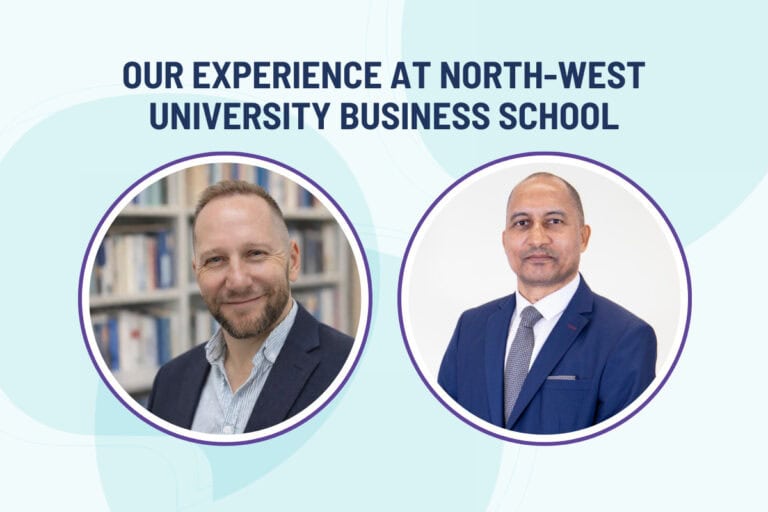
North-West University is globally recognised for its strong teaching and research; it is ranked seventh in Africa and among the top 1,000 ...